



Introduction
More than half of the world’s population relies on rice as a staple food, making the rice market vast and continuously growing. If you want to start a rice milling business but don’t know where to begin, this article will guide you through the essential things you need to know.
Before starting, you need to complete some initial preparations, including market research and securing funds.
Preliminary preparation
Market Research
First, conduct market research and analysis. Understand the types of rice in your target market and the supply and demand situation, and identify your competitors and how they operate. Create a detailed business plan. This will help you quickly clarify your goals, and learning from others’ operations can help you enter the industry more efficiently.
Prepare Enough Funds
Next, you need to prepare enough funds to ensure your company can operate normally for at least one to two years. The essential costs of starting a rice milling business include expenses for the site, equipment, raw materials, and other potential operational costs.
If you lack sufficient funds but are determined to start this business, you can consider loans or bringing in partners to invest. However, it is crucial to have a clear understanding of the market, profit estimates, and how to execute the project.
Registration and Getting Licenses
To start a business, according to your local requirements, you will need to register your business and get licenses to make sure you can build your factory legally. So in this stage, you need to know your local government’s policy.
Build your Factory
Once you have made everything OK, you can move on to selecting a location and building your factory.
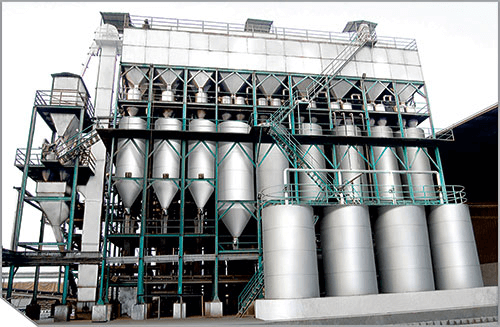
The location you choose should be suitable for a factory building; for example, it should be convenient for transport, because you need to purchase the grain and sell your rice and the place should be suitable for storing a large amount of rice.
Purchase Rice Mill Equipment
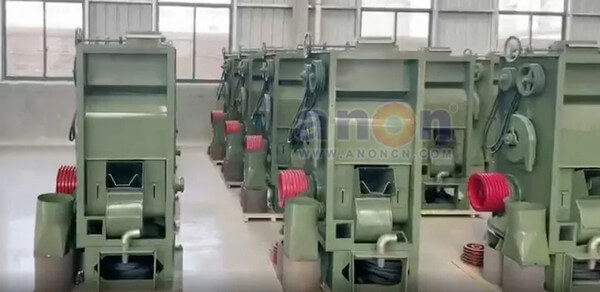
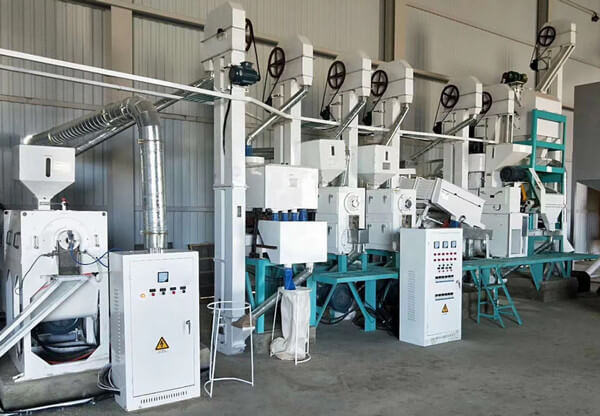
Rice milling equipment is the main tool for starting your rice milling business. It directly determines the quality of your rice and, in turn, affects its price and your profit. So, how do you choose the right rice milling equipment?
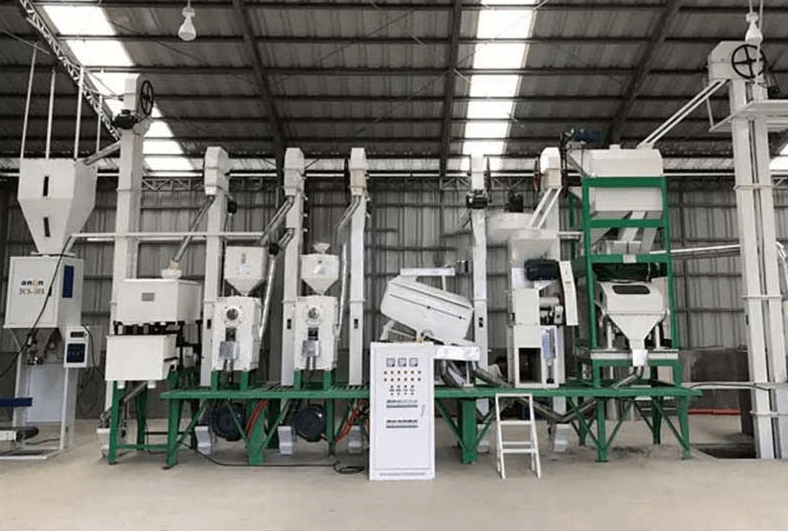
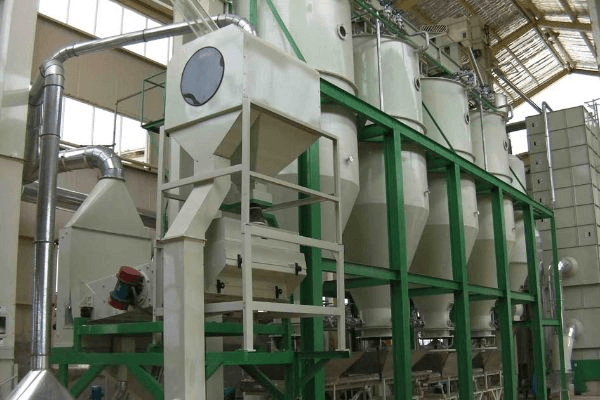
Let’s first understand the machines you will use in a rice milling production line. They are, in order of function:
| 1 | Paddy Cleaner | The paddy cleaner machine is used to remove impurities such as dust, straw, stones, weeds, and so on. Keep the paddy cleaning and protect the subsequent machines. |
| 2 | Paddy Husker | Used to remove the husk of the paddy and turn it into brown rice. |
| 3 | Paddy Separator | Used to separate the brown rice from the paddy and brown rice mixture. The unhulled rice is also separated and sent back to the rice huller for further hulling. |
| 4 | Rice Whitener | The machine that turns the brown rice into white rice. |
| 5 | White Rice Grader | Grading the rice into whole rice, big broken rice, middle broken rice, and small broken rice. |
| 6 | Color Sorter | The machine that helps you remove the discolored particles from rice. |
| 7 | Rice Polisher | Used to polish the rice and make its appearance more beautiful and bright. |
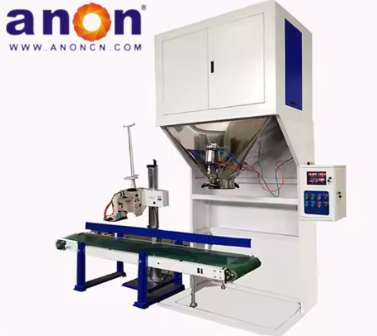
| 8 | Rice packing machine | The machine used to pack the rice into bags according to a unified standard. |
Each machine has different capacity options, allowing you to configure production lines with various outputs. Additionally, the color sorter and rice polisher help produce whiter and more refined rice, but they are optional if not required.
The current rice market mainly includes polished rice, brown rice, regular rice, and parboiled rice.
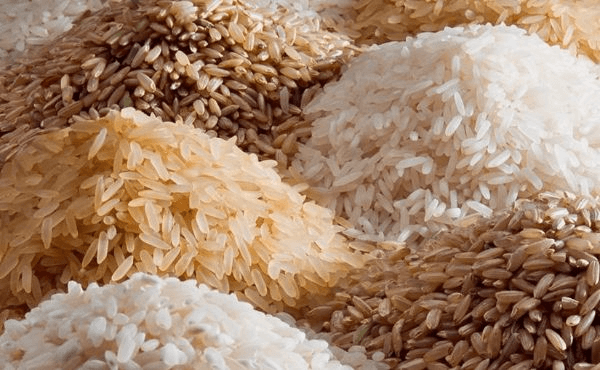
Brown rice production
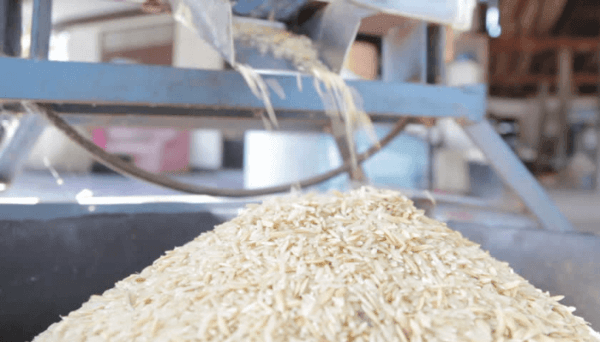
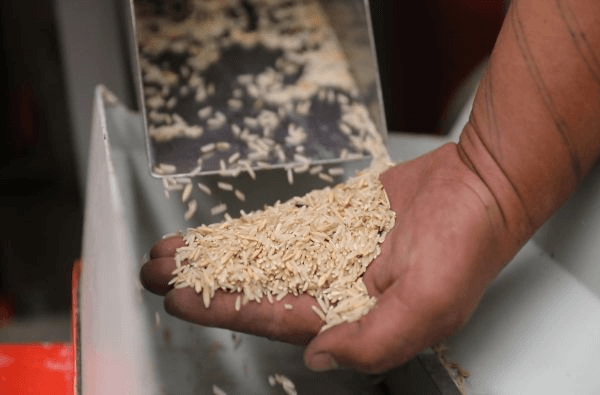
Brown rice is hulled rice that has not been milled or polished. Some people believe that milling removes the rice’s germ and bran, where most of the grain’s nutrients are stored. Therefore, they prefer eating brown rice for its more balanced nutrition. If your production line focuses on producing brown rice, you do not need machines for milling and polishing.
Polished and regular rice production
Polished rice is a high-quality rice produced through fine processing. It starts as brown rice, which is milled to remove the bran, and then graded to separate whole grains. After that, it goes through color sorting and polishing to remove discolored grains, resulting in rice with a cleaner appearance and better quality. Polished rice usually has a higher price. If you aim to produce polished rice, your production line will need all these machines. However, for regular rice production, polishing and color sorting machines are not necessary.
Parboiled rice production
Lastly, parboiled rice is a natural and nutritious type of rice made through cleaning, soaking, steaming, and drying, followed by regular hulling and milling. It retains up to 87% of its nutrients and is priced 5%-10% higher than white rice. Parboiled rice is popular in regions such as Europe, the Middle East, and parts of Central and South America, where it is known as healthy and eco-friendly rice. If you plan to produce parboiled rice, you will need to invest in a parboiled rice processing production line.
In summary, different rice products require different production lines. Based on the current market types of rice, you can determine the type of production line you need by understanding the market you want to target.
Hire Workers
After buying the machines, you need to install them, buy the grains, and hire workers to make your factory run. It would be better if you could hire some experienced workers who are familiar with the machines’ operation. At the same time, the labor cost will be high. If you hire the green-hand people, you will need to train them before they start operating the machines.
Start your Production
Now, everything is ready, so you can start your production and manage your factory.
Necessary knowledge of rice milling
Once production begins, you will need to plan and manage your factory based on the production situation. If you want to start a rice milling business, you must have some necessary knowledge about rice milling to help you carry out your work.
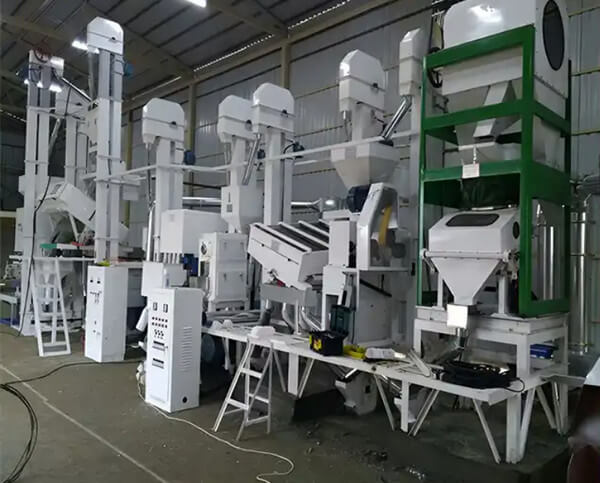
How to increase the output of the production line is related to our rice yield rate, which is related to the condition of the rice itself, machine maintenance, and operation.
The Situation of the grain
First, the paddy quality plays a key role. The variety, impurity level, and moisture content of the rice will affect the milling yield. Rice varieties vary, and you can observe their characteristics, such as length, width, and color, to make judgments. Therefore, before processing, it’s important to classify the rice to ensure that the grains are more uniform, which is beneficial for milling. Rice can also be divided into early and late rice, with late rice generally being more resistant to pressure, resulting in fewer broken grains and higher milling yield during processing.
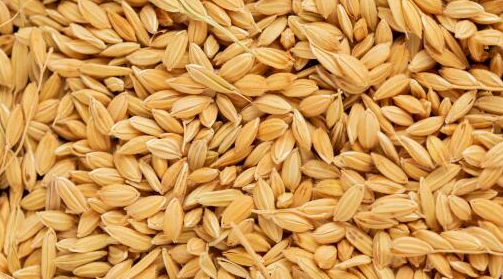
The second factor is the level of impurities in the rice. Too many impurities can burden the cleaning machine and, if not handled properly, may affect the entire production line. Therefore, it’s important to remove large impurities before processing.
Finally, the moisture content of the rice is crucial. The moisture content greatly impacts the breaking strength of the brown rice. The optimal moisture content is 14%, which is suitable for milling and processing. If the moisture content is too high, the rice will have lower pressure resistance, leading to higher broken grain rates. If the moisture content is too low, the rice will become brittle and more likely to crack, also resulting in an increased number of broken grains.
The maintenance of the machines
The next factor is the maintenance of the machines. The efficiency of the machines is directly related to regular equipment checks and maintenance. Lubricating the machine bearings helps reduce wear and tear. Inadequate cleaning of impurities can leave residues inside, which may affect the normal operation of the equipment and the milling results.
Operating factors
Finally, there are operational factors. Improper operation can damage your equipment or affect the milling results, which in turn impacts yield. For example, setting the pressure too high can affect the milling degree. High pressure may cause the milling machine to malfunction and result in significant rice loss. On the other hand, too low pressure may not guarantee proper milling. The milling time also affects the yield, so it is important to adjust it according to the quality of the rice.
Conclusion
Rice milling is a promising and great business. We hope this article helps you start your rice milling business. ANON has a professional consulting team and reliable products to support and safeguard your business.
FAQ
1. What is the rice milling business?
The basic objective of a rice milling system is to remove the husk and the bran layers and produce an edible, white rice kernel that is sufficiently milled and free of impurities. Depending on the requirements of the customer, the rice should have a minimum number of broken kernels.
2 . How profitable is rice milling?
The rice mill industry offers a plethora of opportunities for entrepreneurs looking to enter the agricultural sector. With the growing demand for rice and the potential for export markets, venturing into this business can be highly profitable.
3. Who is the target market of the rice business?
The business aims to meet customer needs through competitive pricing, quality products, and excellent customer service. It plans to target local households, restaurants, hotels, and churches through physical and online storefronts as well as partnerships and referrals.
4 . What is the yield of rice milling?
Rice milling yield is the amount of polished white rice obtained from husked rough rice (yields of brown rice are higher). Rice milling rates for polished white rice vary by crop variety and quality but tend to average about 72% of rough rice weight in the United States.
5. How much capital is needed to start a small rice mill?
For a small rice mill (1-2 tons per hour), the initial investment can range from 30,000 to 100,000 yuan, depending on the brand of equipment, the level of automation, and local construction costs. This includes equipment, installation, and initial working capital. A detailed business plan is essential.