



Rice Mill
rice polisher
The ANON rice polisher is an essential machine for advanced rice processing, designed to provide the industry with an efficient and reliable polishing solution. Its primary function is to remove the outer skin and fine impurities from rice grains, giving them a smoother, brighter, and cleaner appearance while preserving their natural nutritional value. Our rice polishing equipment is engineered with advanced technology and precision design, enabling fully automated operation with minimal manual intervention. This ensures higher productivity while reducing labor intensity.
Choose the right product for you
Providing quality products and services.
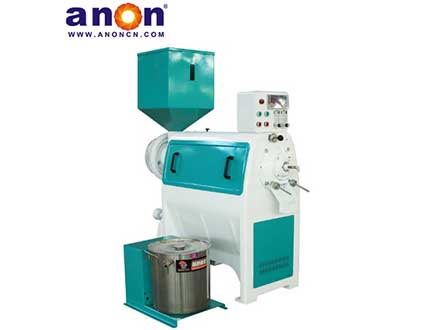
ANON Home Rice Polisher,Rice Polisher Machine
The ANON home polisher effectively improves the taste, quality, and appearance of rice by polishing it. During operation, simply feed the rice into the inlet. As the rice falls into…
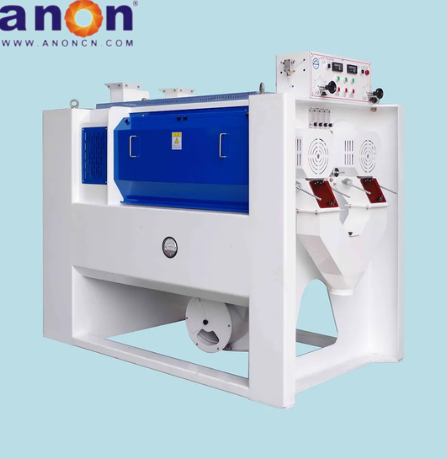
Double Roller Water Silky Rice Polisher Rice Milling and Polishing Machine
The ANON MPGW double-roller rice polisher features a horizontal structure and consists of a drive system, feeding device, polishing chamber, discharge port, spraying device, rice bran collection hopper, base, and…
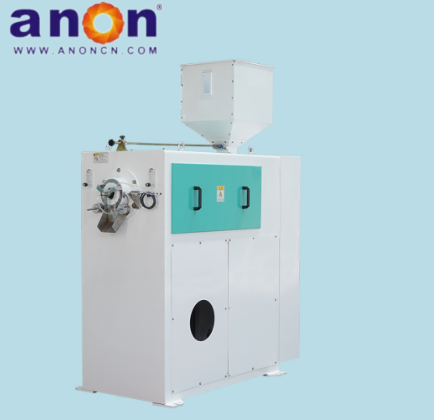
ANON MPGW17 rice polishing machine for rice processing
The ANON MPGW series rice polishing machine is a new generation product developed based on the actual situation in China and the introduction of international advanced technology. Its structure and…
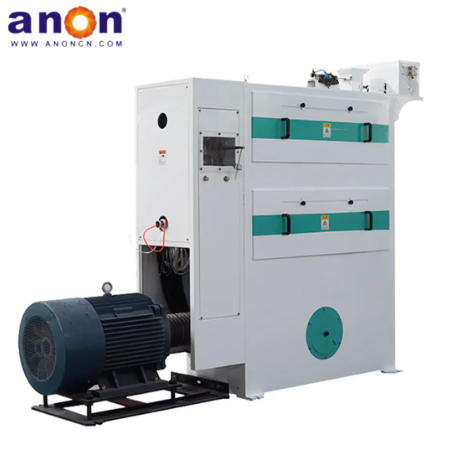
ANON automatic double roller water mist rice polisher
Product descriptions ANON Double Roller Rice Polisher is designed for commercial rice processing plants that require high-quality polished rice with excellent appearance and stable processing performance. Equipped with two polishing…
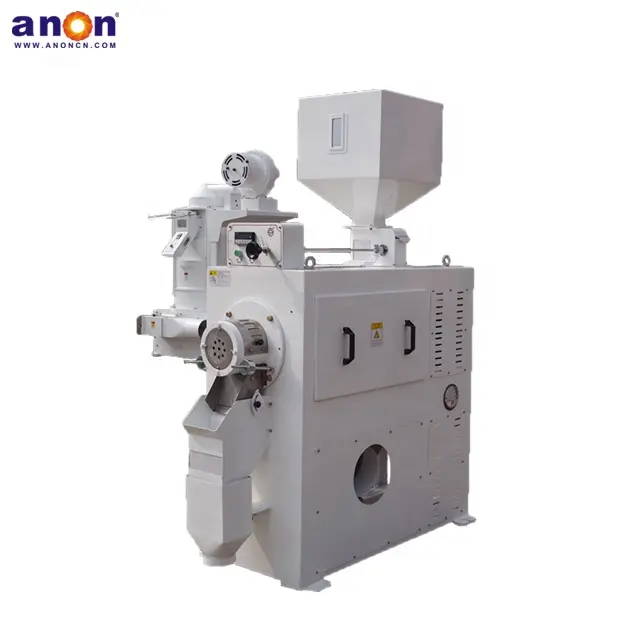
ANON Togo high quality mist water rice polisher rice polisher machine
Product Details MPGW series rice polishing machine is a new generation of product that is developed with introduced international advanced technology in combination with the real conditions of China, structure…
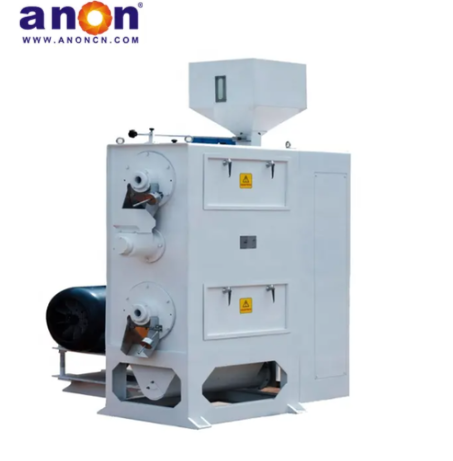
ANON Double Roller Rice Polishing Machine
MPG series rice polishing machine is the introduction of international advanced technology, combined with the actual situation of our country, after several optimizations, it is in the leading position in…
ANON Rice Polisher: Brighter Grains, Lower Breakage, Higher Grade
From standalone water polishers to turnkey multi-stage rice milling lines, factory-direct rice polishers with broken rice rates confirmed below 1–2%.
- Broken Rice Below 1–2%
- Automatic Water-Misting System
- Standalone or Turnkey Mill Integration
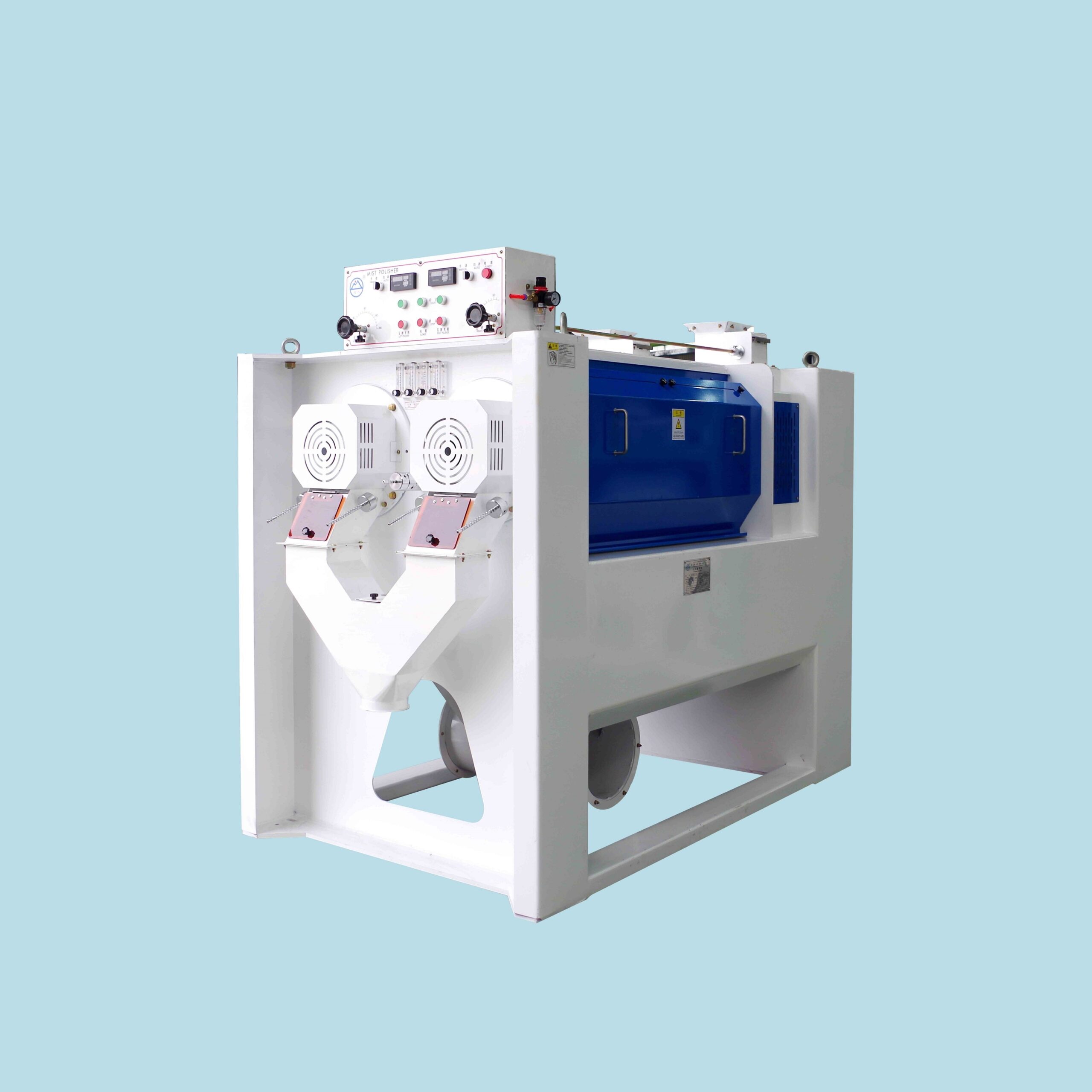
Product Summary
ANON’s rice polisher range covers standalone water rice polishers up to multi-stage complete rice mill solutions. Every unit shares the same wear-resistant polishing roller construction and automatic water-misting control. ANON’s high-pressure air and atomized water combine at the chamber to lay a thin water film on the grain surface, so grain-on-grain friction during rotation removes residual bran without damaging the starch core underneath. Pressure and airflow adjust to fine-tune the polish for long-grain, short-grain, or parboiled rice. Whether you need one standalone polisher or a full processing line, ANON builds the same high polishing accuracy into every configuration.
Features
Water-Misting Polish — ANON’s atomized water film, combined with controlled friction, removes bran without damaging the starch core.
Wear-Resistant Polishing Roller — Stainless steel or alloy rollers hold their surface through continuous friction, so you replace them on a season’s schedule, not a month’s.
Segmented Screen Plates — Wear-resistant screen frames clear bran dust continuously during operation, so grains pass through intact instead of recirculating with waste material.
Adjustable Pressure & Air Flow — Protect delicate long-grain kernels or fully polish tougher parboiled rice by fine-tuning pressure and airflow at the chamber.
Integrated Bran Collection — Keep the work floor clear and capture saleable bran meal, as a suction fan draws it and micro-dust into a collector bag or cyclone separator.
Reduced-Temperature Processing — Built-in air suction cools the polishing chamber, limiting thermal stress and breakage.
Brighter Grain, Higher Grade
Dull, bran-streaked grains sell at a lower value, no matter how clean the milling was upstream. ANON solves this at the polishing stage: every rice polisher in the range runs the same atomized water-misting system. A fine water film coats the grain surface, softening residual bran before roller friction lifts it away. This combination polishes the grain to a bright, translucent finish without relying on excess mechanical pressure to strip the bran layer.
Because the water film does part of the work, ANON’s polishing rollers, built from stainless steel or alloy, can run at controlled friction levels that protect the starch core underneath. A brighter grain surface improves market acceptance and helps meet premium rice quality requirements, since buyers and export markets grade rice partly on visual finish. For rice processors and mill owners, this means clearing a higher grade at the point of sale, not just a cleaner grain at the point of milling.
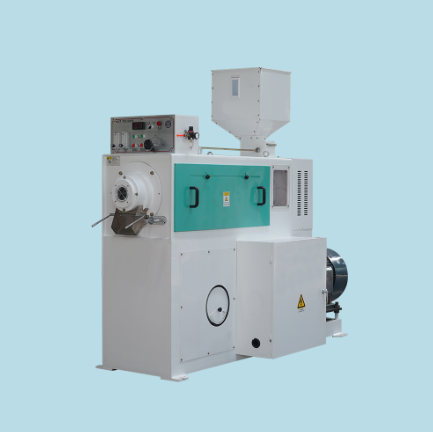
Lower Pressure, Less Breakage
Every broken grain from a polishing pass is head rice yield you cannot recover. ANON addresses this with adjustable pressure and airflow controls built into the polishing chamber of every rice polisher. Instead of forcing one fixed pressure setting across every rice type, operators fine-tune pressure, polishing time, and water supply directly at the chamber, tuning down for delicate grain and up for tougher parboiled rice to match what each batch needs.
Lower pressure combined with the water-misting film means the roller relies less on raw mechanical force to remove bran, a leading cause of grain fracture in high-pressure polishing systems. ANON pairs this with the same air-suction cooling described above, since heat buildup during friction is a secondary cause of grain stress and cracking. Together, these automated adjustments and cooling mechanisms keep ANON’s broken rice rate confirmed below 1–2% before any unit leaves the factory. That breakage rate translates directly into more sellable head rice per batch for the mill owner.
One Line, All Varieties
Rice varieties do not polish the same way, and a fixed-setting machine forces compromise on at least one of them. ANON solves this with that same pressure and airflow adjustment, built into the chamber of every rice polisher in the range, not sold as an add-on. Long-grain rice typically needs lower pressure to avoid snapping the elongated kernel, while short-grain and parboiled rice tolerate higher pressure and benefit from it for full bran removal. Your operators adjust pressure and airflow directly at the chamber, switching between rice types without swapping components or recalibrating the whole line.
The same screen plates and rollers described above handle all three grain types, since the adjustment happens at the process level, not the hardware level. For mills processing mixed rice varieties by season or by contract, this means one ANON polisher covers the full production calendar without downtime for reconfiguration.
Standalone to Full Mill
A processor’s needs on day one are rarely their needs in the future, and equipment that cannot scale forces a full replacement. ANON avoids this with a rice polisher range built across small, medium, and large capacities, plus a double-roller configuration for industrial rice mill lines. The standalone MP Series suits smaller operators or processors testing a new market, running as a single unit without additional line infrastructure.
Medium-capacity units step up throughput for growing mills that have outgrown a single-pass polisher. The double-roller industrial configuration integrates directly into multi-stage turnkey mill lines, handling higher volume without a trade-off in breakage rate.
Because every capacity tier shares the same core mechanism, moving from a standalone polisher to a full mill line does not mean relearning a new machine. This allows processors to select the right capacity for their current needs while keeping future expansion options open.
Why Source From ANON
As an experienced rice polishing machine manufacturer, ANON has over 20 years of grain processing R&D, engineering machinery calibrated for long-grain, short-grain, and parboiled rice across markets in Asia, Africa, and South America. Polishing rollers are built from stainless steel or alloy and paired with wear-resistant screen plates, so the same durability standard applies whether you’re running a standalone unit or a full integrated line. ANON’s 80+ global service networks across 140+ countries mean you get quick-replacement parts, screens, rollers, and nozzles, along with on-site commissioning support without cross-border delay.
FAQ
What is the difference between a rice whitener and a rice polisher?
A rice whitener removes the outer bran layer through abrasive or friction milling to produce white rice. A rice polisher goes a step further, using a water-misting system to soften and lift residual bran without stripping the starch core, giving the grain a brighter, smoother finish than whitening alone.
What happens to the bran removed by a rice polisher, is it wasted?
No, a rice polisher’s segmented screen plates continuously clear bran dust out of the grain stream during operation, and a suction fan draws it into a collector bag or cyclone separator instead of letting it settle on the work floor. Because the bran is captured this way rather than lost as loose waste, mill owners can collect and sell it separately as bran meal for extra revenue.
How often does the polishing roller in a rice polisher need to be replaced?
ANON builds its rice polisher rollers from stainless steel or alloy, and because the water-misting film reduces how much raw mechanical force the roller needs to remove bran, the rollers hold their surface on a season’s schedule rather than a month’s. Actual timing still depends on rice type and daily run hours, but the wear-resistant construction is built to outlast standard rollers under the same conditions.
Can I add a standalone rice polisher to equipment I already have, or do I need ANON’s full mill line?
ANON’s standalone MP Series rice polisher runs as a single unit without needing additional line infrastructure, which is what lets processors testing a new market or adding a polishing stage run it on its own rather than committing to a full mill line from the start. If your operation later scales up, the same core mechanism carries over to ANON’s medium-capacity and double-roller configurations.
Are rice bran and polished rice the same thing?
Polished rice is a byproduct of the rice milling process, where the rice is brushed to polish the grains. The oil content of polished rice ranges from 13% to 19%. The crude protein content ranges from 13% to 16%, and the total nutritional value (TDN) ranges from 70% to 90%, depending on the oil content.
Does milling rice reduce its nutritional value?
Milling primarily removes the bran layer from the surface of the rice grain. This layer contains some vitamins, dietary fiber, and fats, so milling does lead to the loss of these surface nutrients. However, the core nutritional components of rice (such as starch and protein) are mainly found in the endosperm, which is largely unaffected by milling. Water-mist polishing is a gentler process that causes less damage to the rice grain structure and helps retain more nutrients.
How to choose a polishing machine with the appropriate capacity and model?
First, you need to determine the hourly processing capacity (T/H) of the polishing machine based on the daily rice processing capacity or finished rice output of the processing plant. Typically, a 10%-20% margin should be added to the actual requirement. For example, if the daily output of white rice is 50 tons (based on 20 hours of operation per day), you should choose a model with an hourly processing capacity slightly greater than 2.5 tons. Common models such as 1 T/H, 2 T/H, 3 T/H, and 5 T/H can be selected as needed.
Next, clarify the desired rice quality. If you are pursuing a high whole grain rate, high quality, and low broken rice rate, and want the rice to have high gloss and a long shelf life, you should prioritize a wet (water mist) polishing machine with an atomizing water system, which is especially suitable for high-end rice and refurbishing aged rice. If you have a limited budget, do not have high requirements for the broken rice rate, or mainly produce products that require retaining more nutrients, such as germinated rice, you can choose a traditional dry polishing machine.
Finally, pay attention to the brand and after-sales service to ensure the normal operation of the machine and address any potential problems in the future.
Contact for detailed service
Anon cooperates with a number of factories to improve efficiency and service quality, and provide technical support and services to customers.
Get Support