



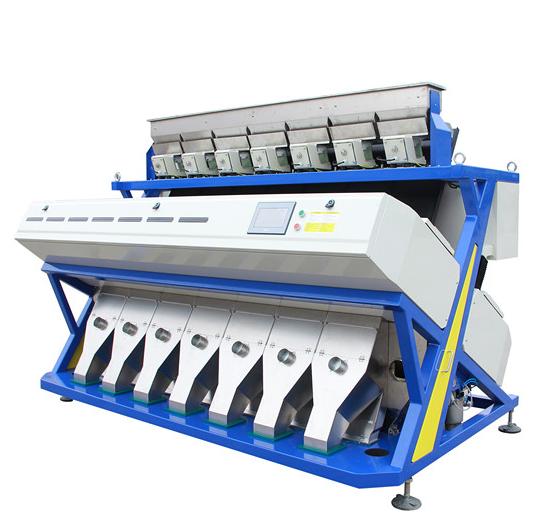
ANON Color Sorter
1. Anon provides a 99.99% high-sorting-accuracy color sorter to improve quality and comply with international food safety standards.
2. Our automatic color sorters are designed for standardized processing in your grain processing production line.
3. ANON offers specialized color sorters and complementary attachments tailored for your grain type and production requirements.
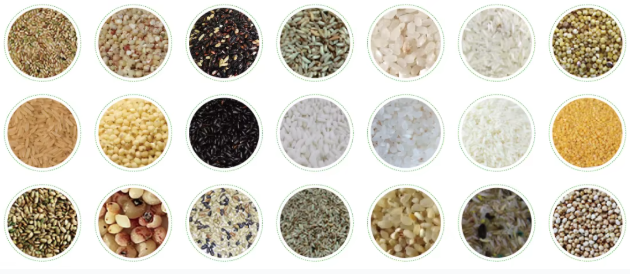
4. ANON color sorters are ideal for most grain, bean, and nut types, such as rice, wheat, corn, quinoa, coffee beans, soybeans, chickpeas, green beans, red beans, lentils, peanuts, cashews, pistachios, almonds, and many more.
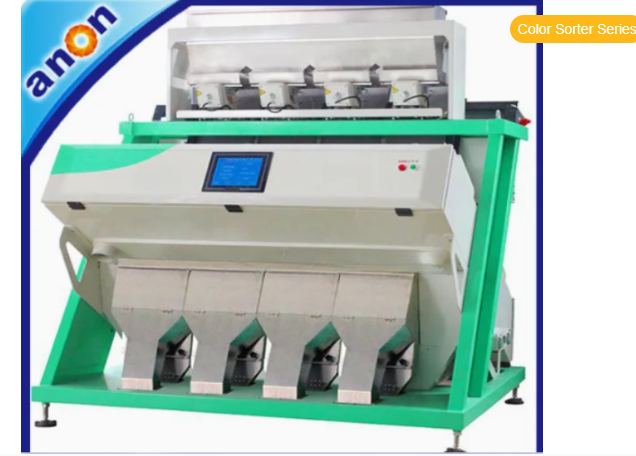
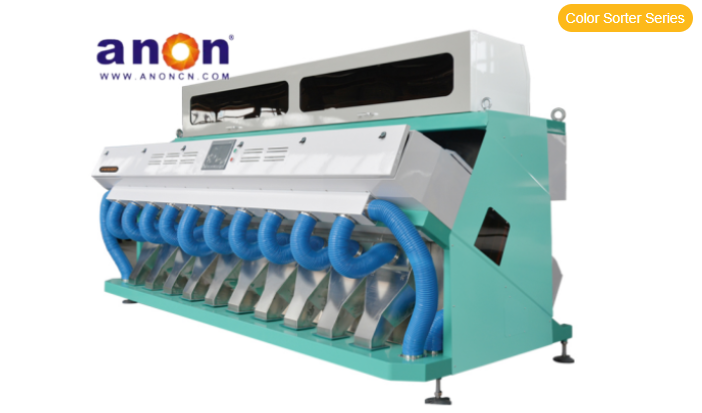
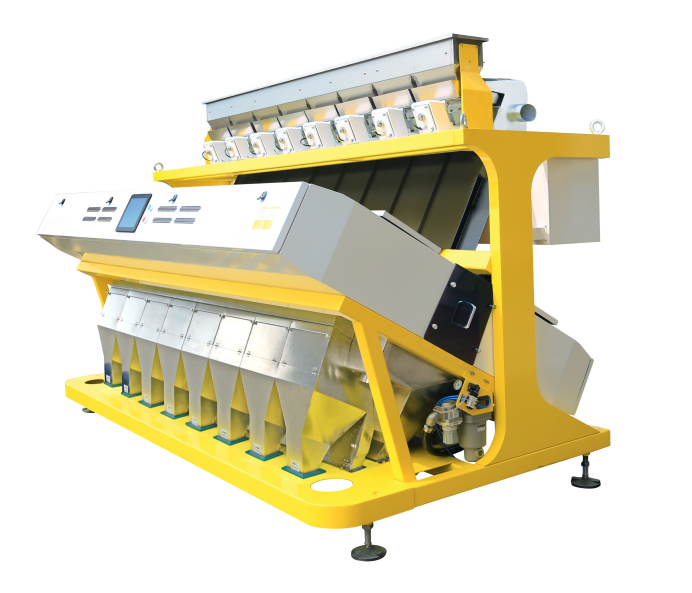
Different types of color sorting machine ANON supply
High Efficiency & Capacity
Enhance your sorting efficiency by switching to the ANON fully automatic color sorter. Our color sorters are strikingly faster in two aspects.
First, ANON high-speed color sorters take 0.001-0.01 seconds to recognize and separate 1 unit of material, which is significantly faster than the processing speed of humans.
Second, ANON only manufactures color sorters with a multi-channel system design – a 32-channel chute in our mini model and a 64-channel chute in the standard model.
That means 32 or 64 workers sorting at the same time, with a 0.001-0.01 processing speed. To adapt to different capacity requirements, we provide more models that have up to a 768-channel system design. This allows a maximum processing speed of 12 t/h in a single machine.
ANON provides high efficient machine regardless of your factory size and capacity requirements.
High Quality Control
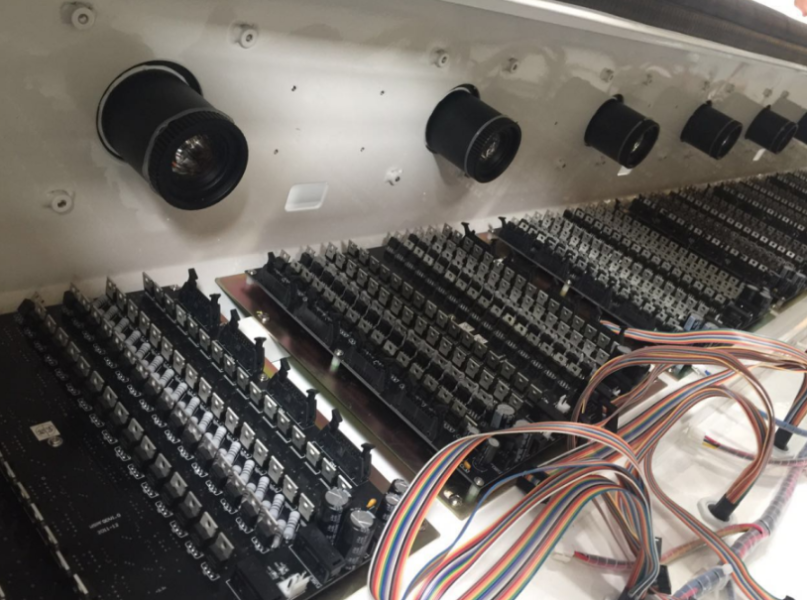
Significantly increase the quality of your products with ANON high-precision camera and AI recognition system built into the ANON advanced color sorter.
Our color sorting machines adopt a multi-spectral light system for better detection of defects invisible to the human eye. The sensor will collect color information from the visible light, red light, and blue light from different angles.
The AI recognition system will then analyze the images. Grains or beans that are different in color or shape will be captured. Additionally, many internal differences that are not visible at the surface will also be detected by the color sorter, such as internal moldiness, water-content differences, and looseness of structure. Finally, every unqualified unit will be removed by the air jets.
In general, the multi-spectral light and AI recognition algorithms in the ANON color sorter ensure higher-standard quality control. It allows for the production of premium products that comply with international standards.
Stable & Durable
ANON color sorter is very stable even under continuous operation.
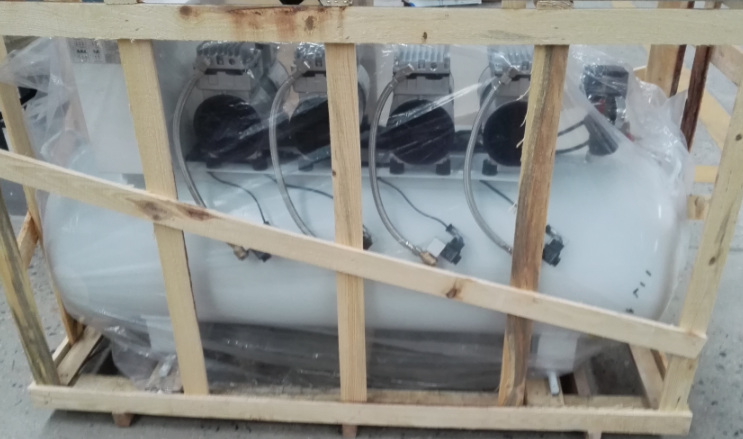
We provide air filtration and refrigeration drying systems along with our color sorter machine to improve stability and reduce failures of the ejection system. They ensure that dust, oil mist, and solid particles do not enter the pneumatic system. This reduces the likelihood of blockage, which can lead to inconsistent and inefficient separation.
We are devoted to providing a stable color sorting machine with minimal downtime, even under continuous operation.
Minimize Waste, Raise Profits
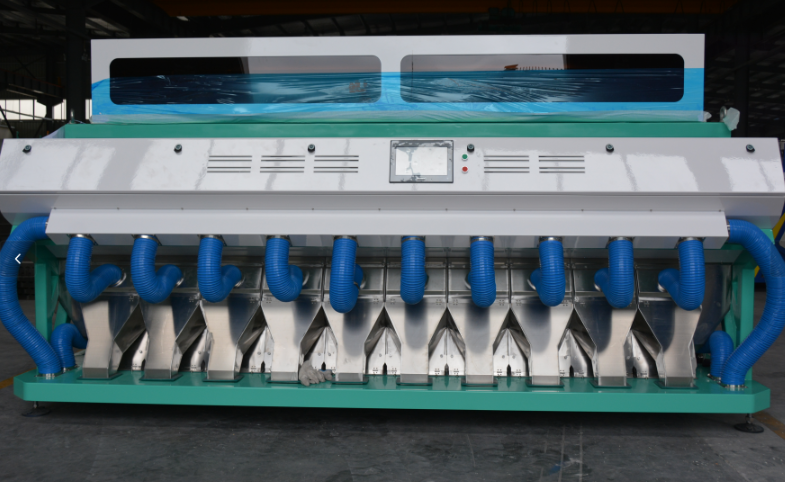
Anon’s two-stage color sorting system will improve purity while minimizing good grain loss, greatly increasing your overall profits.
The first-stage coarse sorting removes obvious defects on the grains and large impurities like stones, while the second-stage fine sorting removes subtle defects and color deviation precisely.
This layered sorting will effectively solve the over-sorting problem that commonly occurs in single-stage sorting. In order to maintain a high-purity output, the single-stage color sorter often has a high reject rate that removes near-quality grains directly. It largely lowers the final yield by resulting in more loss of good grain.
The defect grading separation is achieved by different machine parameter settings – high throughput for the first-stage & high precision for the second stage.
Our two-stage color sorting solution is ideal for export-grade rice and high-value legumes such as coffee beans and cashews. It is a high ROI solution that provides increased yields and stable long-term operation. Since every near-quality grain will go through a second-stage sorting process, it effectively minimizes errors and reduces over-sorting in single-stage systems.
Our Products
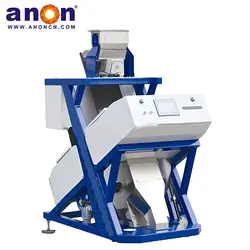
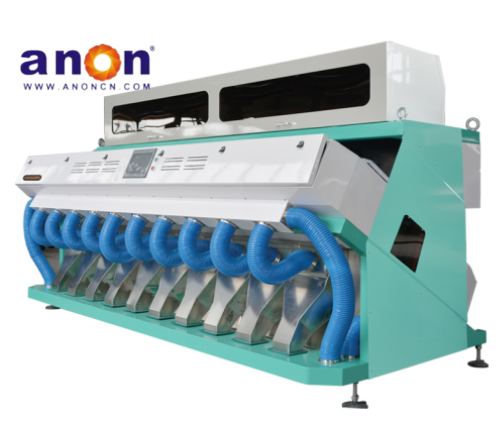
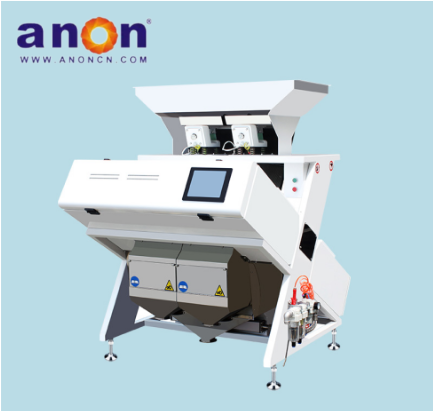
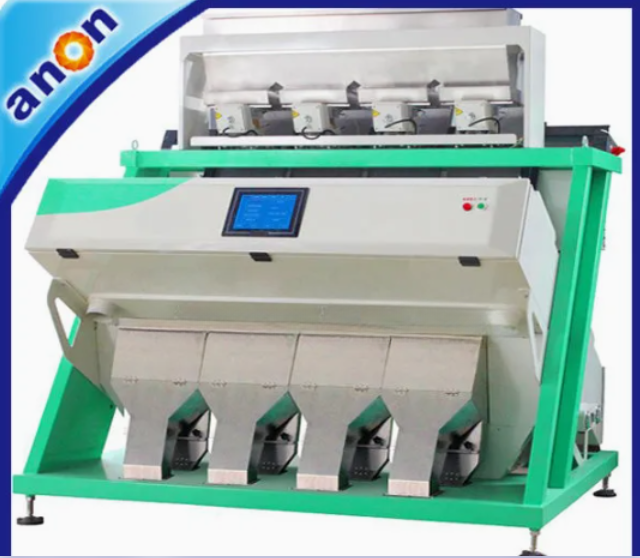
Learn More About Color Sorting Technology
Principle
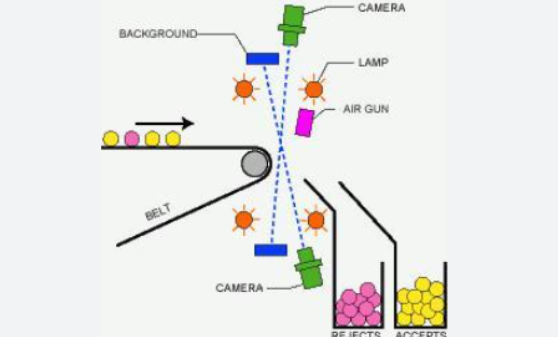
A color sorter works by using optical characteristics to automatically sort out discolored particles and impurities from rice. It can help improve the quality of the rice. The main components of a color sorter include the feeding system, optical detection system, signal processing system, and separation execution system.
The feeding system usually consists of a hopper, vibration feeder, and chute. It arranges the material into a continuous line for easy sorting.
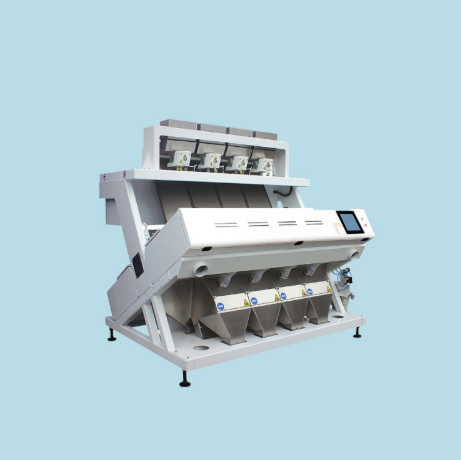
The optical detection system is the key part of the color sorter. It mainly consists of a light source, background board, camera, and sensor. The light source shines on the material, creating different reflective characteristics. These characteristics are similar for good products but significantly different for defective ones. The background board provides a reference signal, and the reflected light signal is converted into an electrical signal by the sensor and sent to the signal processing system.
The signal processing system is responsible for recognizing and analyzing the electrical signals sent from the optical system and issuing commands to the separation execution system.
The separation execution system includes a finished product bin, reject bin, air jet valve, and air compressor. When it receives the system’s instructions, the air jet valve blows defective products into the reject bin, achieving the sorting goal.
Working process
First, the material enters the color sorter from the feeding system. It is accelerated along the chute by vibration and falls into the observation area inside the sorting chamber. In the observation area, the material passes between the background board and the camera. Under the light source, the sensor detects changes in light intensity and color, generating output signals that drive the air jet valve to blow discolored particles into the waste bin. The good material continues to fall into the finished product bin, completing the first sorting.
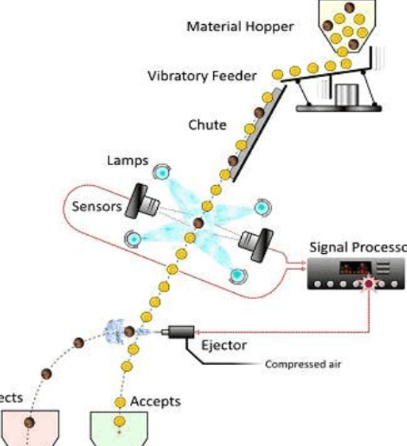
working principle of color sorter
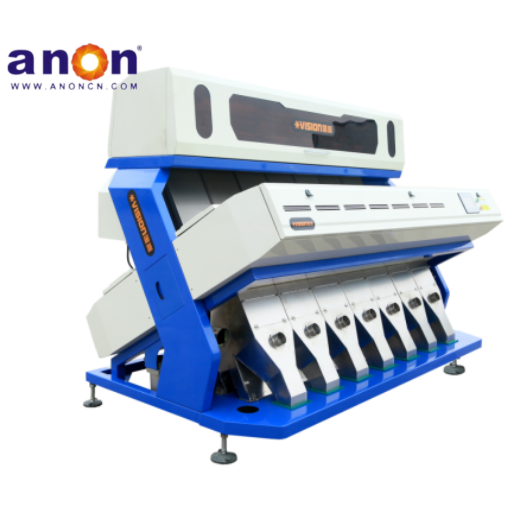
Usually, you need to perform two rounds of sorting to better ensure the sorting effect. On a multi-chute color sorter, you can distribute the chutes for the first and second sorting. For example, an A7 color sorter commonly uses a 5:2 chute distribution. The first sorting uses 5 chutes, and the second sorting uses 2 chutes. A partition is added between the 5th and 6th chutes to separate the first and second product bins. The first product bin provides material to chutes 1 to 5, and the second product bin provides material to chutes 6 to 7.
In this case, after the raw material enters the first product bin, the defective material from the first sorting is sent to the second product bin by the elevator. It is then sorted again, and the second defective product becomes the final waste. The first good product is the finished product, and the second good product returns to the raw material bin to continue sorting with the raw material. The impurity content in the second good product returned to the raw material bin must not be higher than the impurity content of the original raw material. This ensures that the impurity level does not increase, making it easier to maintain sorting accuracy.
Matching equipments
A color sorter usually requires two elevators, one air compressor, an air storage tank, a refrigerated dryer, and a filter to complete the work together.
Air compressor
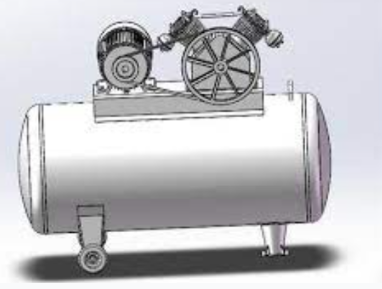
First, there is the air compressor. From the previous reading, we know that in the final sorting process, a jet valve will blow away the off-color particles. However, the color sorter itself cannot provide the air supply, so an air compressor is required to provide the necessary air source during operation. In addition, to prevent contamination and collision, optical components are usually sealed in an optical box. The compressed air can also help clean the optical components and ensure the normal operation of the optical system.
Air storage tank
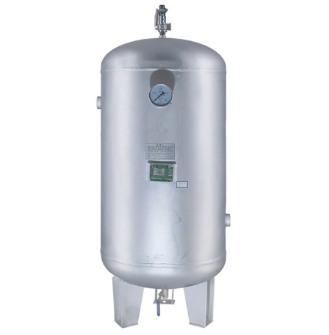
The air storage tank is a device used to store compressed air and is usually connected to the air compressor. When the compression system operates, it produces intermittent fluctuations. With the help of the air storage tank, a stable air supply can be maintained, which helps improve the overall production efficiency of the color sorting process.
The air storage tank has a large surface area, which allows the compressed air inside to exchange heat with the outside. This helps remove moisture from the compressed air and provides a cooling effect. It also causes dust and particles in the compressed air to settle at the bottom of the tank. This reduces the load on the subsequent air dryer and extends the service life of the equipment.
Additionally, without the air storage tank, the frequent loading and unloading of the air compressor during operation would accelerate component wear and waste energy. Therefore, the air storage tank can effectively prevent frequent starts and stops of the compressor, helping extend the service life of the entire system, reduce unloading time, and save energy.
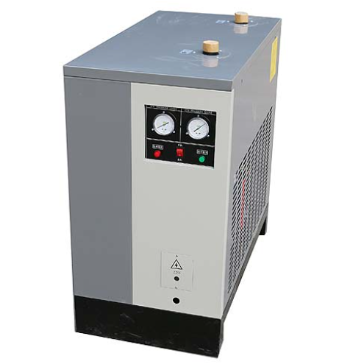
Refrigeration dryer
The main function of the air dryer is to remove moisture from the compressed air and ensure stable production. Compressed air needs to pass through pipes to reach pneumatic equipment and end-use points during production. However, compressed air usually contains impurities like water, oil, and dust, which come from the air. If not treated, these impurities can damage the pipes, harm the pneumatic equipment, and reduce product quality.
The air dryer uses the principle of refrigeration and dehumidification. It forces the compressed air through an evaporator for heat exchange and cooling. This process causes the gaseous water and oil in the compressed air to condense into liquid water and oil through isobaric cooling. The water, oil, and dust are then expelled from the system through an automatic drainage valve, providing clean compressed air.
Filter
The filter can remove large-sized liquid water droplets and solid particles in the compressed air. If the dryer is in a state of large amounts of liquid water and solid impurities for a long time, the dehumidification capacity will gradually decrease.
Elevator
When the color sorter is working, you need to use two elevators, because you need to perform color sorting twice, and the elevator is the key to your production automation operation.
With these machines working together with the color sorter, you can ensure the normal and stable operation of the color sorter, thereby improving your production efficiency.
Classify Color Sorter by structure
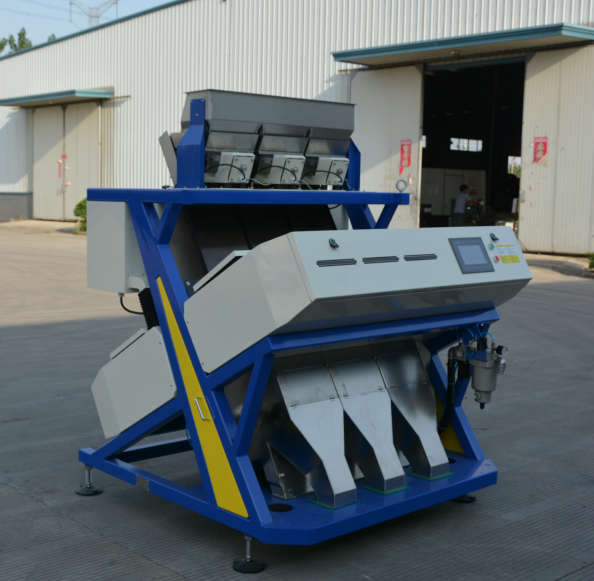
Applications of color sorting machine - Food Industry
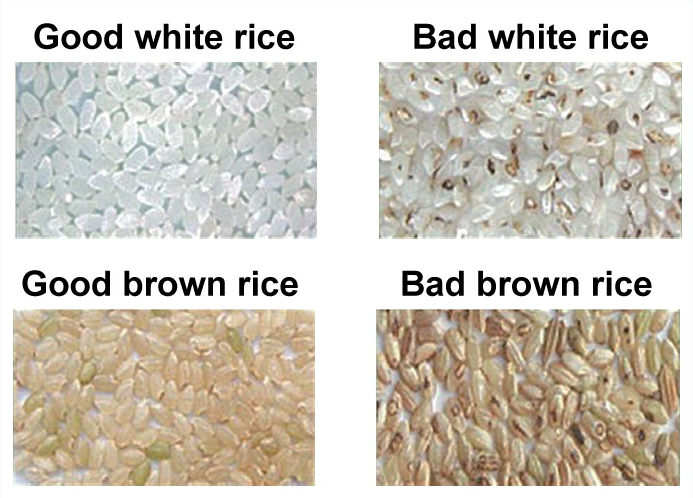
For Nonfood industry
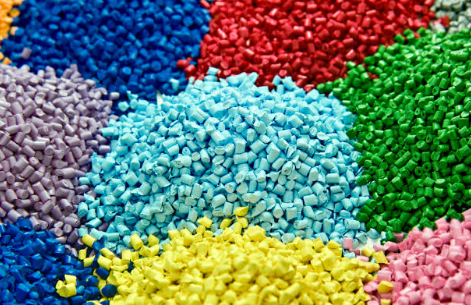
Color sorters can also be widely used in non-food industries, such as color sorting of ore, glass, plastic, etc. Because these products have low fluidity and irregular shapes, it’s better to use crawler color sorters to sort these materials.
Maintenance of rice color sorter machine
1. Clean the chute
First of all, you need to clean the chute regularly. The movement of rice from the chute into the sorting room will also cause pollution to the chute, such as dust and debris, so you need to clean it to ensure a smooth surface of the chute. Do not touch it with sharp objects when cleaning. You can use a dust-cleaning air gun to clean the dust on the surface, or wipe the surface with cotton cloth, but do not use corrosive liquids to clean the chute. When cleaning with a cotton cloth, be careful not to let water drip.
2. Replace the bristles of the dust-cleaning brush regularly
The color sorter itself has a cleaning brush to clean the dust inside the color sorter. The brush skin of the cleaning brush will wear out after long-term use, affecting the cleaning effect, so you need to check it regularly and replace it when you find an abnormality.
3. Cleaning of touchscreen
You also need to clean the touch screen regularly to prevent dust from entering and damaging the screen. You can wipe it with a cotton cloth, but do not use a high-pressure air gun to clean the touch screen directly.
4. Regularly power on
If the color sorter stops working for more than three months, you need to power it on at least once a month and let it fly for 15-30 minutes. This can avoid moisture accumulation inside the machine in some humid areas, or dust blocking the jet pipe, to ensure the normal function of each component inside the color sorter and avoid the color sorter being unable to start and work normally due to long-term shutdown.
1. What types of impurities can be separated by a color sorter?
It can separate surface impurities such as stones, soil blocks, discolored particles, insect-infested particles, and diseased particles; Internal defects, such as moldy, hollow, and sprouted grains (requiring the use of an infrared color sorter); And particles with abnormal shapes, such as broken and withered grains.
2. Is rice sorted by color?
Rice is usually categorized by its length, color, and processing method. For example, jasmine rice is a long-grain rice that comes in both milled (white rice) and unprocessed (brown rice).
3. How does an optical sorter operate?
First, the operator places the material into a hopper, where it is vibrated and moved down a chute. Then, a pneumatic or mechanical ejector separates the material based on size and quality, ejecting any defective material.
4. How should I maintain my color sorter on a daily basis?
Regularly clean the lens, spray valve, and passages to prevent dust from affecting detection accuracy. Check the spray valve operating pressure (0.2-0.5 MPa) and the air compressor pressure (≥0.7 MPa) to ensure stable airflow. Regularly clean or replace the air filter element to prevent air flow blockage.
5. What is the working principle of a color sorter?
The selected material enters the machine from the top hopper and moves downward along the channel through the vibration of the feeding device. As the material accelerates into the sorting chamber, it passes through the inspection area between the sensors and the background board. Under the illumination of the light source, variations in light intensity and color are detected, generating output signals that activate the ejector valves. The defective or discolored grains are blown into the waste hopper, while the good grains continue to fall into the finished product hopper, thus achieving accurate separation.
6.Where are sorting machines used?
Sorting machines are used in the food processing industry to sort and sort fruits, vegetables, empty bottles, crates, and other items. Other applications include sorting tablets and capsules by weight for quality control in the pharmaceutical industry. They are also used to sort waste in the recycling industry.