



Introduction
Rice is one of the most widely cultivated food crops in the world. During its growth, weeds compete with rice for water and nutrients, seriously affecting rice yield and quality. A rice weeder is an agricultural machine and equipment used for weeding in rice fields.
It removes weeds mechanically, reducing reliance on chemical herbicides and ensuring rice growth and yield.
What is a Rice Weeder?
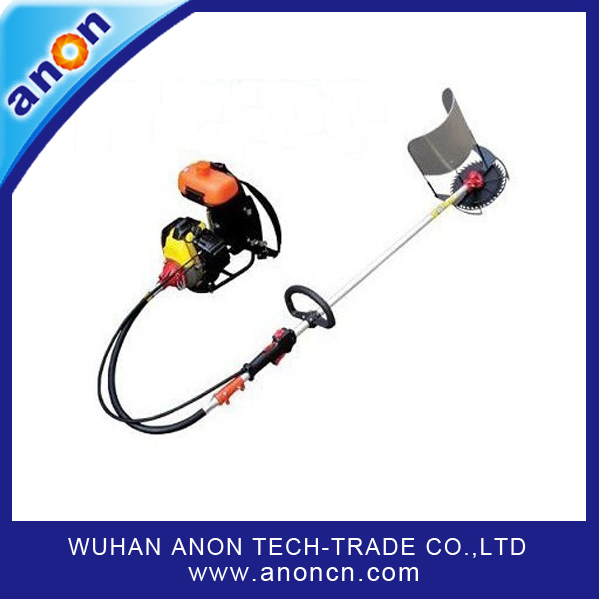
A rice weeder is an agricultural machine specifically designed for weeding rice paddies. It mainly consists of a power system, a transmission system, a weeding device, and a walking mechanism.
The power system provides power to the weeder; the transmission system transmits this power to the weeding device, which converts the power into mechanical energy to remove weeds from the rice rows; and the walking mechanism is responsible for the machine’s movement.
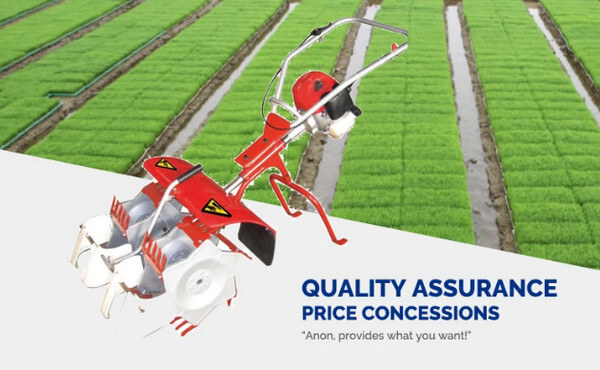
Rice weeders primarily use rotating blades, spring-loaded, or barbed wheels for weeding. During operation, the rotating blades loosen the top 2-5 cm of soil, uprooting weeds and effectively removing them. In addition, some high-end self-propelled rice weeders are equipped with devices such as lidar and cameras, which use intelligent algorithms to identify and remove weeds.
There are two main weeding methods for rice:
Rake weeding: A rake weeding machine uses a rake-like device to bury weeds in the soil, depriving them of the conditions necessary for growth.
Cutting weeding: A Cutting weeder uses a cutting device to cut the weeds, preventing further growth.
Types Of Rice Weeder
Rice weeding machines can be classified in several ways.
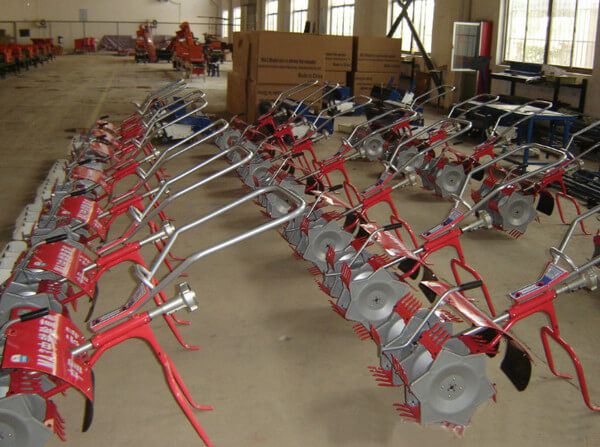
Based on operation, rice weeding machines can be divided into push-type and tractor-trailer types.
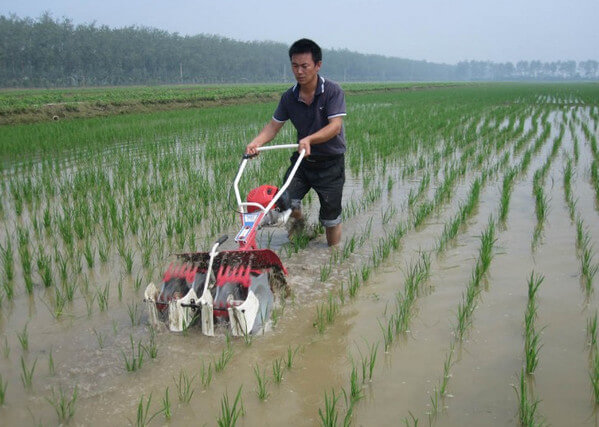
Push-type weeding machines are smaller and usually operated by one person.
Trailer-type weeding machines are larger and require a tractor to pull them.
Regardless of type, the working principle of weeding machines is to use mechanical force to remove weeds instead of manual labor.
Based on the different weeding devices, rice weeding machines can be divided into rake weeding machines, cutter weeding machines, and combined weeding machines.
Rake weeding machines are suitable for rice fields with short, dense weeds; cutter weeding machines are suitable for rice fields with tall, sparse weeds; combined weeding machines combine the advantages of rake and cutter weeding machines and are suitable for various types of rice fields.
What is the Function of a Rice Weeder
Physical Weeding
The core function of a rice weeding machine is, of course, weeding. It mechanically uproots, cuts, or buries weeds in the soil. Utilizing rotating blades, spring-loaded teeth, or comb-like teeth, it directly targets the weeds without the use of any chemical agents, making it ideal for organic rice growers.
Soil Improvement
During weeding in rice paddies, the blades or rakes of the rice weeding machine effectively break up the soil layer, introducing trace amounts of oxygen to the root zone, increasing soil aeration, stimulating rice root growth, and enhancing nutrient absorption. Simultaneously, for parched and cracked areas, the rice weeding machine can help repair the cracks, improving the paddy field’s water retention capacity. The rice weeding machine can also incorporate green manure crops or organic fertilizer into the soil surface, mixing them with the soil and accelerating their decomposition, releasing nutrients that can be absorbed by the rice.
Advantages of Rice Weeder
The advantages of using a rice weeder are numerous.
First, it saves time and manpower. Traditional manual weeding requires a large labor force and is time-consuming and labor-intensive. Agricultural weeding machines can automate the weeding process, reducing the burden on farmers and saving time and labor costs. Moreover, they are highly effective at removing weeds cleanly and efficiently while protecting the rice grains from damage. Rice weeding machines can operate in any weather conditions, while traditional weeding methods are unusable during rain.
Secondly, Weeds are competitors of rice growth, taking up water, nutrients, and sunlight resources. The rice weeder can effectively and promptly remove weeds, providing a better growing environment for rice and thus increasing yield.
Thirdly, using pesticides may have negative impacts on the environment and human health. Rice weeding machines can reduce reliance on pesticides, thereby reducing pesticide use.
And lastly, weeding machines operate mechanically and do not damage soil structure or the ecological environment. Compared to traditional farming methods, they are more protective of soil and ecosystem health.
What can help farmers?
The use of rice weeders can help farmers complete weeding work and improve rice yield and quality.
At the same time, it can also reduce labor input, pesticide use, production costs, and improve economic benefits.
In addition, the intelligent technology of agricultural weeders can also improve operating efficiency and accuracy, enable farmers to complete agricultural production more conveniently and quickly.
If your farmland needs such agricultural machinery and equipment, you can come to ANON to learn more about its products.
I believe we will provide you with a satisfactory solution.
FAQ
What’s the difference between a rotary tiller and a weeder?
In short, a tractor-mounted weeder is used to remove weeds from planted crops, while a rotary tiller is used to prepare the soil for sowing. Both machines can be attached to a tractor and are widely used in agricultural production to help farmers save time and increase efficiency.
What are the three methods of weed control?
Common weed control methods include manual weeding, the use of herbicides, and mechanical weeding. Timely weed control helps maintain better crop growth and quality.