



Introduction
Corn is one of the most widely grown food crops in the world and an important feed crop. As our living conditions improve, the demand for such crops has also greatly increased. So, for farmers, if they want to export and sell more corn crop products, more plants must be planted, which requires the use of agricultural machinery and equipment to complete the transportation. The harvest of corn is an important link in agricultural production. Traditional corn harvesting methods are inefficient and labor-intensive. Therefore, the emergence of the corn combine harvester has greatly improved the efficiency and quality of corn harvesting. If you don’t know much about this kind of harvester, don’t miss the product information shared by ANON below. We believe that our agricultural machinery and equipment can meet everyone’s farm needs.
What is a Corn Combine Harvester?
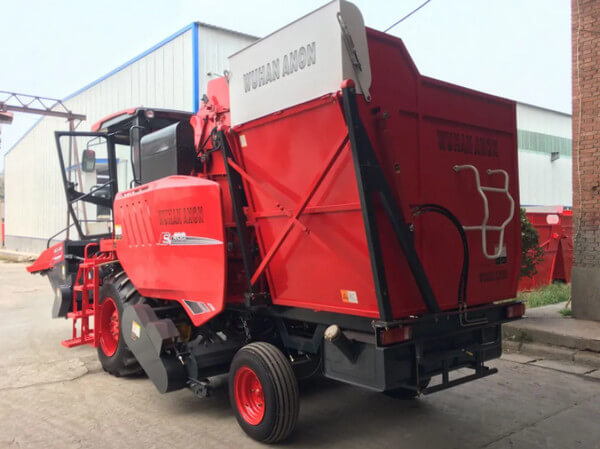
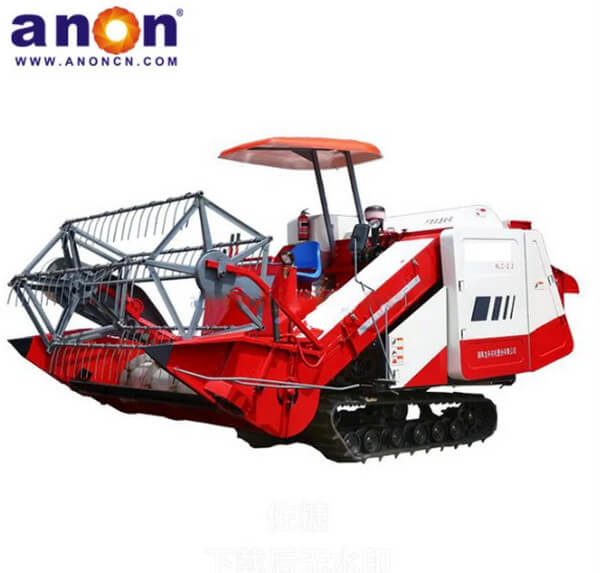
First of all, ANON needs to answer questions from farmers who are not familiar with this equipment. What exactly is a corn combine harvester, and also basic information about this equipment, and other questions. A corn combine harvester is an agricultural machine that integrates harvesting, ear picking, hulling, and straw crushing functions, significantly improving corn harvesting efficiency. Compared to traditional manual harvesting, corn harvesters have significant advantages such as speed, labor saving, and high yield. Therefore, if large-scale crop harvesting operations are required, using one or more agricultural machines is necessary, which will greatly save time and money.
Types of Corn Combine Harvester
Corn combine harvesters can be divided into corn kernel harvesters and corn cob harvesters. The difference lies in whether the final product is corn kernels or corn cobs. The corn kernel harvesters will have additional threshing and cleaning functions during operation.
It’s important to note that if you want to harvest corn kernels directly, there are certain requirements regarding the maturity of the corn; otherwise, it will result in significant losses. Corn cob harvesters have relatively more relaxed operating conditions, but the threshing process needs to be done separately after harvesting.
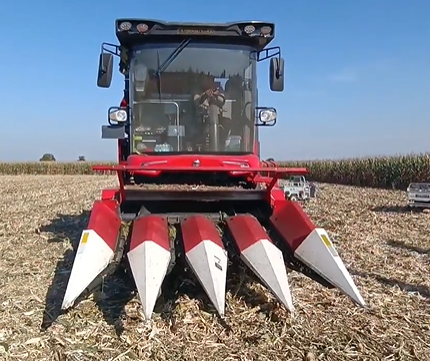
Main Components of a Corn Combine Harvester
Corn combine harvesters typically consist of the following core components:
Header: Located at the very front of the machine, it is responsible for “harvesting” corn plants from the field, including the row divider, ear picker (or stalk lifter), and the header chain.
Conveyor: Transport the harvested ear clusters to subsequent processing components, including elevators, augers, etc.
Shelling device: Removes the outer bracts from the fruit clusters, typically consisting of multiple sets of rotating shelling rollers.
Threshing device: Separates the corn kernels from the cob, including the threshing drum and concave plate.
Cleaning System: Removes impurities from grains, typically consisting of a vibrating screen and a fan.
Straw Processing Device: Crush and return corn straw to the field or recycle it.
Grain silo and unloading system: temporary storage of clean grains.
How does a Corn Combine Harvester Work
Next, let’s introduce in detail how the corn combine harvester completes the harvesting work.
While working, the combine drives slowly along the field. When the harvester encounters the mature corn cobs, the device at the front end will cut off the corn cobs. A conveyor belt transports the cut cobs along with the leaves into the machine. In this part, the high-speed rotating grinding device will knock the corn kernels off the cob core and separate them. The shelled corn kernels will enter the grain storage tank through the conveying pipe. The leaves, cores, etc., are discharged through the port.

The working process of the corn combine harvester can be divided into the following steps:
Step 1 Cutting
First, when you drive the corn combine harvester into the field, the divider will guide the corn to the roller and then to the straw chain, which will push the corn stalks to the cutter.
Step 2 Corn Cob Picking
The corn will then enter the ear-picking rollers. A pair of ear-picking rollers will move relative to each other in opposite directions, pulling the corn stalks downwards. The corn will be picked off because it is too large and cannot be flattened, and the corn stalks will be chopped up by the rotating blades under the ear-picking rollers.
Step 3 Conveying
The separated corn husks are conveyed to the first elevator via a screw conveyor, while the corn ears are conveyed to the top and slide down to the hulling device.
Step 4 Peeling
The separated corn husks are transported to the first elevator through the screw, and the ears are transported to the upper part and slide down to the husk peeling device.
The husk peeling device consists of several pairs of husk peeling rollers and impeller-type press conveyors. The husk peeling rollers turn inward, bite and tear the husk of the corn, and the husk is discharged out of the machine.
Step 5 Threshing
The corn cobs, with their husks removed, are lifted to a second-stage elevator and enter the threshing unit. This unit consists of a threshing drum with blade grooves and a metal concave screen. After entering the gap between the drum and the concave screen, the corn kernels are repeatedly rubbed and struck by the drum’s grooved blades, causing them to detach from the cob and fall through the concave screen, while larger cobs are discharged from the machine.
Step 6 Cleaning
The corn kernels pass through the grille and enter the vibrating screen. The vibration removes large impurities, while the airflow generated by a fan blows out light impurities from the kernels.
Step 7 Grain Collection
The cleaned corn kernels fall into a grain bin or are conveyed by a screw conveyor to an accompanying transport vehicle.
Step 8 Straw Processing
The straw is generally crushed and returned to the field. Some machines that can harvest both stalks and ears can chop the straw and recycle it as silage.
How We Use a Corn Combine Harvester
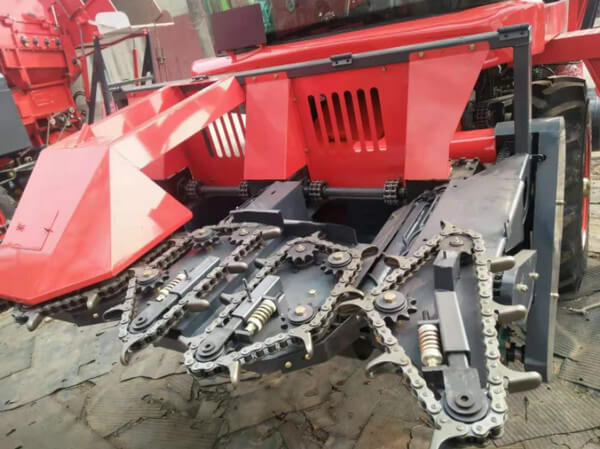
After we purchase the harvester equipment, how do farmers harvest corn with a corn combine harvester? How do they operate it?
Before using a combine harvester, farmers first need to ensure that the harvester is in good condition, and carry out necessary maintenance and upkeep of machinery and equipment.
Harvesting corn with a combine harvester requires certain operating skills. Here are the general steps:
(1) Preparation: Check whether all components of the combine harvester are operating normally, and make sure you add enough fuel and lubricant.
(2) Adjust the height of the tool: Adjust the height of the harvesting knife to ensure the best cut according to the growth of corn.
(3) Start the engine: Start the combine harvester engine according to the instructions in the operation manual. And adjust the engine speed to achieve the appropriate working conditions.
(4) Start harvesting: Move the combine harvester close to the corn field, advance slowly, and maintain a certain traveling speed. At the same time, observe the cutting effect to ensure that the corn cob can be completely cut.
(5) Clean up in time: During the harvesting process, clean up blocked corn cobs or weeds and other substances in time to ensure the normal operation of the combine harvester.
(6) End harvesting: Stopping the work of the combine harvester when the field is completed. Thoroughly clean and maintain the equipment for next use.
What are the Benefits of a Corn Combine Harvester
Increased Efficiency
The corn combine can harvest a large amount of corn in a short time, saving labor and resources compared to manual work. Besides harvesting, the corn combine also completes tasks like threshing, separating stalks, and removing debris all at once, greatly improving efficiency.
Improved Yield and Quality
Compared to traditional corn harvesting methods, the corn combine is more precise, reducing losses during the harvest. It completes multiple tasks in one step, minimizing the loss and waste of corn kernels and stalks.
Sustainability
The corn combine also has a stalk processing device that can chop the stalks and return them to the field. This helps improve soil structure and increase soil fertility, supporting sustainable agriculture.
Reduce Costs
Using a corn combine harvester can help you save a lot of labor costs. It can automate the harvesting process and reduce the need for physical labor. Long-term use can significantly reduce harvesting costs.
Summarize
A corn combine harvester is an important tool in modern production. It greatly improves the efficiency and quality of corn through efficient and convenient working methods. Farmers need to master correct operating skills when using combine harvesters. To ensure the smooth operation of the equipment, I hope this article will help you understand the working principle and operation method of the combine harvester. Of course, if you have any questions about our agricultural harvester equipment, you can leave a message online to inquire about product details. We believe that ANON will provide satisfactory solutions to all farmer friends.
FAQ
1. What is the difference between a corn picker and a combine?
A corn picker is an agricultural machine that harvests corn by leaving the whole ear intact rather than shelling the kernels off like a conventional combine.
2. What is the price of a corn combine harvester?
The price of the new harvester ranges from $100000 to $500000. The cost of a second-hand combine harvester is lower, but you need to ensure that you receive the same high quality. You can typically expect to pay around $100000 to $150000 for a used combine harvester, but the exact price will depend on the size, brand, model, and age of the device.
3. How much corn can a combine harvester harvest in a day?
Do you want to know how many acres of corn can be harvested per hour by a combine harvester? According to newer models, even on hot and dry days, combine harvesters can cover up to 200 acres of land. A combine harvester occupies an average of 150 acres per day.