



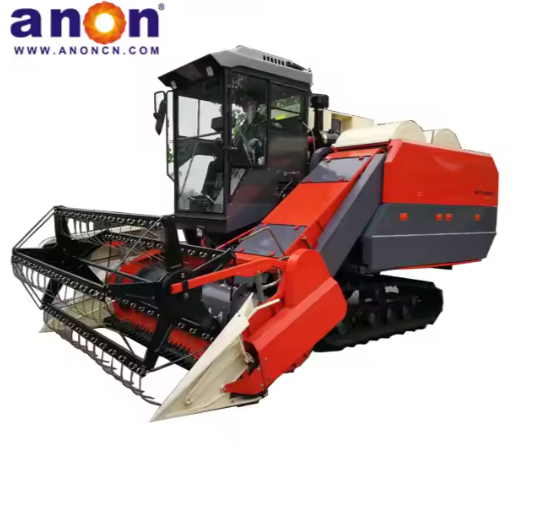
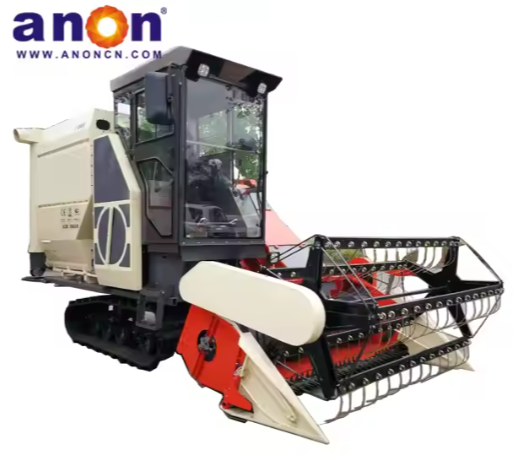
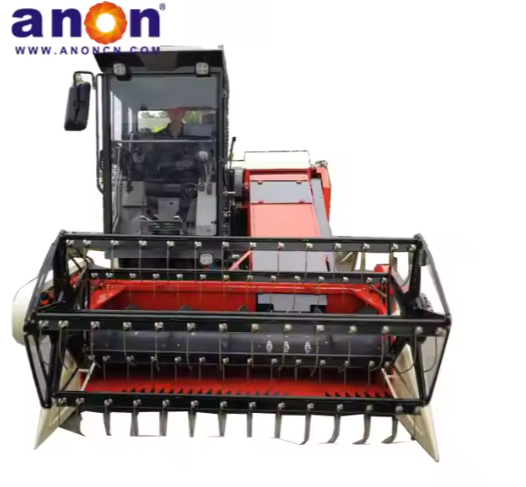
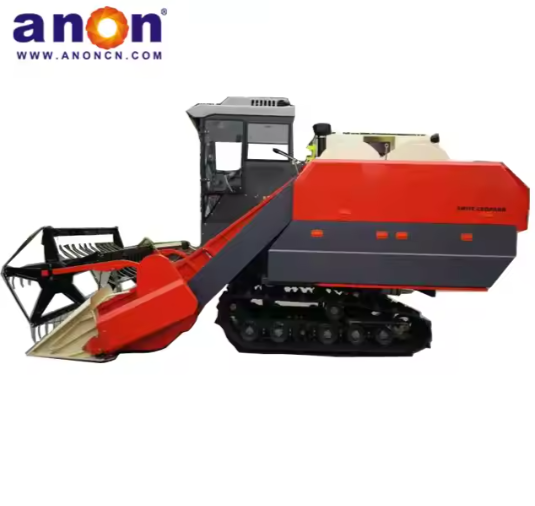
ANON Crawler Harvester
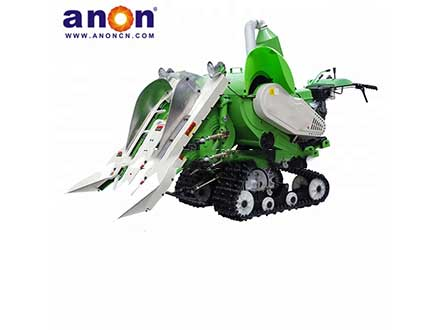
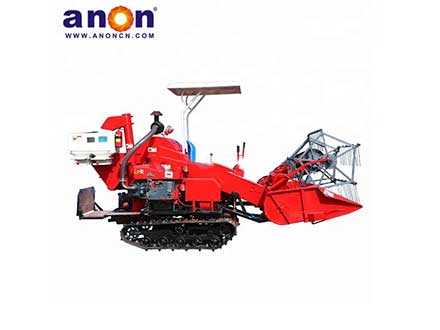
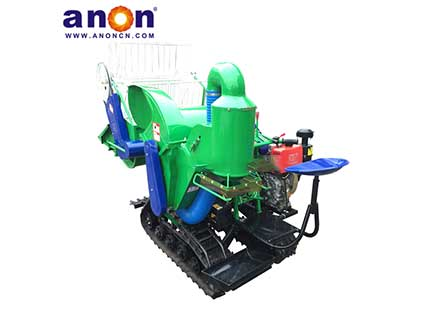
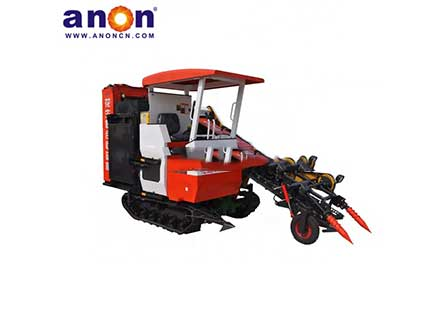
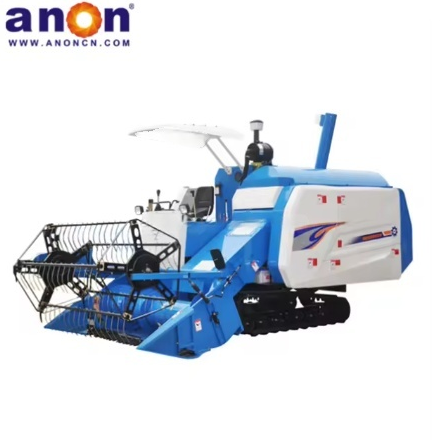
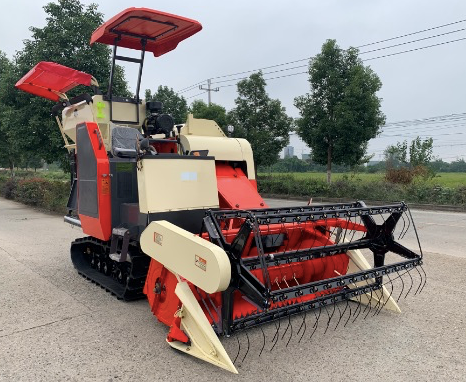
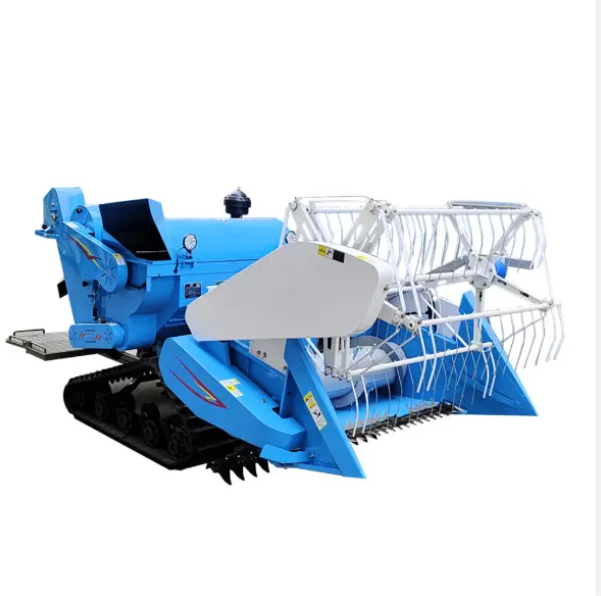
ANON crawler harvester is an agricultural machine designed specifically for field operations. With the unique advantages of its crawler walking device, it performs excellently in complex terrains such as mud, hills, and mountains.
Main structure:
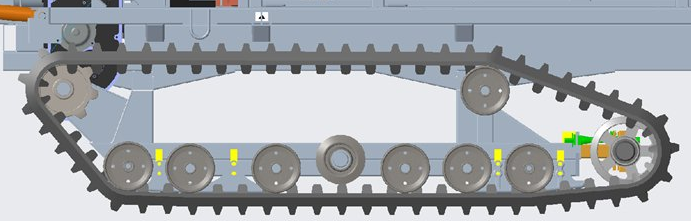
1. Walking system: including tracks, drive wheels, and tension wheels, providing strong traction. Track width can be selected according to needs, and wide tracks are more suitable for muddy terrain.
2. Harvesting system: The harvester is responsible for cutting crops and transporting them to the machine body, with cutting widths ranging from small 1.5 meters to large 4 meters, suitable for different plot widths.
3. Threshing and cleaning system: The grains and straw are separated by high-speed rotation of the drum, and then cleaned by the fan and screen to remove impurities. The pure grains enter the grain tank.
4. Straw processing system: Straw can be crushed and returned to the field to increase soil fertility or spread as a whole, making it easy to recycle and meet different environmental and resource needs.






Our Products
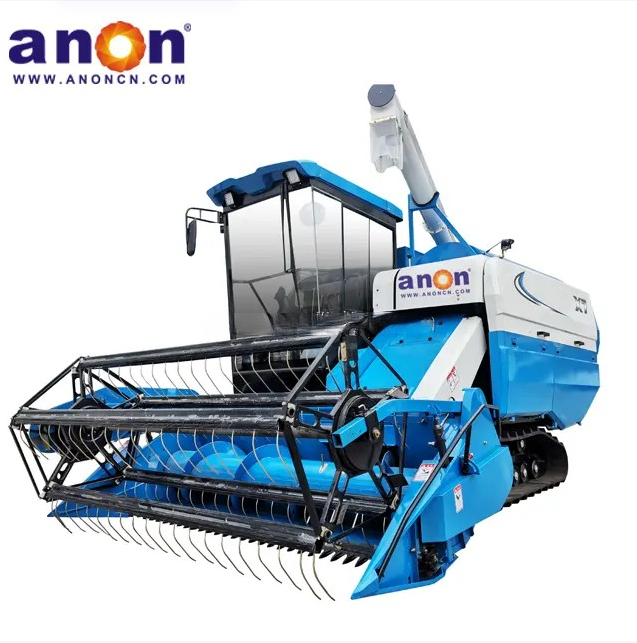
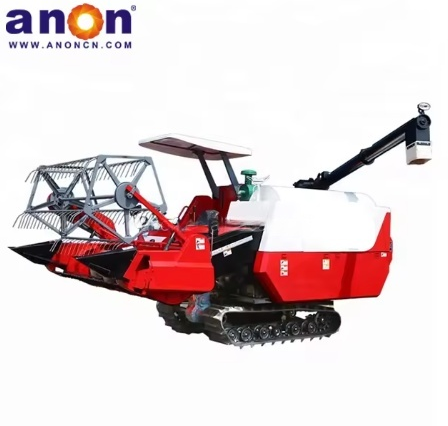
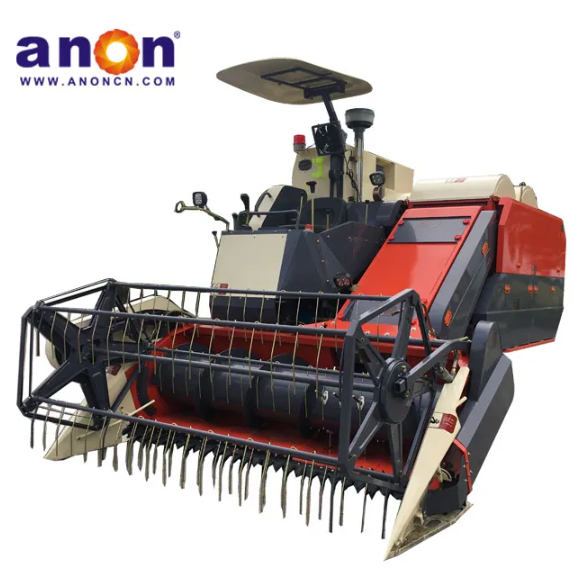
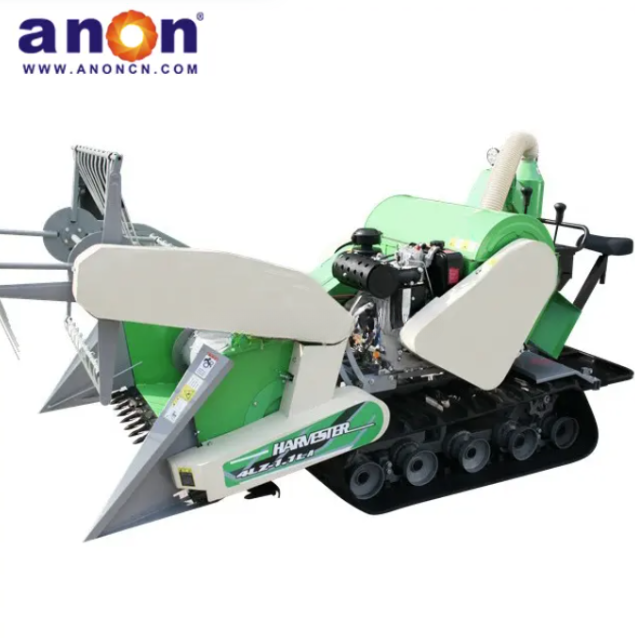
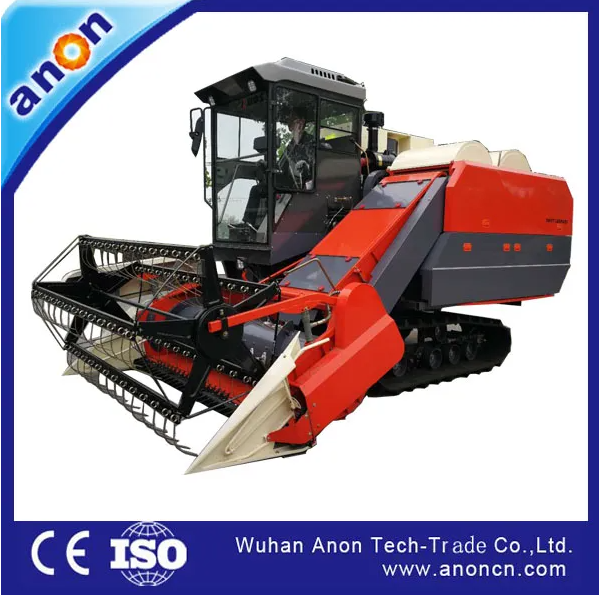
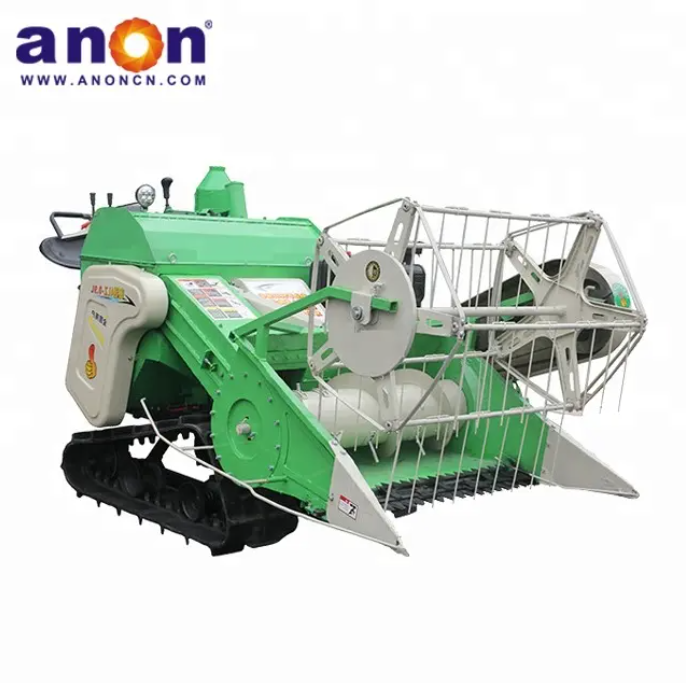
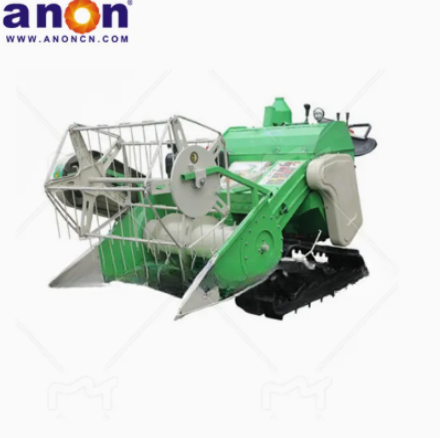
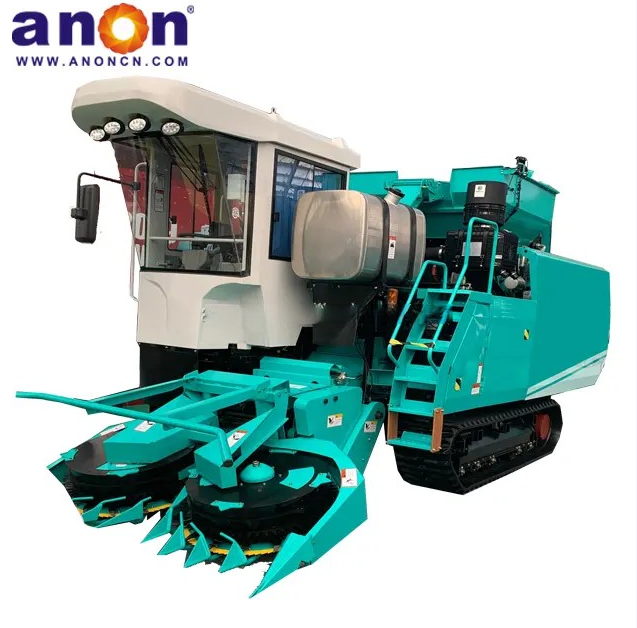
High Terrain Adaptability
ANON crawler harvesters are a reliable choice for large-scale planting in complex environments. Their unique tracked system provides a larger ground contact area compared to wheeled systems, effectively reducing ground pressure. Even in muddy or wet terrain, they can travel smoothly, avoiding getting stuck and preventing harvesting delays due to terrain limitations. The anti-slip tread pattern on the tracks further enhances grip, maintaining machine stability even on slopes and preventing tipping. This strong stability ensures a smooth and safe harvesting process.
Compact Structure
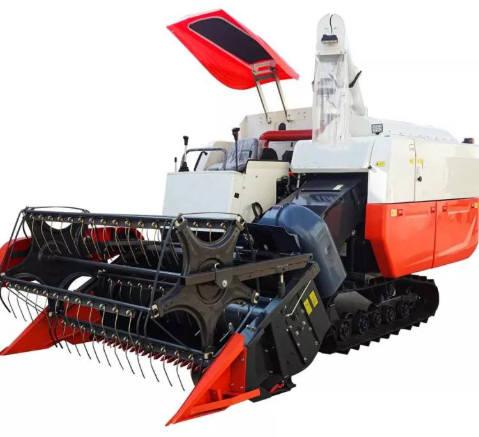
ANON crawler harvesters feature a compact overall structure and a small turning radius, allowing for agile maneuvering in terraced fields and small, irregularly shaped plots. Some models are equipped with a turn-on-the-spot function, enabling flexible maneuvering in narrow fields and requiring minimal space for turning around, significantly improving harvesting efficiency and completely solving the problem of traditional harvesters being unable to turn around. The compact body and low center of gravity design, combined with the excellent traction of the tracks, ensure high stability when operating on slopes, making it an ideal choice for small-scale planting areas such as mountainous regions and terraced fields.
Integrated Harvesting
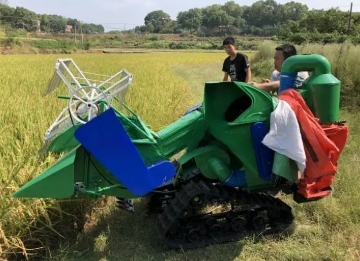
The ANON crawler harvester integrates harvesting, conveying, threshing, cleaning, and straw processing into one unit. During operation, it completes crop harvesting, threshing, and cleaning in a single pass, directly producing clean grains. The header width can be adjusted according to crop row spacing, adapting to various crops such as wheat, rice, and rapeseed. The cleaning system is equipped with a blower and a dual cleaning structure with screens, achieving a grain cleanliness of over 98%, reducing the need for subsequent manual screening. Straw return to the field, crushing, or baling functions are optional to meet different straw processing needs.
Multi-functional Machine
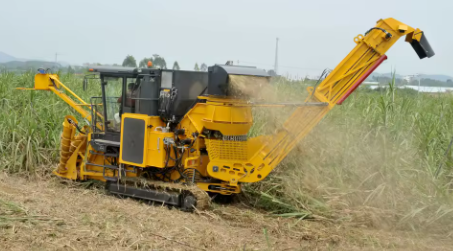
ANON’s crawler grain combine harvesters can harvest various crops such as rice, wheat, rapeseed, and soybeans by quickly changing different headers. We also have machines for special crops, such as peanut harvesters, sugarcane harvester and so on. You can choose the appropriate machine according to your needs. The straw processing function allows you to choose between returning straw to the field, crushing, or baling. Returning straw to the field improves soil fertility, while crushing and baling can be used as animal feed or biomass raw materials. During the harvest season, a trailer can be added for field material transportation, improving equipment utilization.
Advantages
Related Products
FAQ
Brand and model. Top brands and models of harvesters are usually more expensive. Some high-end manufacturers will cost more than lesser-known brands. Each manufacturer has different models with standard features and optional features that can increase the cost.
It might have 4,000-5,000 hours of engine operation and 2,500-3,000 hours of separator operation or even more. The depreciation of a machine slows down over time. Typically, after 17-20 years of use, its value drops to 10-20% of what it was when it was new.
The problem with used combines and all used equipment is that prices for new equipment have skyrocketed over the past three years. The supply of used equipment at dealerships has outstripped demand, and it looks like it will remain that way for the foreseeable future. These factors have impacted the overall performance of auction values, causing them to decline in value.
1. Equipment Inspection: Check if the track tension is too loose or too tight, and adjust it to the normal state. Check the condition of the header blades and the tension of the conveyor chain. Test the threshing drum and cleaning fan to ensure they are operating normally and without abnormal noise.
2. Parameter Adjustment: Adjust the header height according to the crop height. A stubble height of 10-15 cm is recommended for rice, and 5-10 cm for wheat. Adjust the cleaning fan speed according to the crop moisture content; reduce the speed when the crop has excessive moisture to prevent grains from being blown out.
3. Field Clearing: Remove stones, tree stumps, and other hard objects from the field to prevent damage to the header and tracks. Mark the positions of ridges and ditches to avoid collisions during operation.
4. Trial Cutting and Calibration: Conduct a small-area trial cut first to check the grain loss rate and cleaning effect. Large-scale operation should only proceed after confirming there are no problems.
When purchasing a crawler harvester, in addition to brand and after-sales service, you should pay attention to four core parameters and configurations: First, the track specifications (width and ground contact length) directly determine the ground contact pressure and passability; wide tracks must be selected for wet and rotten fields. Second, the engine power must match the working width of the header to ensure efficient and powerful operation. Third, the threshing and cleaning system (drum type, cleaning screen area, and blower air volume) is the core to ensure grain cleanliness and control loss rate. Finally, key functions such as a hydraulic continuously variable transmission, a comfortable cab, and one-button header lifting significantly improve the convenience of operation and the overall working experience.
When a crawler harvester experiences severe track slippage or is unable to move forward, address the specific cause as follows: First, stop the machine and check the track condition. If the tracks are too loose, adjust the tension immediately. If the tracks are severely worn, replace them. Simultaneously, reduce the operating speed and choose harder terrain for operation, avoiding areas with deep mud. If the harvester is already stuck, place planks, straw, or other materials under the tracks to increase friction, then slowly drive it out.