



Introduction
Learn how much it costs to build a rice mill plant. This complete guide covers equipment prices, construction costs, power requirements, and other investments for small, medium, and large-scale rice milling projects.
Rice Mill Machine Price Overview
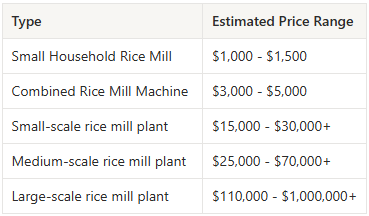
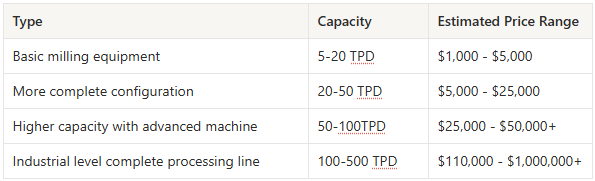
Here is a price range table for a quick cost overview
How Much Does Building a Rice Mill Plant Cost?
The above price range gives you an idea of how much a complete set of machines will cost depending on the factory size.
However, the overall expenditure of establishing a rice mill plant covers much more than just the machines.
Here is a breakdown of the fixed costs you should consider when budgeting.
Rice Milling Machine: This is usually the largest part of the investment, accounting for around 40–60% of the total expenditure, depending on the capacity level you choose.
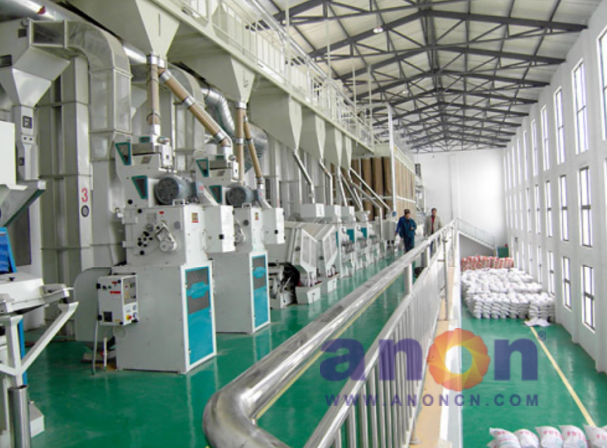
Civil Construction & Construction Costs: This is another major part of your investment. You will need to budget for:
- A factory building.
- A strong foundation that can withstand high-speed vibration during long-term operation.
- Equipment pits required for certain machines, conveyors, and bucket elevators.
For larger rice processing plants, you may also need to consider high-strength steel structures for multi-level platforms.
Warehouse: A warehouse is required for storing raw paddy in a dry environment with moisture protection, as well as storing finished rice bags with convenient loading access.
Power System Setup: The expenditure depends on the type of power system you choose, including conventional electricity systems, diesel generators, solar energy systems, and biomass boiler systems.
What Factors Affect Rice Mill Machine Price?
So, how much should you invest in each part to get the most value from your investment? This can be difficult to figure out when considering too many factors. Let me simplify the decision-making process for you.
The construction and warehouse building costs largely depend on local rental prices, construction material costs, and labor costs. These factors are usually beyond your control as a rice mill business owner.
Therefore, the key consideration is the rice mill machine cost. This section introduces the four most important factors that directly affect machinery costs. Hopefully, after reading this section, you will have a clearer idea of how much you should invest in each part.
The four important factors you should consider before choosing the right machines for your business are:
- Capacity
- Automation Level
- Equipment Configuration
- Power Supply
1. Capacity
Capacity is the most important factor that directly determines the price of your rice milling machines.
As you increase the processing capacity, not only does the size or quantity of machines change, but a more complex material handling system is also required to smoothly convey larger volumes of paddy between different processing stages.
Below is an estimated price range of complete rice milling equipment based on different capacity levels.
2. Automation Level
Another factor that determines how much you need to invest is the automation level.
Undoubtedly, a higher automation level requires a higher initial investment. However, the key question is what additional value automation brings and whether it matches your business requirements.
In simple terms, a higher automation level reduces your dependency on manual labor.
For example, advanced automation can include:
- Automatic feeding
- Automatic adjustment
- Automatic conveying
- Quality control systems, such as moisture monitoring, rice flow control, color sorting, size sorting, and grading
3. Equipment Configuration
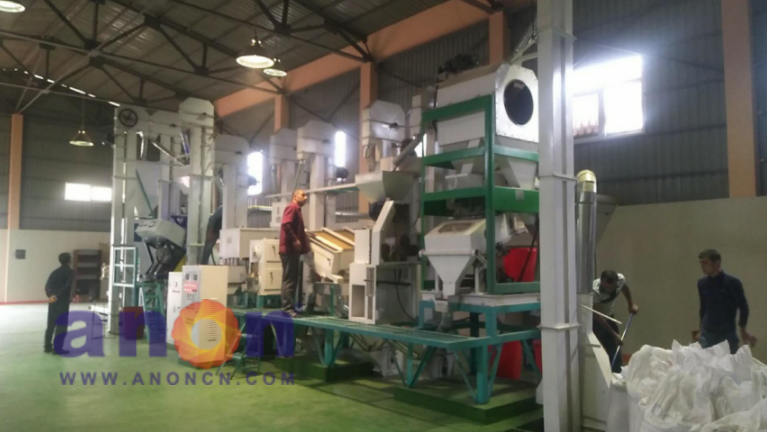
Equipment configuration is a factor that many investors tend to overlook.
A basic configuration focusing on essential milling machines is usually enough for small or household rice mills.
For larger rice processing factories, additional equipment such as paddy cleaning systems, rice polishers, and graders can significantly improve rice quality and increase the final product value.
For producing high-standard export-quality rice, advanced equipment such as color sorters and automatic packing machines are essential.
4. Power Supply
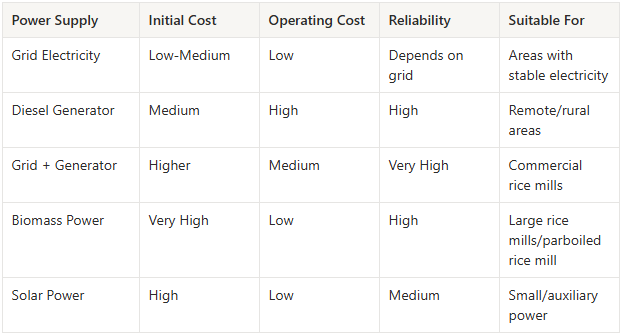
A rice mill plant usually has 5 power supply options:
- Grid Electricity: A conventional solution with easy operation and low operating costs.
- Diesel Generator: A flexible rice mill diesel engine option that allows operation without relying on an unstable power supply.
- Grid Electricity with Diesel Backup: A hybrid solution that provides a balance between reliability and operating costs.
- Biomass Power: Uses rice husk and straw as energy sources, making it especially suitable for large rice mills and parboiled rice processing plants.
- Solar Power System: Stores and converts solar energy to provide electricity for rice milling machines.
Below is a summary chart for comparison:
Rice Mill Machine Configuration: What Equipment Do You Need?
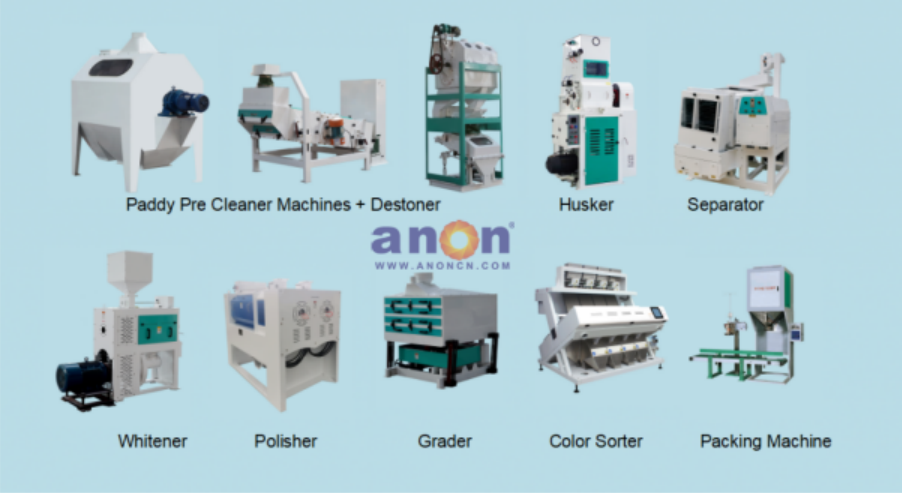
The complete rice milling process is listed below. The essential machines required for a basic rice milling line are highlighted in bold.
Paddy Unloading System: Receiving and unloading paddy into the raw paddy feeding area.
Paddy Cleaner Machine: Removing straw, weeds, and other impurities from raw paddy before processing.
Rice Destoner Machine: Removing stones and other heavy impurities from the raw paddy.
Paddy Husking Machine / Rice Huller: Removing the outer rice husk from paddy to produce brown rice.
Paddy Separator: Separating unhusked paddy from brown rice to improve milling efficiency.
Rice Whitener Machine: Removing the bran layer from brown rice to produce white rice.
Rice Polishing Machine: Improving the appearance of rice and increasing its market value.
Rice Grader: Separating head rice, medium rice, small rice, and broken rice according to size.
Rice Color Sorter: Removing discolored, defective, and low-quality rice grains.
Packing Machine: Filling and sealing a consistent amount of rice into retail bags to improve storage and market readiness.
How to Choose the Right Rice Mill Machine?
Choose the right rice mill machine based on the following steps.
1. Determine Your Capacity Requirements
The required processing capacity is the first factor to consider when selecting a rice mill machine.
- Small Combine rice mill business: 5-30 TPD
- Medium Rice Mill: 40-60TPD
- Commercial rice mill: 40-100 TPD
- Large industrial rice mill factory: 100-500+ TPD
Choose a suitable capacity based on your expected production volume, available raw materials, and business development plan.
2. Choose Based on Your Rice Quality Requirements
Different rice quality requirements require different equipment configurations.
Regular rice production:
Focus on processing efficiency and lower initial investment. A basic configuration is usually sufficient.
High-standard export-quality rice:
Consider adding equipment such as a rice polisher or color sorter to improve rice appearance, quality, and market value.
Rice Mill Machine Investment: Cost vs Long-Term Value
Investing in a rice milling machine is not only about the initial purchase cost but also about long-term production value. A reliable rice milling machine can improve milling efficiency, enhance rice quality, reduce operating costs, and support stable business growth over time.
Choosing a Reliable Rice Mill Machine Supplier
A reliable rice mill machine supplier can help you build your rice milling plant and support your long-term business growth.
1. Check the Supplier’s Rice Milling Experience
A supplier with longer experience in the market can better understand different customers’ requirements and provide more suitable solutions for different rice milling projects.
2. Choose a Supplier That Provides Solutions, Not Just Machinery
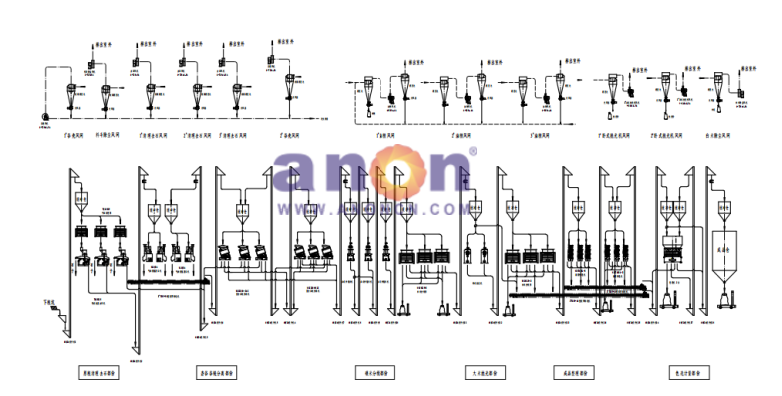
A reliable supplier should help you build your rice mill plant by providing:
- Project design
- Equipment configuration guidance
- Customization options
- Equipment supply
- Installation support
- Maintenance support
3. Customization Options
A reliable supplier should provide customization options to meet your specific production requirements, including capacity, rice quality requirements, local power conditions, and budget.
4. Machine Quality
A professional rice mill machine manufacturer should provide durable equipment with stable performance, high rice yield, and a low broken rice rate.
5. After-Sales Service
For overseas equipment purchases, after-sales service is a critical factor. Spare parts supply and remote technical assistance should be provided with timely responses to ensure continuous operation of the rice mill plant.
Get Your Customized Rice Milling Solution
ANON provides customized rice processing plant solutions from individual machines to complete rice milling plants. Based on your capacity, rice quality requirements, power conditions, and budget, we can help you select the right equipment configuration for your project.
Contact ANON for a suitable rice mill plant solution and quotation.