



Introduction
A threshing machine is agricultural equipment used to separate grain or seeds from harvested crops such as wheat, rice, corn, and other grains. It uses high-speed rotating drum and a fixed concave screen to detach the grain from the stalk, ear, or pod, and some machines also perform cleaning and separation after threshing.
In simple terms, a thresher removes the edible grain from the harvested plant material, reducing the manual labor required for post-harvest processing.
In this guide, we explain what a threshing machine is, what a thresher does, how a threshing machine works, the main types of threshers, and what to consider when choosing one.
Threshing Machine at a Glance – Quick Answer
| Question | Answer |
|---|---|
| What is a thresher? | A machine that separates grain from harvested crop material. |
| What does it do? | It removes grain, seeds, or kernels from stalks, ears, pods, or other plant material. |
| What crops can it process? | Depending on the model, rice, wheat, corn, peanuts, beans and other crops. |
| How does it work? | Mechanical threshing separates grain, followed by sieving or air cleaning in some machines. |
| Is it a harvester? | A standalone thresher usually performs threshing after harvesting rather than harvesting the crop itself. |
What is a Threshing Machine?
A threshing machine is a farm machine designed to separate edible grain or seeds from the harvested plant. The process is called threshing.
After a crop is harvested, the grain usually remains attached to stalks, ears, heads, or pods. A threshing machine processes the harvested material mechanically so that the grain can be separated from the rest of the plant.
A typical threshing system may include several basic processes:
- Feeding: Harvested crop material enters the machine.
- Threshing: A rotating drum or other threshing mechanism separates grain from the plant.
- Separation: Grain is separated from straw, husks, or other crop residues.
- Cleaning: Airflow, sieves, or other mechanisms remove remaining light impurities.
The exact structure depends on the crop and type of thresher being used.
What is a thresher?
A thresher is another common name for a threshing machine. In agricultural use, the two terms generally refer to equipment used to separate grain from harvested crops.
For example, a rice thresher separates rice grains from harvested rice plants, while a wheat thresher separates wheat kernels from wheat heads and straw.
The terms thresher machine, threshing machine, and agricultural thresher may therefore be used to describe similar types of farm equipment.
What Does a Threshing Machine Do?
The main function of a threshing machine is to separate grain from the harvested crop material.
For example, after harvesting rice, the grains remain attached to the panicles. A rice threshing machine applies mechanical force to detach the grains from the plant. The machine then separates the grain from straw and other residues.
The same basic principle can be applied to different crops, although the machine structure and operating parameters may vary.
A thresher can help farmers and agricultural processors:
- Reduce the amount of manual threshing work
- Process harvested crops more efficiently
- Separate grain from stalks and other plant material
- Handle larger quantities of harvested crops
- Improve the consistency of the threshing process
The actual performance depends on crop variety, moisture content, feeding rate, machine configuration, and operating conditions.
How Does a Threshing Machine Work?
The working principle of a threshing machine is based on applying mechanical force to harvested crop material so that the grain is released from the plant.
Although different threshers use different mechanisms, the process generally follows four stages.
1. Feeding
The harvested crop is fed into the threshing machine.
For a stable operation, the crop should be fed at a suitable and relatively consistent rate. Excessive feeding can overload the threshing system, while insufficient feeding may reduce machine productivity.
2. Threshing
The crop enters the threshing chamber, where a rotating drum, cylinder, rotor, or another mechanism applies mechanical force.
Depending on the machine design, threshing may involve:
- Beating
- Rubbing
- Stripping
- Impact
- Friction between the crop and machine components
For example, some threshing systems release grain primarily through rubbing action, while other designs rely more heavily on impact or beating.
The objective is the same: detach the grain from the harvested plant without causing unnecessary grain damage.
3. Separation
After threshing, the material contains a mixture of grain, straw, husks, and other crop residues.
The threshing machine then separates the heavier grain from larger or lighter plant material. This may be achieved through a combination of mechanical separation, sieving, and airflow.
4. Cleaning
In machines equipped with a cleaning system, airflow and screens help remove remaining light impurities.
The final output is cleaner grain that can be sent for further processing, storage, or other post-harvest operations.
What Crops Can a Thresher Process?
The crops that a thresher can process depend on its design. Common examples include:
- Rice
- Wheat
- Corn
- Barley
- Sorghum
- Beans
- Peanuts
- Other grain or seed crops
A machine designed specifically for one crop may provide different performance from a multi-crop machine. Therefore, you should confirm that the machine is suitable for their crop before purchasing.
Types of Thresher
There are different types of threshers because crops have different physical characteristics and threshing requirements.
Rice and Wheat Thresher
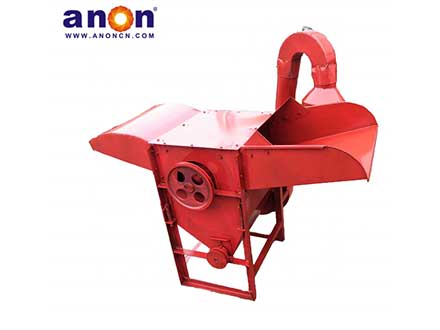
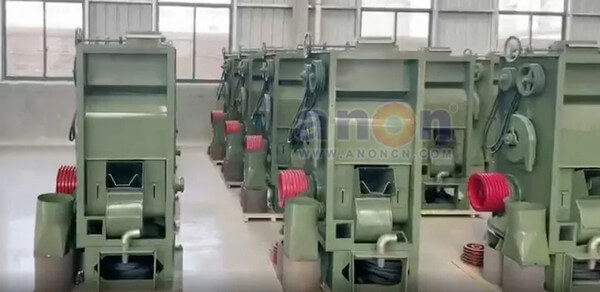
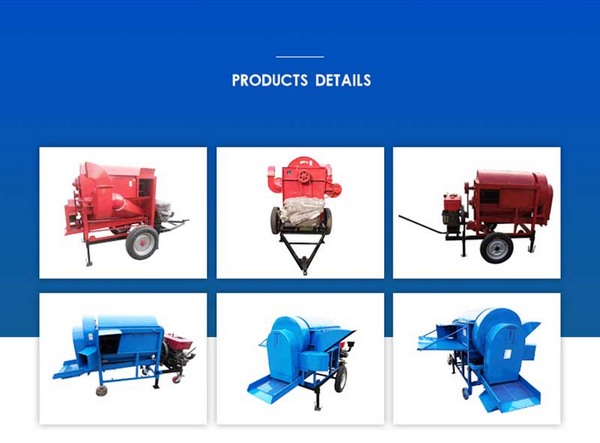
The main parts of a rice and wheat thresher include the feeding platform, frame, concave screen, drum, straw discharge opening, machine cover, main fan, engine, vibrating screen, grain outlet, and towing guide system.
When using a rice and wheat thresher, you place the grain onto the feeding platform, and it enters the threshing chamber. The V-belt drives the drum, causing it to spin at high speed. It works with the concave screen to rub and press the grain, separating the seeds from the straw.
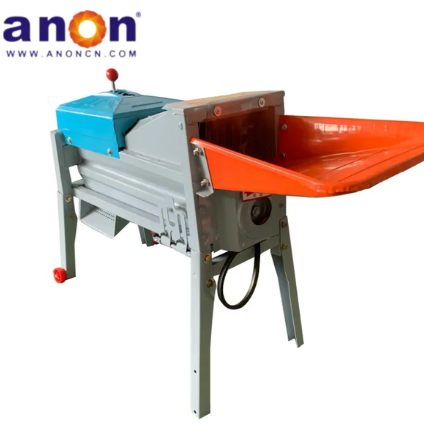
Corn Thresher
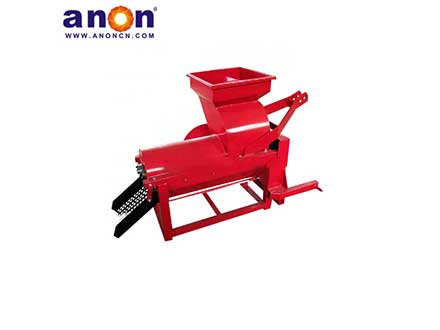
The main parts of a corn thresher include the frame, feed inlet, threshing device, concave screen, vibrating screen, engine, corn kernel outlet, corn cob outlet, and fan.
When the corn thresher is working, you need to feed the corn cobs into the machine’s upper inlet. The cobs then fall into the threshing chamber due to gravity. The threshing mechanism consists of three metal rollers, each with a spiral beater, all connected by a central shaft. When the main shaft turns, it drives the rollers. The corn is then threshed by the friction and impact from the rollers, spiral beaters, and concave screens, causing the kernels to fall off the cob.
The kernels drop through the concave screen at the bottom of the threshing mechanism, while the fan blows any remaining impurities on the screen out through the cleaning outlet. Below the concave screen, there are two vibrating sieves: the top one has larger holes to separate the corn kernels, and the bottom one has finer holes to filter out dust. The fan blows the kernels out through the grain outlet, while the remaining corn cobs are expelled from the back of the threshing chamber.
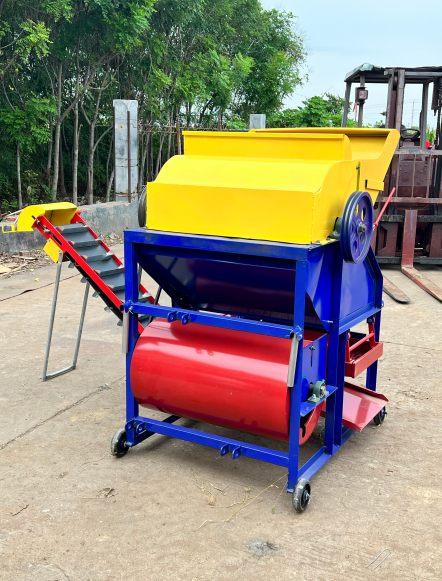
Peanut Thresher
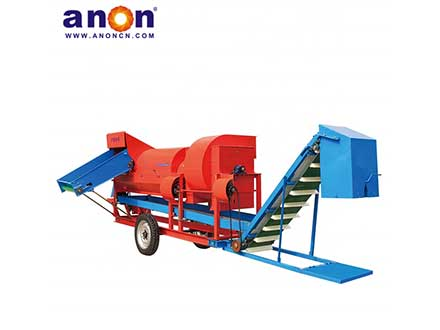
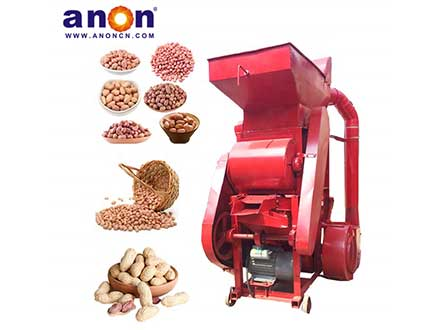
A peanut thresher, also called a peanut picker, consists of the frame, feed inlet, engine, transmission system, drum picking rods, concave holes, fan cleaning system, vibrating screen, and elevator.
During operation, feed the peanuts with vines into the peanut thresher through the feed inlet. Inside the threshing chamber, a drum with several picking rods spins at high speed, driven by the engine. The peanuts are separated from the vines through brushing and striking. The separated peanuts fall through the concave screen onto a vibrating screen. The fan blows away the weeds and leaves, while the peanuts drop onto the elevator. The machine then carries the peanuts to the top, and they fall into a bag that collects them. It discharges the peanut vines from the outlet.
Multi-crop Thresher
A multi-crop thresher is a modern agricultural machine capable of processing various grains such as wheat, rice, corn, beans, and sorghum, and can switch between different crops without complex modifications. It offers versatility, helping farmers reduce equipment purchase costs and increase utilization rates.
What Is the Difference Between a Threshing Machine and a Combine Harvester?
A threshing machine and a combine harvester can both be involved in grain harvesting, but they are designed for different levels of the harvesting process.
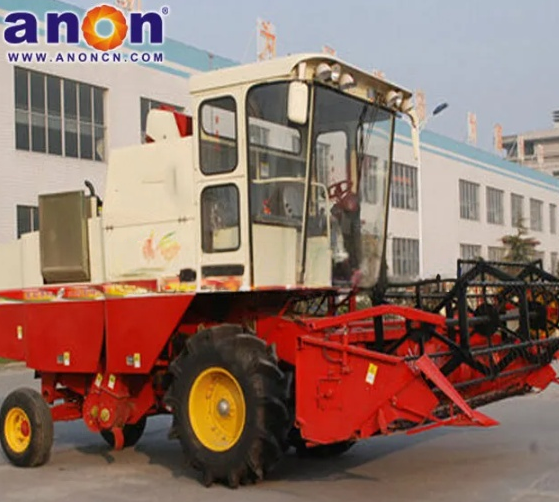
A combine harvester combines several harvesting operations in one machine. It can typically cut or collect the crop, thresh it, separate the grain, and clean the harvested grain during field operation.
A threshing machine mainly focuses on separating grain from harvested crop material. Depending on the machine, it may also perform separation and cleaning. A thresher is used after havesting, it is more flexible and low investment burden to farmers.
For example, a corn combine harvester can harvest, peel, thresh, separate, and collect corn in a single operation. A corn threshing machine, however, requires workers to feed harvested ears of corn into the machine, where the kernels are separated from the cobs.
The Advantages of Thresher
High Cleaning Ability
Whether you use a rice and wheat thresher, corn thresher, or peanut thresher, all of them come equipped with an air cleaning system. This system helps remove impurities mixed with the seeds and fruits as they separate from the stalks. The vibrating screen and airflow work together to ensure you get clean seeds and fruits.
Reduce Harvest Losses
Compared to traditional manual threshing methods, using a thresher can significantly reduce your harvest losses. Its rationally designed threshing drum and wind screen system achieves a high grain removal rate, minimizing residual grain. Optimized friction and impact intensity also effectively minimize grain breakage, ensuring grain integrity and quality. This high threshing rate(>99%) and low breakage rate reduce your harvest losses.
Labor-saving
A thresher can quickly process large amounts of crops, and all you need to do is feed the crops into the machine without much effort. The threshing speed is much higher than doing it by hand. For example, the 80-type rice and wheat thresher can handle 700kg to 800kg of grain per hour. The extended version of the corn thresher can process 1,300kg to 1,800kg per hour. In the same amount of time, the thresher can do the work of dozens of people.
Affordable Prices
Threshers come in a range of sizes, from small to large, and can meet your threshing needs, whether it’s for a few acres or several hundred acres. Since threshers have simple designs, they usually don’t require a high initial investment. For most households, purchasing a small or medium-sized thresher is usually enough.
User-Friendly Design
Using a thresher is very user-friendly. Even if you have no experience, you can easily operate it by following the instructions. After assembling the thresher according to the manual, tighten the screws and adjust the V-belt. Then, run the machine empty for a test. Once everything is working properly, feed the dry crops into the machine’s feed inlet. Wait for 1 to 2 seconds before adding the next batch of crops. The operation is effortless.
Factors to Consider When Choosing a Threshing Machine
When you’re thinking about buying a thresher, you should consider the following factors to help you choose the machine that’s best for you.
Crop types
Before explaining how a thresher works, I introduced the structures of three different types of threshers. While they are generally similar, the key differences are important, such as the design of the threshing drum and the screens. We make these to match the specific characteristics of each crop, so you must choose the thresher based on the type of crop you are working with.
Power type
There are three types of power options for threshers: electric motor, gasoline engine, and diesel engine. The electric motor is best for places with a power supply, like at home. A gasoline or diesel engine would be a better choice if you’re using the thresher in an area without electricity. Gasoline threshers are usually better for personal or small-scale use, while diesel threshers are more suitable for large-scale farming because they provide more power.
Cleaning Rate
The cleaning rate refers to the percentage of the weight of cleaned seeds compared to the weight of the seeds fed into the machine. Typically, this should be at least 99%.
Total Loss Rate
The total loss rate indicates the amount of seed lost during the threshing process, including losses from incomplete threshing, seed mix, cleaning, and splashing. I recommend choosing a thresher with a total loss rate of 1% or less.
Looking for a Threshing Machine?
Choosing the right threshing machine depends on your crop type, processing capacity, power source, grain quality requirements, and operating conditions.
ANON provides agricultural machinery and grain processing equipment for different farming and post-harvest processing applications. If you are looking for a suitable thresher for rice, wheat, corn, or other crops, contact ANON with your crop type and required capacity to discuss a suitable machine configuration.
Common Problems and Solutions For Thresher
Drum Clogging:
If you feed too many crops at once and the crops are too wet, you may slow down the machine’s speed or even clog the drum. You’d better dry the grain before threshing and feed the crops evenly in smaller amounts, with a 1-2 second gap between each feed.
Incomplete Threshing:
If the cleaning rate is much lower than what the machine is rated for, check if the crops are being fed unevenly or in too large amounts. And if those aren’t the issues, check the threshing gap. If the gap is too wide, the drum won’t rub and brush the crops effectively. You should adjust the gap to be smaller, but make sure it’s not less than 4mm, as this could cause too many seeds to break.
Poor Seed Cleanliness:
If you find that many impurities are mixed with the seeds, it could be because the fan isn’t generating enough airflow. Try tightening the fan belt. You can also control the amount of crops being fed to avoid too much straw, which can prevent the cleaning process from working properly.
 Safety Tips for Using a Thresher
Using a threshing machine for threshing crops can be effective. But you need to be careful and protect yourself and others when using it. Here are some safety tips for you.
Check the Machine Before Using
Every time you use a thresher, please inspect the machine and make sure there are no worn or loose parts. And ensure that the machine is adjusted to the correct parameters for the type of crop. Then you can start the machine.
Wear Protective Equipment
When using the thresher, it will produce dust and powder, which are harmful to health. So it’s essential to wear goggles and a dust mask to avoid them getting into your eyes and lungs. The thresher can produce noise while working, so you can use earplugs to reduce hearing loss.
Maintain a Safe Distance
Never put your hands or tools into the feed inlet while the machine is running. Wear well-fitting clothing and tie long hair back to prevent it from getting tangled in the machine. Do not wear any jewelry. If hard objects fall into the machine, it can cause a malfunction.
Conclusion
In conclusion, a threshing machine can greatly improve your post-harvest efficiency. By understanding the different types, working principles, and key selection factors, you can choose the right machine for your farm size and crops. If you need further advice or a reliable supplier, feel free to contact us at ANON!
FAQ
What does the threshing efficiency of the thresher depend on?
Factors like drum speed, drum type and diameter, concave screen area, and feeding amount can all affect the threshing performance.
Which threshing method is most efficient?
When operating at a speed of 1500rpm and a feed rate of 1.4kg/s, the drum thresher achieved the highest threshing efficiency and output of 99.07% and 2448kg/h, respectively.
What is the importance of threshing machines for farmers?
The use of threshers reduces the physical pressure on farmers, making the entire agricultural process more sustainable and reducing reliance on physical labor. Timely harvesting: Rice threshers can harvest rice in a timely manner, helping farmers avoid losses caused by excessive sowing or exposure to harsh weather conditions.