



ANON Semi-Automatic Packing Machine
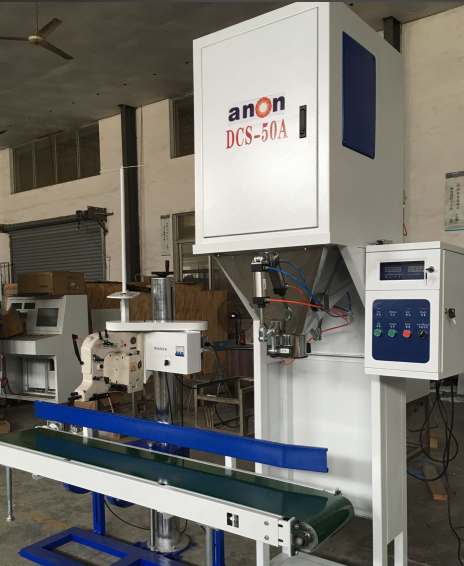
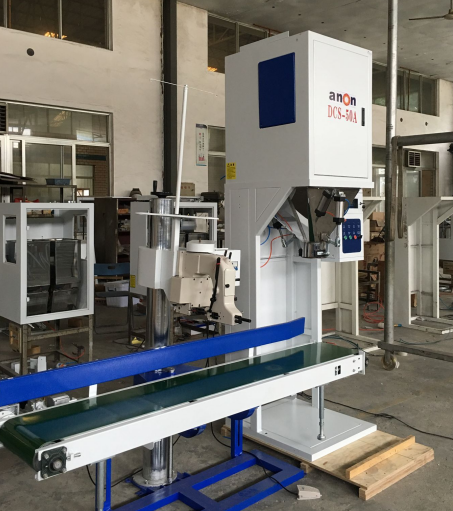
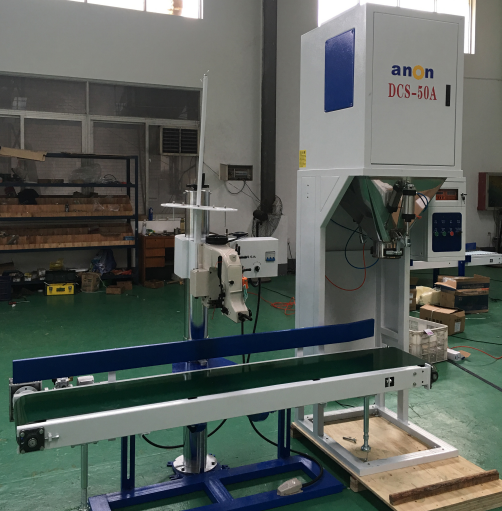
The ANON semi-automatic packaging machine is a packaging device that integrates weighing, metering, and filling functions. It is specifically designed for quantitative packaging of rice, grains, and other granular materials.
1. High measurement accuracy, stable performance, full touch screen display, and easier and faster operation.
2. High precision controller with automatic error correction, automatic alarm for out of tolerance, and automatic fault diagnosis function.
3. Adopting imported sensors and pneumatic actuators, it works reliably, is easy to maintain, and has no pollution.
4. The casing adopts advanced spray coating technology, and the parts in contact with the material are made of imported stainless steel materials, with high hygiene standards, corrosion resistance, and long equipment service life.
5. Reserved communication interface for data communication with the upper computer.
6. Optional functions include automatic hot coding, automatic sewing, automatic cutting, automatic lifting, and a hot sealing machine.
7. One-click recovery function, press the reset button to return to default parameters.
8. Equipped with anti-vibration and anti-interference ultrafiltration function, ensuring a stable and accurate weighing process.
Our Products
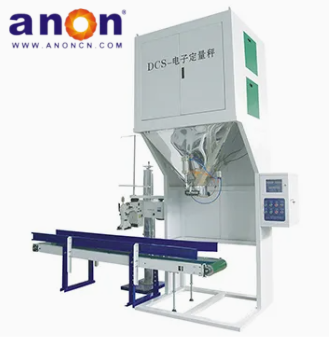
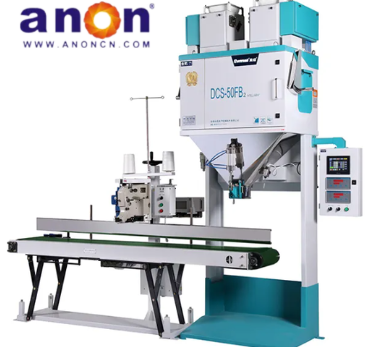
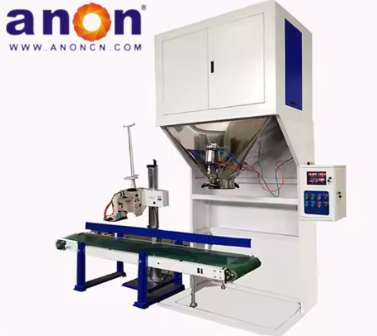






Operating Steps
1. Manual bagging
The operator places an empty bag (e.g. jute or woven bag) onto the filling nozzle and starts the machine.
2. Automatic weighing and filling
The machine automatically weighs the preset quantity of rice. Once the target weight is reached, the hopper bottom gate opens, and the rice flows into the bag.
3. Bag vibration and compaction
The bag vibration device, driven by a motor and sector gear, shakes the bag to compact the rice inside, reducing its volume for easier sewing.
4. Bag guiding and sewing
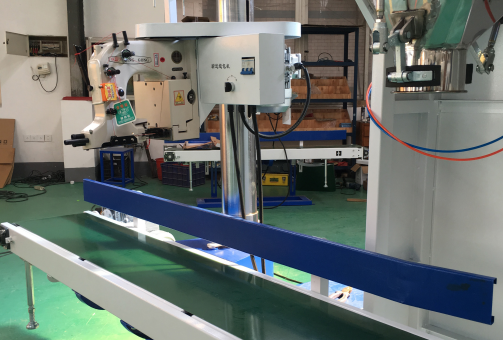
The bag guiding device clamps the bag mouth and feeds it into the sewing machine. The sewing unit, powered by a flexible V-belt and flat belt, automatically completes the stitching and cuts the thread.
5. Conveying and stacking
The conveyor belt transfers the packed bags to the output area. Some models can be integrated with an automatic stacking or truck-loading system for efficient handling.
Supported bag sizes: 5kg, 10kg, 25kg, 50kg (adjustable parameters to fit different bag types).

One machine for multiple uses
ANON semi-automatic packaging machine has a wide range of material adaptability, supporting the packaging of bulk materials such as rice, wheat, feed, plastic pellets, fertilizers, etc. The hopper and program can be quickly replaced, and the packaging specifications can also be quickly switched. The packaging tape has strong compatibility with various materials such as woven bags, PE bags, paper bags, vacuum bags, etc. It has low requirements for tape thickness and style, and a specially designed anti-breakage bag device to meet flexible production needs.
Compact Structure
The ANON semi-automatic baler features a compact design, small footprint, and light weight, eliminating the need for dedicated large equipment space and significantly saving space. Ideal for space-constrained environments such as small processing plants, its compact size allows it to be integrated into existing workflows. Despite its small size, it boasts powerful performance, capable of meeting the needs of almost any small to medium-sized rice milling production line. Furthermore, unlike fully automatic balers that rely on a fixed production line, it allows for flexible adjustment of the operating rhythm based on the location of the goods.
Balance flexibility and stability

Related Products
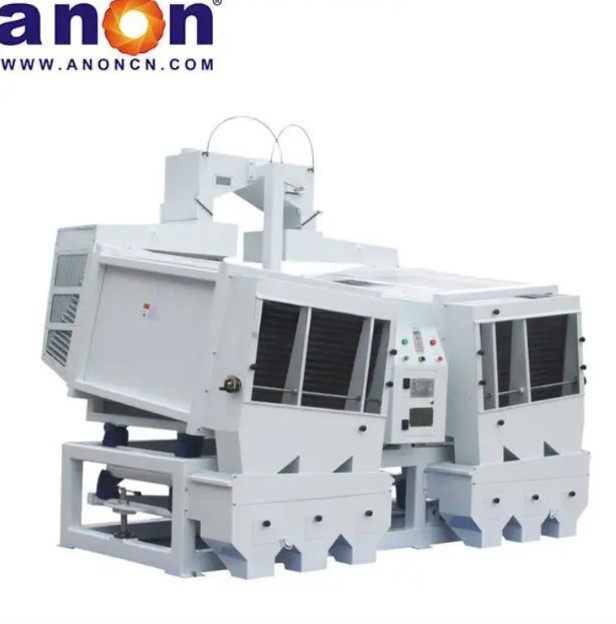
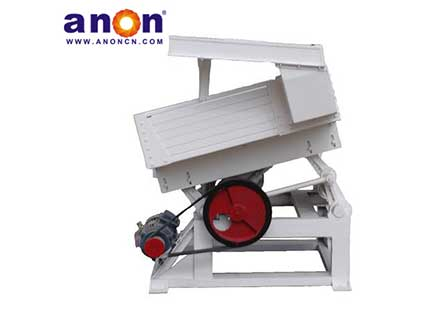
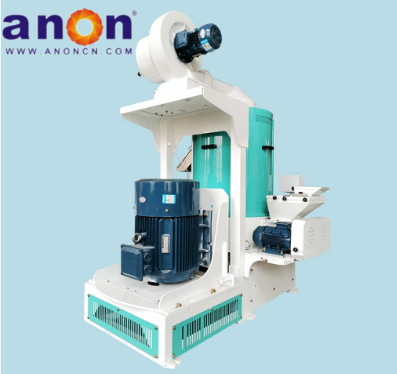
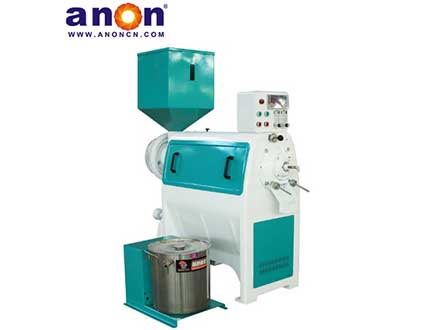
FAQ
Clean up residual materials at the discharge port every day to prevent mold growth or blockage caused by clumping; Check the tightness of the conveyor belt every week (too loose can cause slipping, too tight can cause wear), lubricate the transmission bearings; Calibrate the weighing system once a month and check if the motor wiring is loose to ensure accurate measurement.
Most models support manual feeding mode. When power is off, the feeding port can be opened through a mechanical handle for temporary manual filling, avoiding delays in shipment due to equipment shutdown.
Firstly, check if it is a problem of power disconnection or motor overload. Overload protection will cause the machine to automatically shut down, so restart it at that time. It is also possible that the discharge port is blocked by debris, so you need to stop the machine for cleaning. If equipped with a photoelectric sensor, it may not sense the bag. If the bag color is too light, the sensitivity of the sensor can be adjusted, or a dark packaging bag can be used instead.
The fundamental difference lies in their level of automation and applicable scenarios. The semi-automatic strapping machine requires manual intervention during the strapping process to adapt to packaging materials of various sizes and irregular shapes. The equipment cost is usually only 1/3 to 1/2 of that of fully automatic machines, with a smaller footprint, flexible installation, and easy maintenance.
The fully automatic strapping machine integrates the complete process of automatic strapping, detection, strapping, and cutting, making it suitable for high-speed assembly line operations of standardized products such as beverage cardboard boxes and finished cardboard box production lines. Although highly efficient, it is expensive and requires strict consistency in packaging specifications.
The chain of factors affecting the overall working efficiency of a semi-automatic strapping machine begins with the operator’s skill level, which determines the speed and smoothness of the manual strapping process. Next, the size, weight, and regularity of the packaged goods directly determine the time required for each strapping and adjustment. The strapping process requirements, such as single-strapped or complex multi-strapped strapping, fundamentally define the total operation time for a single package. Finally, all aspects are limited by the optimization of the work environment layout. A well-designed strapping area can seamlessly connect all stages; conversely, unnecessary movement and handling will lead to continuous efficiency losses.
1. The equipment must be reliably grounded to prevent the risk of electric shock.
When the machine is running, it is strictly prohibited to put tools or any part of the body into the conveyor belt.
The temperature of the hot melt joint can reach over 300 ℃. Avoid contact within 15 minutes after the machine stops to prevent burns.
4. Keep the work area clean to avoid the risk of tripping or slipping.
5. Non-professionals are not allowed to dismantle the protective cover of the machine or adjust its internal structure.