



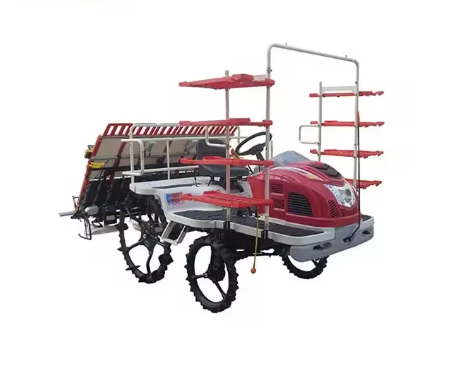
Riding Type Rice Transplanter
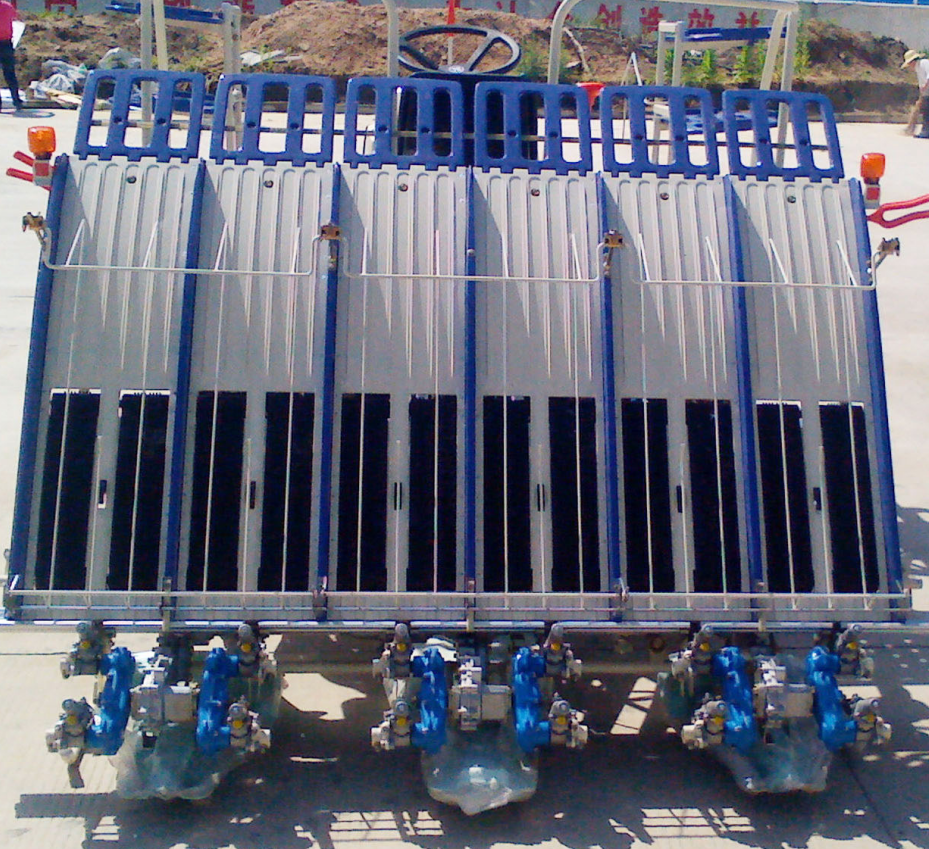
When operating, a rice transplanter places rice seedlings neatly in the seedling tray in groups. As the tray moves sideways, the seedling pick-up mechanism takes a set number of seedlings in each cycle. Under the guidance of the planting trajectory control system, the machine inserts the seedlings into the soil according to agronomic requirements. The pick-up mechanism then returns along a set path to retrieve more seedlings from the tray. This process repeats continuously, achieving efficient and uniform rice transplanting.
The riding-type rice transplanter boasts core advantages such as comfortable operation, high efficiency, precise planting, and strong adaptability, making it ideal for large-scale rice cultivation. It can significantly reduce labor intensity while improving transplant quality and yield.




Why Choose ANON Riding Type Rice Transplanter?
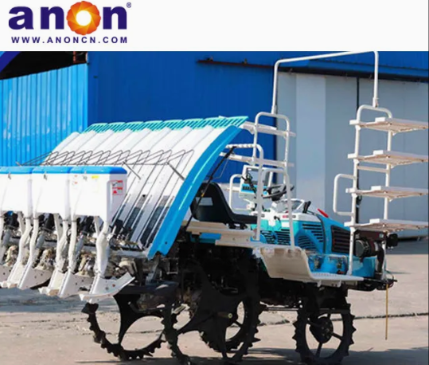
The ANON riding-type rice transplanter is equipped with electronic leveling control, ensuring uniform planting depth even on uneven fields. Row and plant spacing are flexibly adjustable, resulting in a stable seedling load and consistent planting depth. This adjustable depth ensures high precision, uniform row and plant spacing, and consistent planting depth, allowing seedling roots to penetrate the soil at an appropriate depth, promoting rapid seedling recovery and laying the foundation for high yields. After transplanting, the seedlings are evenly distributed in the field, ensuring good ventilation and light penetration, reducing the incidence of pests and diseases, and minimizing pesticide use, aligning with green agriculture principles.
The ANON ride-on rice transplanter is adaptable to various seedling types, including mat-shaped seedlings and potted seedlings. Its elastic seedling claws prevent damage to seedling roots and seedling detachment during harvesting, achieving a seedling survival rate of over 95%. It supports transplanting seedlings of different ages. Equipped with an ultra-low speed gear and anti-sinking device, the machine enhances its maneuverability and ability to escape obstacles in paddy fields, ensuring stable and efficient operation even in complex conditions while minimizing compaction and damage to the field. When used with a seedling raising machine, it enables full mechanization from seedling raising to transplanting, suitable for large-scale planting needs. The ANON rice transplanter can be equipped with a simultaneous side-deep fertilization function, precisely applying fertilizer to the side and below the seedlings, eliminating the need for separate fertilization, improving fertilizer efficiency, saving fertilizer, and increasing machine utilization. The high-speed transplanter chassis can also be used as a multi-functional platform to carry other agricultural implements.
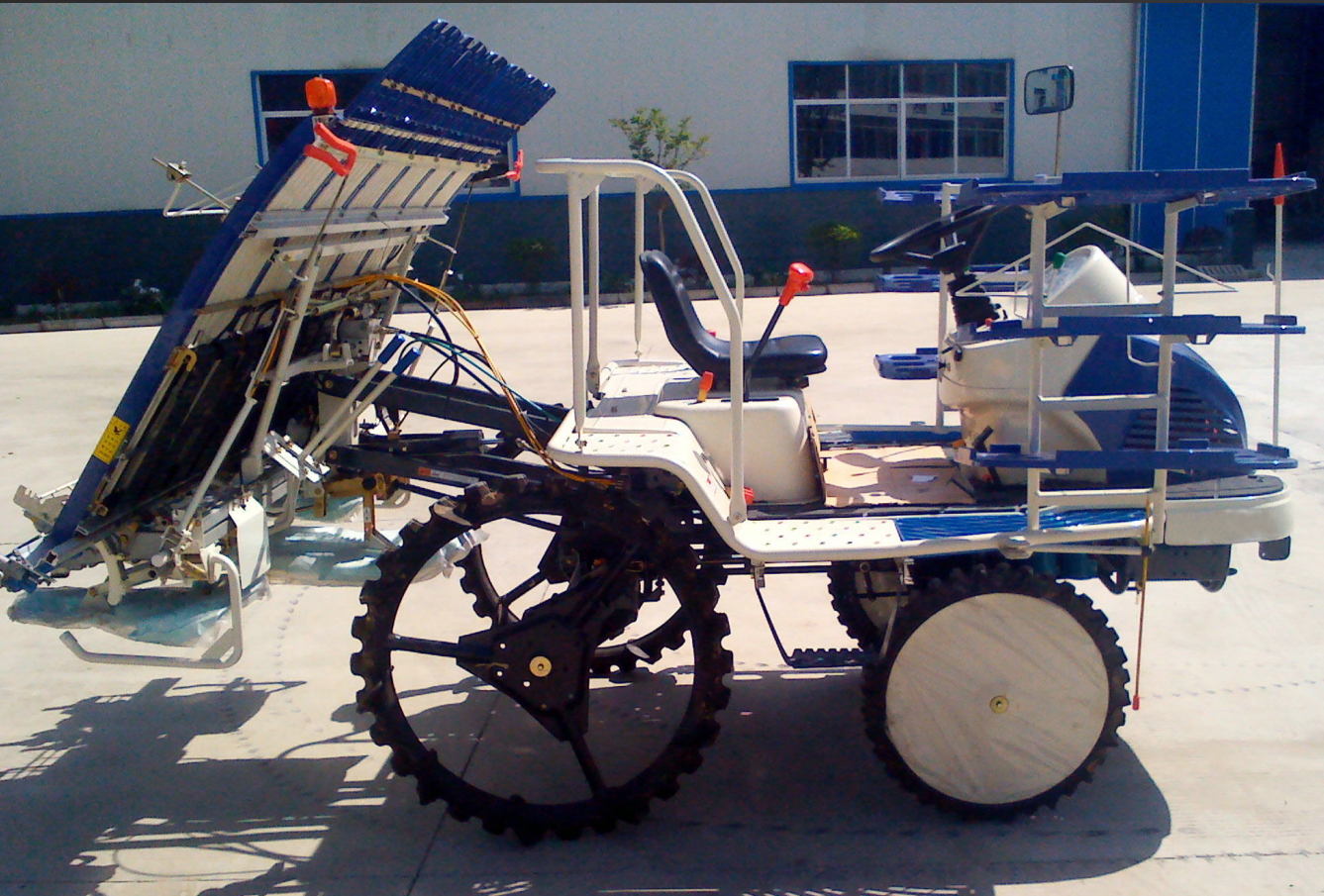
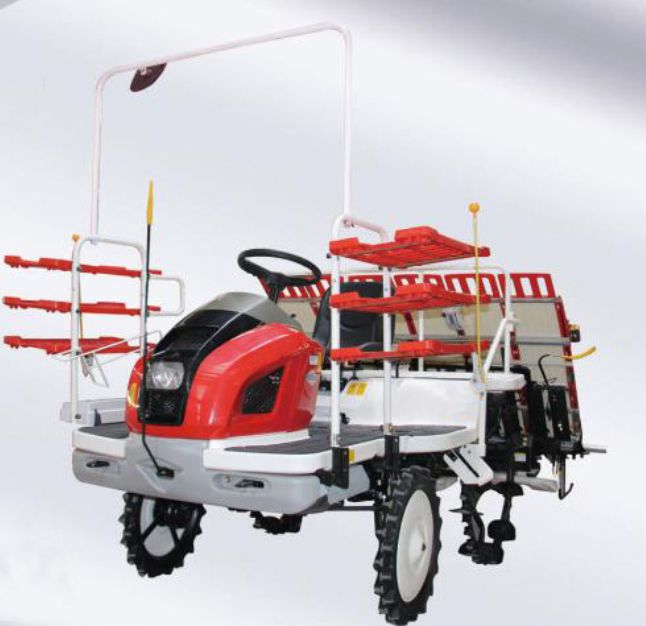
The ANON ride-on rice transplanter is divided into modules such as a power system, a walking system, a seedling picking and planting system, and a hydraulic adjustment system. Its clear structure facilitates inspection and maintenance. Key components, such as the seedling claws and guide rails, are made of high-strength steel, which is wear-resistant and corrosion-resistant, extending their service life. The cover uses engineering plastics or corrosion-resistant aluminum alloy, which is lightweight and corrosion-resistant. Specially reinforced anti-corrosion treatment for paddy field environments ensures the machine can withstand the structural stress of long-term operation and prevent rust.
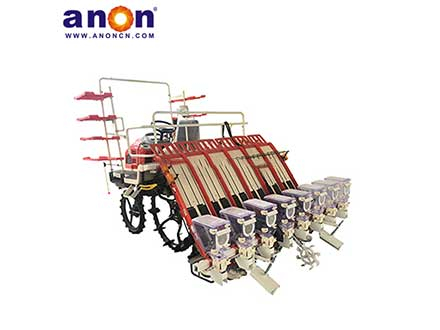
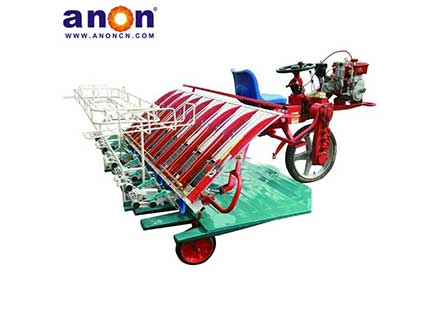
The ANON ride-on rice transplanter features a riding design with a dedicated seat and steering wheel control system. You don’t need to walk alongside during operation, making it easy and effortless, and reducing fatigue during long periods of use. High-end models are equipped with a sunshade, non-slip foot pedals, an instrument panel, and a reversing camera, further enhancing your operating experience and safety. The self-propelled model operates quickly, supporting multi-row transplanting, planting more than 6 rows at a time. Its daily operating area far exceeds that of a hand-held transplanter, equivalent to the work of dozens of people. This not only saves you labor costs but also easily handles large-scale planting, shortens the planting time, and improves planting efficiency.
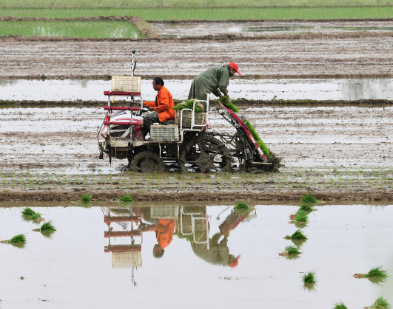
Applications
ANON riding type rice transplanters are typically suitable for medium and large rice planting bases, agricultural machinery cooperatives and agricultural social service organizations, especially for areas with labor shortages and an urgent need to improve transplanting efficiency. At the same time, in organic or high-end rice planting scenarios, there are high requirements for the standardization of seedling planting, which is also of great application value.
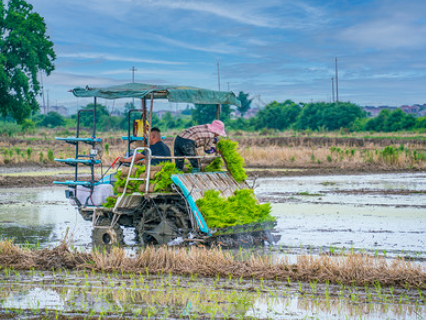
Recommendations for Use
Before using the riding type rice transplanter, you need to ensure that the seedlings have intact roots and are of moderate age (generally 12-15 days), and pre-set the row spacing, plant spacing, and transplanting depth to ensure standardized and orderly transplanting. Try to maintain a uniform speed during the operation to avoid problems such as wrong holes and floating seedlings. After the operation, you need to clean key components such as the claws, chains, and tracks in time to prevent mud accumulation and extend the service life of the equipment. At the same time, the field needs to be leveled and the water depth should be kept at 2-4 cm to facilitate stable transplanting results.
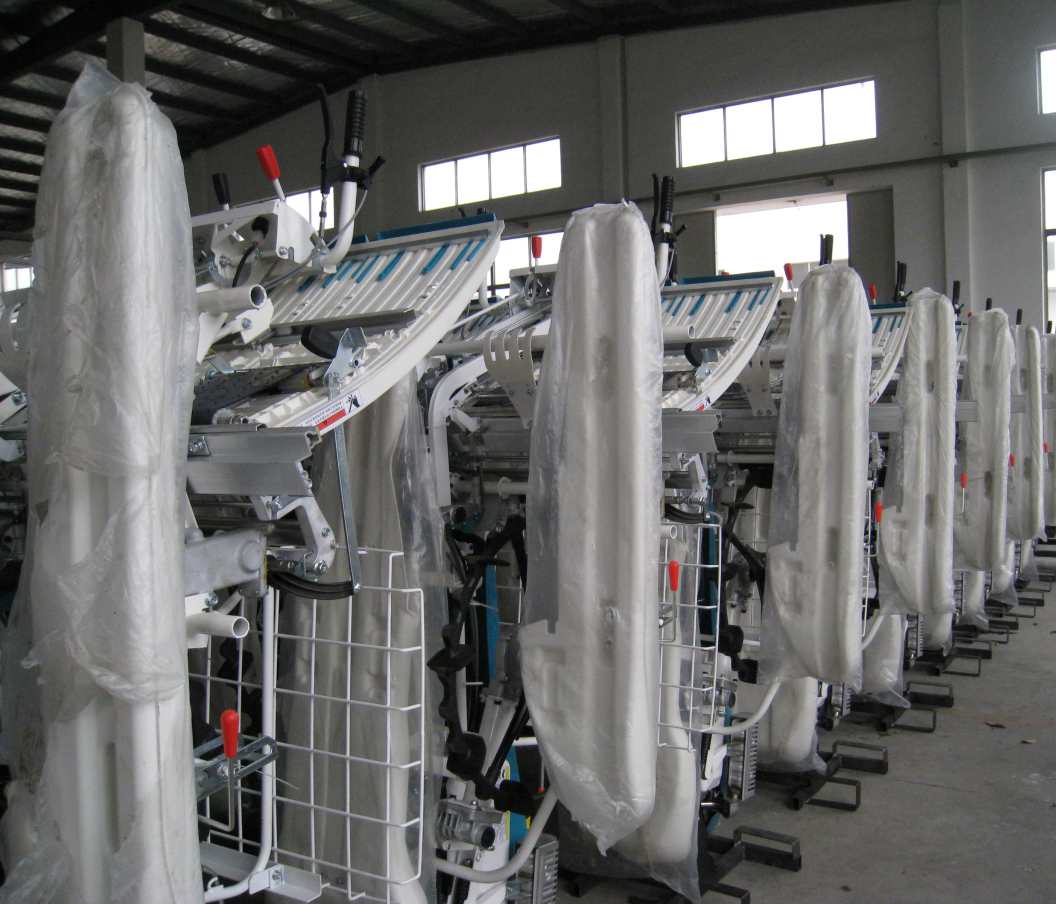
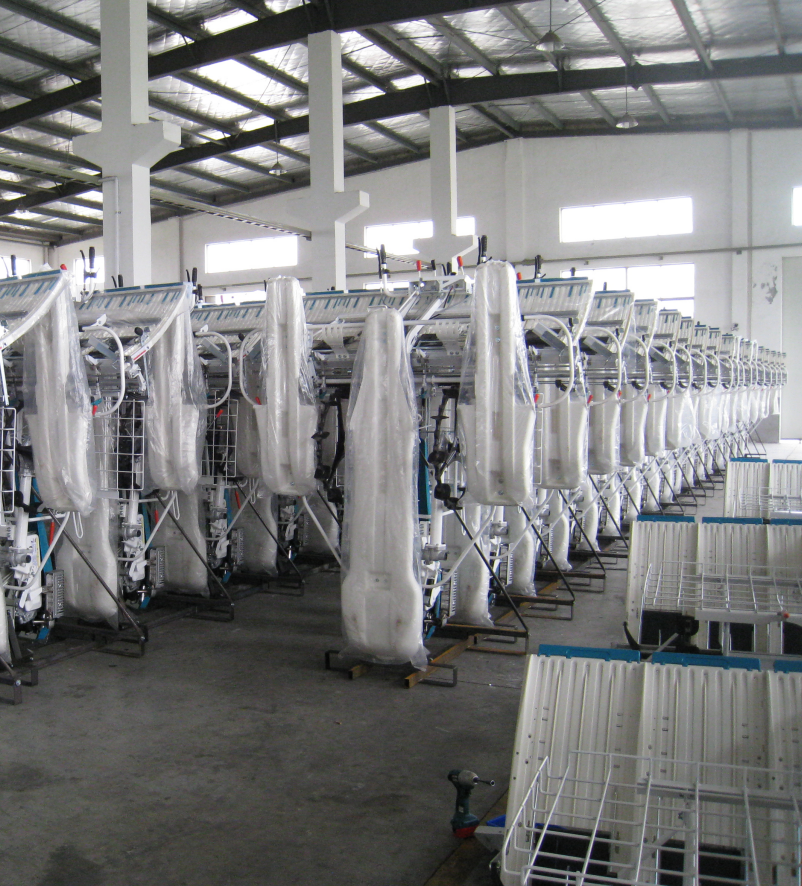
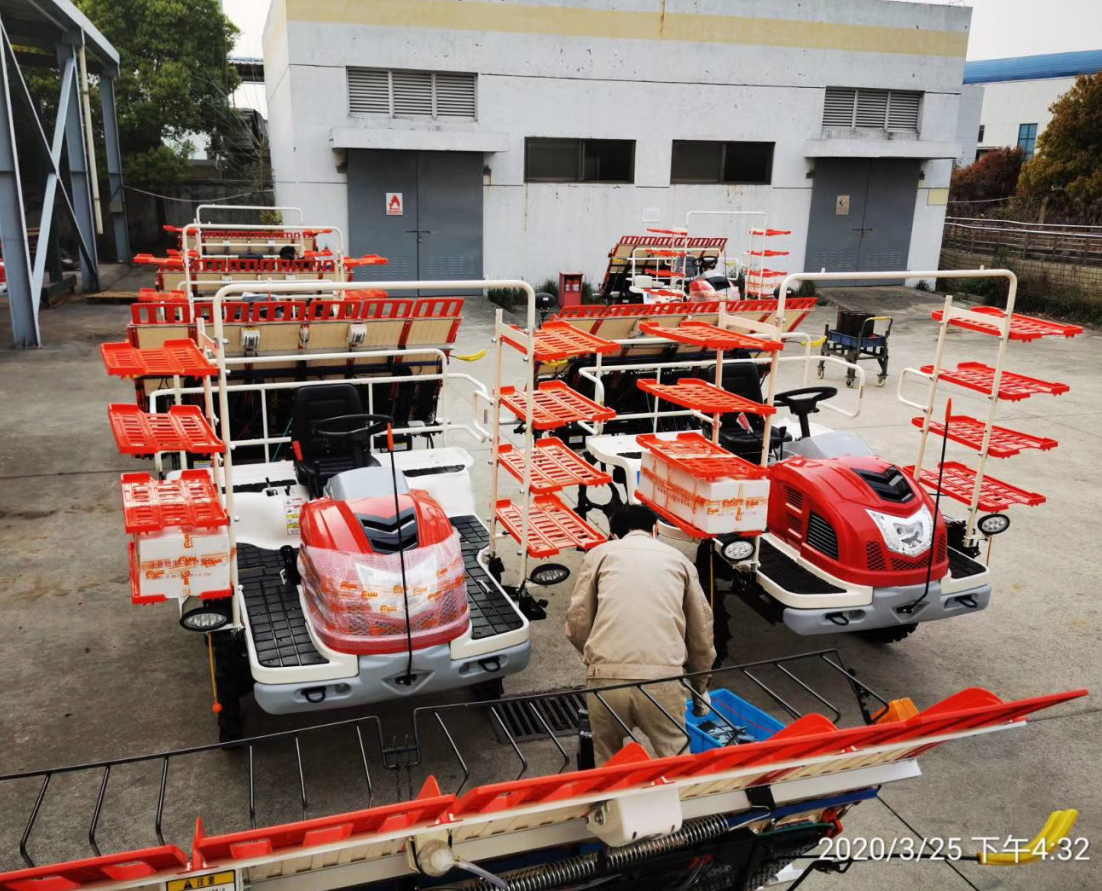
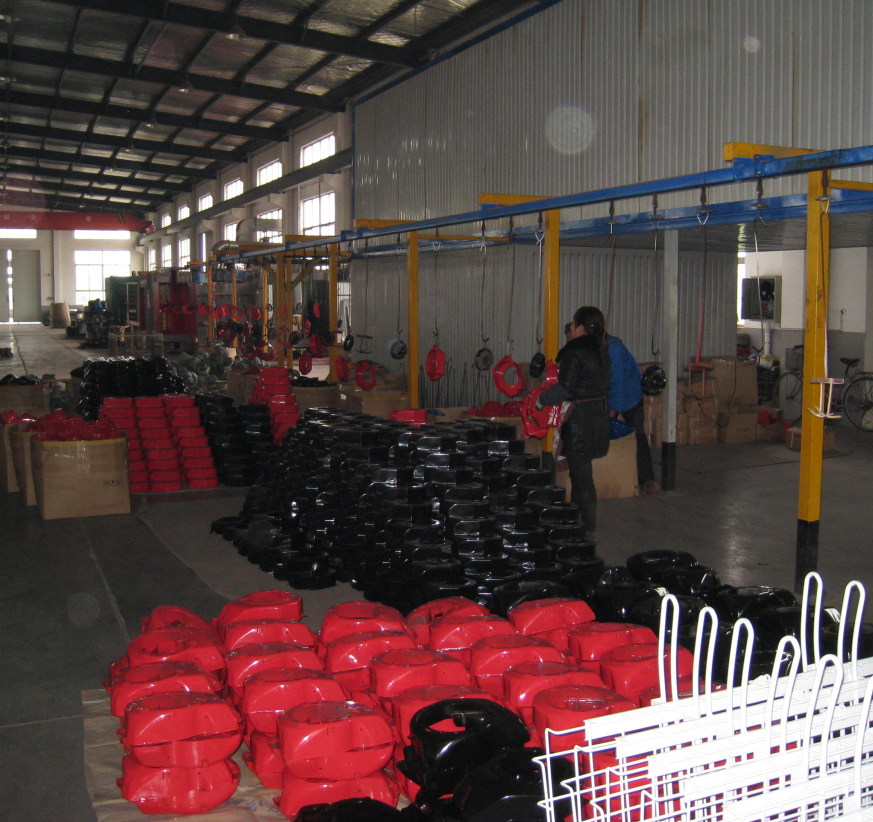
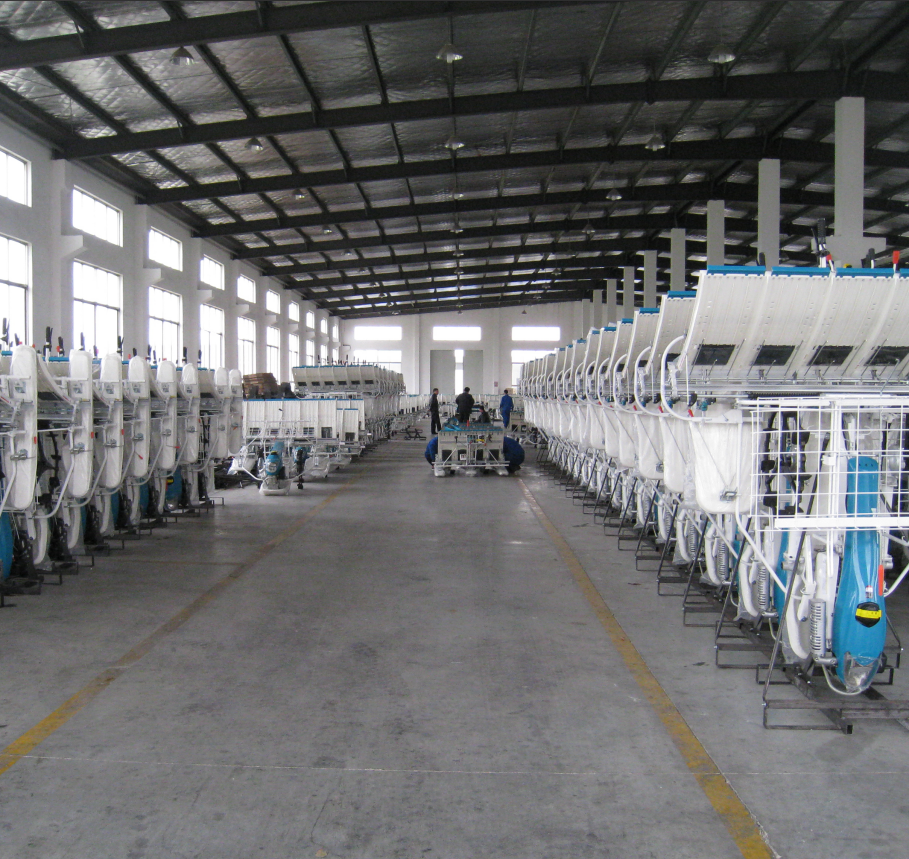
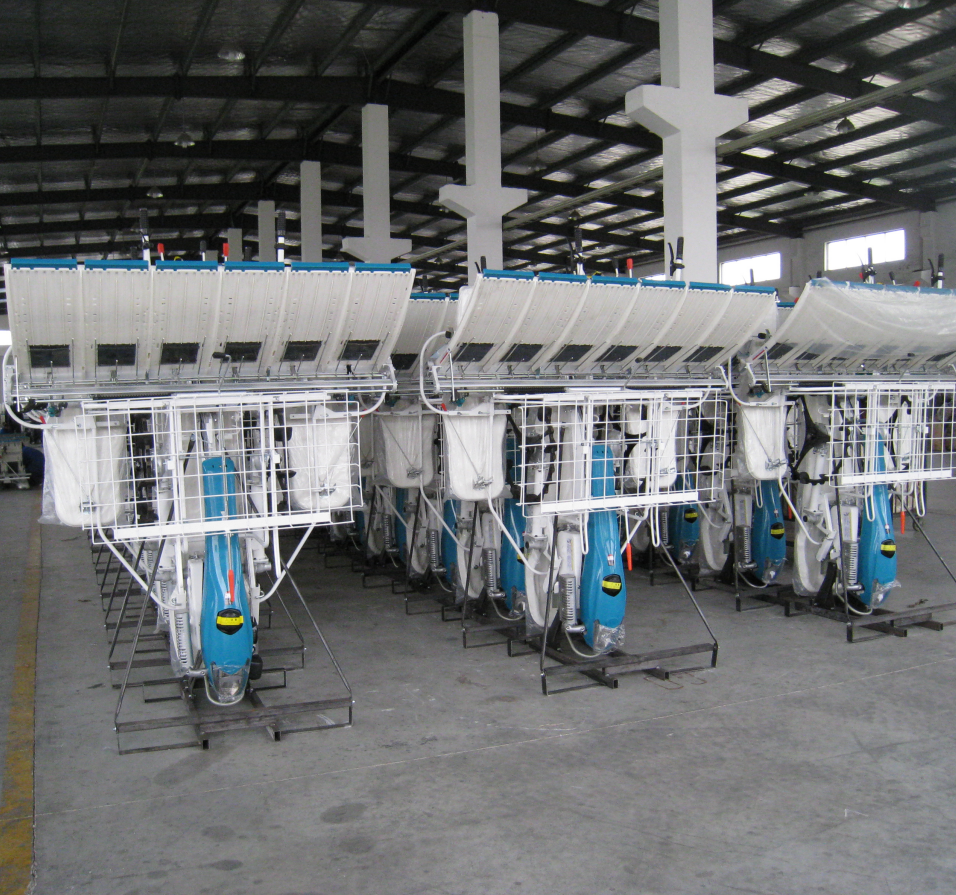
Our Factory
Related Products
FAQ
0.45-0.55 hectares/day
The mechanical rice transplanter is a manually operated machine that transplants rice seedlings in rows, with a field yield of 0.45-0.55 hectares/day. The transplanter uses precision-cut seedling mats with a width of 20.5 cm and a length of 40 cm. The transplanter is easy to operate and maintain.
The majority of rice fields in Asia are manually transplanted. Depending on soil type, one hectare of rice requires 25 to 30 person days to establish. Manual transplanting can be done in two methods: the Random Method.
First, check the power transmission: Check if the drive belt is slipping or broken, and if the clutch is properly engaged. If the belt is slipping, adjust the tension. If it’s broken, replace it. Next, re-check the hydraulic system: If it’s a hydraulically driven insertion mechanism, check if the hydraulic oil level is sufficient, if the hydraulic pump is working, and if the lines are blocked. Finally, check the planting mechanism for any foreign objects (such as seedling roots or stones) stuck in it. After cleaning, manually rotate the crank connecting rod to confirm smooth operation.
Main causes: loose spacing adjustment mechanism, slipping wheels, unstable engine speed. Solutions: retighten the spacing adjustment handle and lock the adjustment bolts; check if the wheels are slipping, and appropriately reduce the running speed or increase wheel pressure; adjust the engine throttle to a stable speed to avoid sudden speed changes during operation.
After daily operation, ride-on rice transplanters require timely maintenance: First, clean the mud and residual seedlings from the seed box, planting arms, and tracks. Then, carefully remove debris from the gaps in the planting claws with a brush to prevent blockage. Next, check for deformation or wear on the planting claws, and for cracks in the tracks; repair or replace any problems promptly. Afterward, lubricate the seed box guide rails and planting arm bearings to prevent rust and jamming. Finally, park the machine in a dry, well-ventilated place and cover it with a dustproof cloth to prevent rain and direct sunlight.