



Half-feed harvester
Half-feed harvester
The ANON platform has two major categories: full-feed combine harvesters and half-feed combine harvesters. The half-feed combine harvester is an efficient agricultural harvesting machine that only feeds the head of the crop into the threshing drum. It can prevent excessive breakage of the stems in full-feed models, maintain the integrity of the stems, and provide you with more utilization space. This half-feed combine harvester is specifically designed for crops such as rice and wheat. The ANON platform has been optimized in many aspects of its functions. This machine combines multiple advantages and stands out in terms of performance. If you need a machine with low energy consumption and high efficiency, then it would be the best choice. ANON offers you high-quality services and agricultural machinery, ensuring your satisfaction in all aspects.
Choose the right product for you
Providing quality products and services.
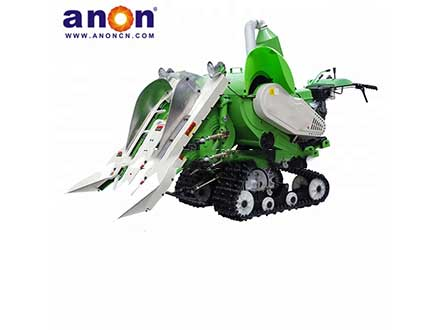
ANON Mini Rice Combine Harvester
The ANON mini rice combine harvester is designed specifically for rice and wheat. It can cut crops from the field while simultaneously handling threshing and cleaning, giving you clean grains…
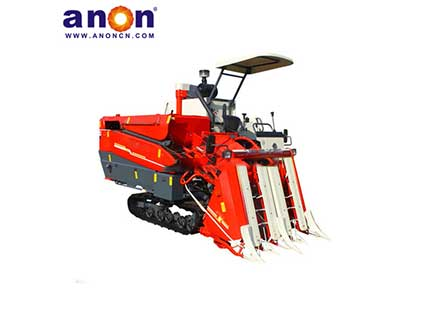
ANON Half Feed Rice Combine Harvester
4LBZ semi-feed rice harvester, small size, light weight, small turning radius, especially suitable for small fields and greenhouses. ANON Semi Feed Rice Combine Harvester The cut is low and the…
Features of ANON Half-feed Harvester
Precision Threshing
The ANON half-feed harvester employs a unique ear-feed threshing mode. During operation, only the ear of the crop is fed into the threshing drum, while the stalk remains intact and exits from the side of the machine. This effectively avoids the problems of whole-plant crushing, stalk entanglement, and grain damage associated with all-infeed models. During operation, you can flexibly adjust the threshing gap according to the rice variety, maturity, and moisture level. Combined with the low-speed, gentle drum rotation design, it achieves clean threshing with no residue while maximizing grain integrity. It is highly adaptable to harvesting delicate crops such as high-quality rice and seed rice.
Low Power Consumption
The ANON semi-feed combine harvester threshes only the ears of grain. This design effectively reduces the power consumption of the threshing and cleaning devices, lowering energy consumption by approximately 30% compared to full-feed models. The entire power system is optimized for light-load semi-feeding operations, resulting in significantly lower power consumption than traditional full-feed harvesters. Furthermore, its threshing teeth are arched. During threshing, the arched teeth primarily brush and impact the grain ears. This gentler threshing process improves the overall threshing rate and reduces breakage.
High Threshing Efficiency
Almost all ANON half-feed combine harvesters employ dual threshing drums. The dual-drum structure is better suited to wetlands or high-humidity environments. It maintains stable threshing efficiency and reduces problems such as easy adhesion and difficulty in threshing of wet crops. Simultaneously, the dual-drum design extends the residence time of crops in the threshing space, enhancing threshing and separation effects, and effectively reducing the load on the cleaning device.
High-Quality Grains
ANON half-feed harvesters utilize a combination of multi-drum grading, threshing, and multi-duct intelligent cleaning. Through a step-by-step operation of primary threshing by the main drum and fine separation by the secondary drum, grain breakage caused by single-stage high-pressure threshing is avoided. The airflow and screen angle of the cleaning system automatically adapt to the crop feed amount, efficiently separating impurities such as straw, broken leaves, and soil from the grains. In actual operation, grain breakage rate, field loss rate, and impurity rate are all controlled at extremely low levels, resulting in clean, plump, and high-quality harvested rice, ensuring grain quality from the source of harvest.
Optimized Transmission System
The ANON half-feed harvester utilizes high-temperature superconducting devices, offering high sensitivity and safety. It features high efficiency and energy saving, significantly improving the harvester’s operating efficiency. Simultaneously, high-temperature superconductivity helps optimize the harvester’s transmission system, making it more stable and achieving higher operating precision. We can also apply it to the heat treatment of key harvester components, thereby enhancing their wear resistance and effectively extending their service life.
High Adaptability
The ANON half-feed combine harvester has a compact body, a small turning radius, and is highly maneuverable, specifically designed for small paddy fields in hilly and mountainous areas, allowing for free maneuvering even in narrow plots. Equipped with wide, extended tracks and a liftable chassis, its moderate ground clearance provides strong traction, preventing it from getting stuck or slipping in deep mud or wet fields. Combined with the automatic leveling function, it maintains a level and stable harvesting platform even with lodged crops up to 45 degrees. It can operate stably in various complex scenarios, including plains, sloping paddy fields, and lodged fields, greatly improving the safety and efficiency of users in hilly areas.
Strong Lodging Resistance
Lodging fields are a no-go zone for full-feed harvesters, but a prime application scenario for our semi-feed products. Our header features a low-angle feeding design, combined with the powerful combing action of the lifting chain, which lifts the prostrate rice ears from the soil, precisely cutting them and ensuring that grains do not get muddy or fall off. In years with frequent severe weather, the ability to harvest lodged fields directly determines the farmer’s profit or loss for the season. Our machines safeguard the bottom-line income for users in the most difficult circumstances, a strength that ordinary models cannot match.
High Straw Integrity
ANON half-feed harvesters retain intact stalks after harvesting grain, without breaking or tangling them. You don’t need to separately purchase straw crushing and returning equipment; you can directly dry-bale and sell the straw. Whether used as roughage for cattle and sheep, briquettes for biomass power plants, or raw materials for straw crafts, it can generate substantial additional income. Our semi-feeder model is no longer just a grain harvester, but also a collection device that transforms field straw into similar-yielding harvesting equipment.
FAQ
1. How does a half-feed harvester achieve that only the head of the ear enters the threshing drum?
It can send the head of the crop panicle into the threshing drum through the vertical header and the supporting conveyor chain. The stems will be held and conveyed without entering the threshing area.
2. What are the differences between full-feed and half-feed types?
Firstly, their threshing teeth differ. Full-feed harvesters use spike-tooth threshing teeth, while semi-feed harvesters use bow-tooth threshing teeth. Secondly, semi-feed harvesters (which perform the harvesting action) reduce the overall crop loss and damage rate to a level lower than that achieved by full-feed harvesters. Lastly, the straw processing methods differ. Semi-feed harvesters only feed the ear of the crop into the threshing drum, allowing the stalks to pass through the machine intact, resulting in long, straight stalks upon discharge. Full-feed harvesters, on the other hand, feed the entire crop into the drum, forcefully crushing the stalks and discharging broken straw. This structural difference brings a series of advantages: semi-feed harvesters have a lower grain breakage rate and less loss; the discharged straw can be baled and recycled; and they are more adaptable to wet, rotten fields and lodged crops. Full-feed harvesters have a large feeding capacity and fast operating speed, making them suitable for harvesting scenarios where straw retention is not required, and the fields are flat and dry. Both have their applicable boundaries, and there is no absolute superiority or inferiority. The key is to consider your working environment and revenue structure.
3. How to choose between full-feed and half-feed combine harvesters?
If your main business is rice and you want to use straw for secondary sales and other work, you should give priority to the half-feed type. If you need to harvest a variety of mixed crops, give priority to the full-feed type, as it has stronger versatility.
4. What crops are semi-feed harvesters primarily suitable for harvesting?
Semi-feed harvesters are primarily designed for rice, especially high-quality rice, glutinous rice, fragrant rice, seed rice, and conventional rice varieties with extremely high requirements for grain integrity and quality. Their harvesting results are far superior to those of other models. Some adapted models can also be used for harvesting short-stalked crops with good straw toughness, such as wheat, rapeseed, and flax. However, they are not suitable for tall, coarse-stalked crops like corn and sorghum, and are generally more suited for harvesting fine grains.
5. What precautions should be taken when storing the machine for extended periods?
Semi-feed models have a more complex structure than full-feed models, and proper storage can significantly extend their lifespan. We provide a detailed maintenance checklist with the machine and can offer on-site maintenance services before storage. Three key points: First, the threshing drum and cleaning fan must be thoroughly cleaned, as residual wet grains will corrode the screen frame; second, all chains and belts must be relaxed to a tension-free state to avoid long-term stretching and deformation; third, the hydraulic multi-way valve control lever should be in the neutral position to unload the system. When storing outdoors, the exhaust pipe and air inlet must be covered to prevent rodents from nesting and chewing the wires. As long as it is stored according to specifications, it can operate normally again with minor adjustments in the spring of the following year, without the need for major disassembly or replacement.
6. How to adjust the cleaning system if there are many impurities in the harvested grain?
Poor cleanliness is mainly caused by improper cleaning air volume and screen angle. You can appropriately increase the cleaning air volume and decrease the screen gap, fine-tuning the parameters according to the dryness of the crop and the feed rate. At the same time, check for blockages in the blower and screens, and remove any straw or debris promptly. Semi-feeding multi-channel cleaning systems have a large adjustment range; as long as the parameters are matched, the grain impurity rate can be controlled at a very low level, resulting in clean and tidy grain.
Contact for detailed service
Anon cooperates with a number of factories to improve efficiency and service quality, and provide technical support and services to customers.
Get Support