



Introduction
With the continuous development of agricultural mechanization, tractors have become an indispensable mechanized tool in agricultural production.
Four-wheel tractors have the advantages of flexibility, easy operation, and a wide range of uses. So what exactly is a 4-wheel tractor? What are its main components and functional advantages? What benefits can it bring to us?
In this issue, ANON will learn more about four-wheel tractors with you.
What is a Four-Wheel Tractor?
First of all, let’s briefly introduce what kind of equipment a 4-wheel tractor is.
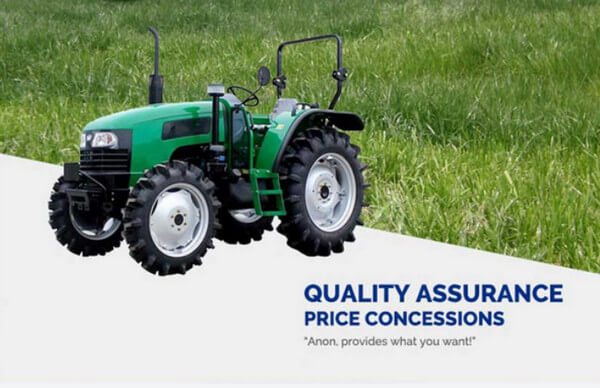
A four-wheel tractor is a multi-functional tractor. It is a self-propelled machine with four wheels that provides power for agricultural operations, mainly used for tilling, sowing, fertilizing, and harvesting in agricultural production.
Four-wheel tractors have a simple structure and high mobility. Compared with other types of tractors, four-wheel tractors are favored for their stability and versatility, making them an indispensable tool in modern agriculture.
What are the Parts of a Four-Wheel Tractor?
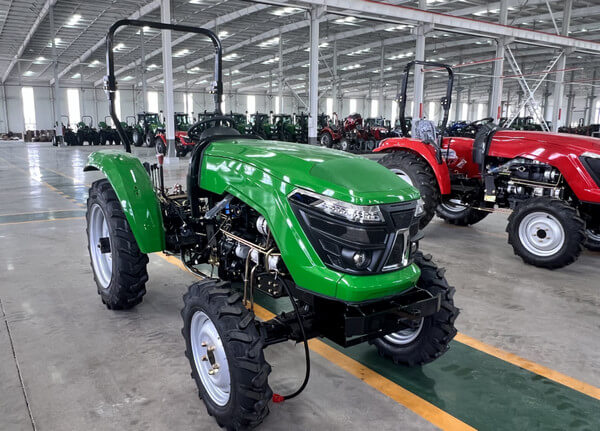
Next, let’s answer the question of what important parts a four-wheel tractor is composed of.
- Engine: The core component that provides power, usually a diesel engine, but there are also gasoline engines and electric versions.
- Gearbox: realizes the adjustment of the mechanical transmission ratio and controls vehicle speed through gear shifting.
- Transmission system: Transmits engine power to the driving wheels, usually using a bushing transmission.
- Front and rear axle mechanism: transmits power to the front and rear wheels.
- Frame: The support system that carries the weight and load of the entire vehicle.
- Wheels: components that support the car body and achieve movement.
- Cab: The control center of the vehicle, equipped with steering wheels, control levers, and other operating mechanisms.
- External plug-in system: Hydraulic three-point suspension systems for attaching and raising various agricultural implements, such as plows, harrows, and seeders, as well as rear-mounted power take-off shafts that provide power to rotary implements.
Types of Four-Wheel Tractors
The most common classification of four-wheel tractors based on their drive system is two-wheel drive tractors and four-wheel drive tractors. Below, I will introduce them one by one.
Two-wheel drive tractors(2WD)
Two-wheel drive tractors are driven by two rear wheels, with the front wheels guiding the load. In appearance, two-wheel drive tractors generally have smaller front wheels and larger rear wheels, and the front wheels are usually designed with longitudinal tread patterns to reduce drag, known as universal treads.
Two-wheel drive tractors are mainly used for dryland farming, transportation, and general field operations.
Four-wheel drive tractors(4 WD)
Four-wheel drive tractors are tractors where both the front and rear wheels are driven. They have tires of relatively similar size, and the tread patterns of the front and rear tires are usually consistent, using herringbone tires with high tread patterns for strong grip and anti-skid capabilities, also called figure-eight treads. These wheels have a strong grip and mud-removing performance.
Four-wheel drive tractors are generally used in wet, loose soil, on slopes, and on large farms requiring heavy-duty operations.
What are the Uses of Four-Wheel Tractors
There are many farmers who, before choosing a tractor with excellent performance, will all ask about the scope of use and functional characteristics of this equipment. So, below, ANON will take our four-wheel tractor as an example to explain its advantages.
Farming and Planting
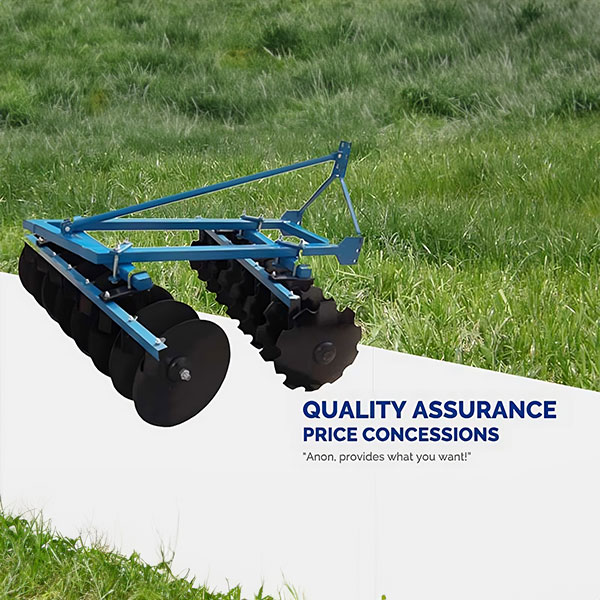
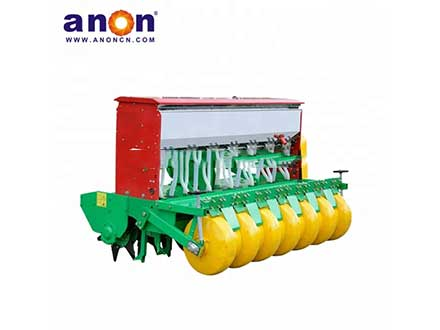
Four-wheel tractors can be equipped with a variety of tools and equipment, such as plows, harrows, rotary tillers, seeders, fertilizer applicators, and harvesters, to complete various agricultural operations such as tilling, sowing, fertilizing, and harvesting.
Field Management
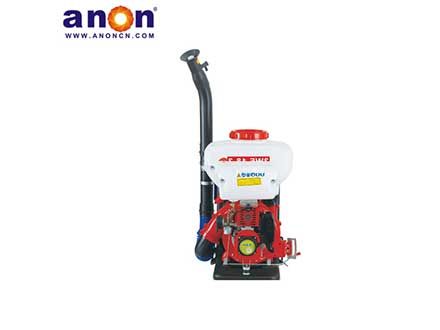
Four-wheel tractors can also perform tasks such as weeding, ditching, pesticide spraying, and sprinkler irrigation during the plant growing season by connecting to a cultivator, ditcher, sprayer, and irrigation equipment.
Transportation and Handling
Four-wheeled tractors can be attached to trailers to serve as transportation tools for transporting agricultural supplies and products in the fields and on roads, saving labor and time.
Fixed Operations
Four-wheeled tractors can also serve as a power source for fixed-location operations, such as connecting to a thresher to thresh crops.
Benefits of a Four-Wheel Tractor
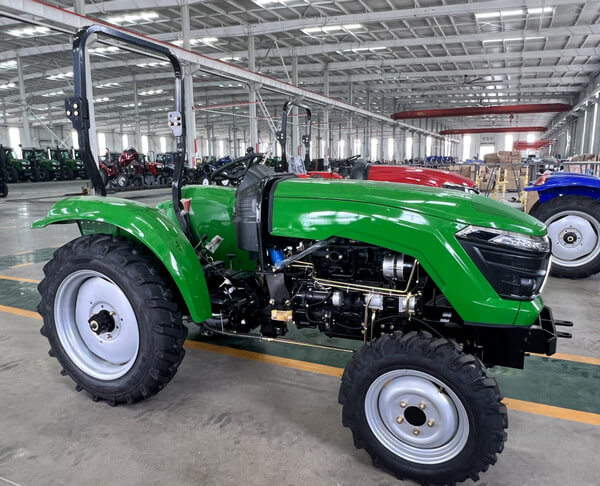
So, what benefits can farmers bring by using this tractor? In fact, agricultural mechanization equipment can bring us many advantages.
High-Efficiency
First, the four-wheel tractor has a faster speed when working. When equipped with the wide-width attachments, such as a plow, seeder, etc., it can achieve a great working efficiency for you.
In addition, tractors also help farmers realize modern management of farmland and improve the technological content and quality of agricultural production.
Through automation and intelligent technology, tractors can achieve automatic guidance and control, improving the accuracy and precision of agricultural machinery operations.
Strong Adaptibility
The four-wheel tractor can connect with various agricultural attachments and help you finish many different tasks, such as plowing and harrowing, planting, cultivating, harvesting, spraying, fertilizing, and so on. Its excellent passability enables it to adapt to different terrains and working environments.
Improve Traction
Four-wheel tractors offer excellent stability and a strong grip. If your land has many slopes, the powerful drive of a four-wheel tractor allows for better traction and less slippage.
Easy to Use
In terms of operation, this tractor has flexible steering, a small turning radius, and flexible and convenient operation. Compact structure, easy to use and maintain.
Adopting a new integrated, fully sealed front axle, the drive shaft has enhanced strength and durability, making it the first choice for paddy field operations.
At the same time, the control structure and the driving space are large.
Comfort
It improves the comfort of operation and reduces the driver’s work intensity. Owning this tractor will reduce a lot of economic and personnel pressure on everyone’s farmland operations.
Save Time and Effort
Conclusion
Choosing the right four-wheel tractor isn’t just about horsepower—it also depends on the size of your farm, the terrain you’re working on, and the implements you’ll be using. ANON offers a full range of two-wheel and four-wheel drive models to meet diverse needs. If you’re unsure which model is right for your work, contact our team—we’ll help you find the perfect fit for your farm and budget.
FAQ
Is a 4WD tractor worth buying?
4WD agricultural tractors offer powerful power, strong traction, and versatile versatility, making them the top choice for large farms, heavy loads, and challenging terrain. Their exceptional productivity, fuel efficiency, and durability make them a wise long-term investment for serious agricultural operations.
Can a two-wheel drive tractor be converted to four-wheel drive?
No. The chassis, gearbox, front axle, and steering system of two-wheel drive and four-wheel drive tractors are completely different in design. The conversion cost is extremely high, almost equivalent to buying a new tractor. If you need four-wheel drive functionality in the future, it is recommended that you purchase a four-wheel drive tractor directly.
How often should I service my four-wheeled tractor?
Routine maintenance includes daily checks of engine oil, coolant, and tire pressure; lubricating critical components every 50 hours; and changing the engine oil and oil filter every 200-250 hours. Please always follow the manufacturer’s maintenance plan for your specific model.