



Product Description
ANON’s broadcast spreaders/seeders are designed for efficient spreading and seeding materials including grass seed, wheat, corn, lime, clover, fertilizer, salt, and granular materials.
Our broadcast spreader has adjustable features in a few places to ensure consistent spreading results. These include spinner rotation speed, the spreading width, and the discharging speed
We produce and export varies capacity to adapt to the spreading efficiency requirements of different farms, orchards, pastures, etc.
We offer two spreading systems – single disc & double disc – to match your spreading width requirements from 4-18m
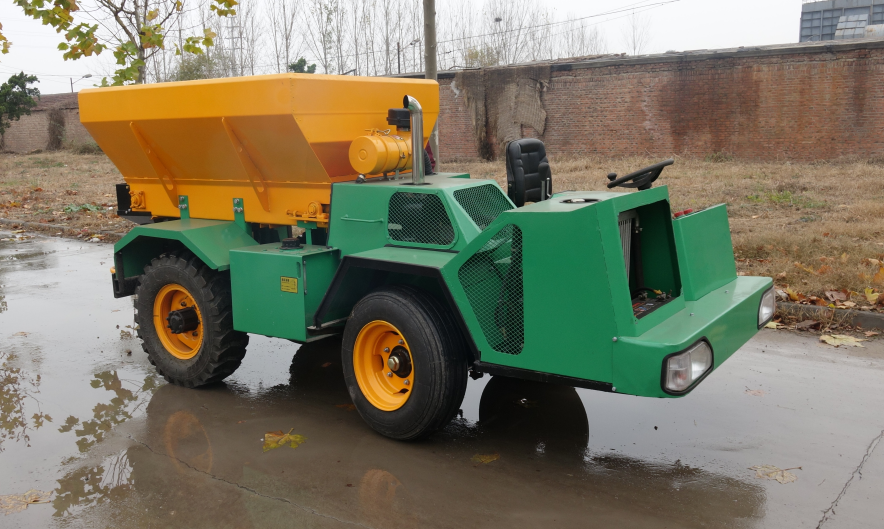
Two types of power options are provided: Self-propelled & PTO driven
3-point hitch is adopted to fit your tractor or ATV. It requires a match tractor power from 25-120 hp
Every model is built with corrosion-resistant, heavy-duty materials for durability and longer service life.






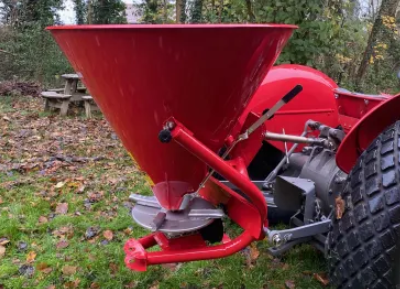
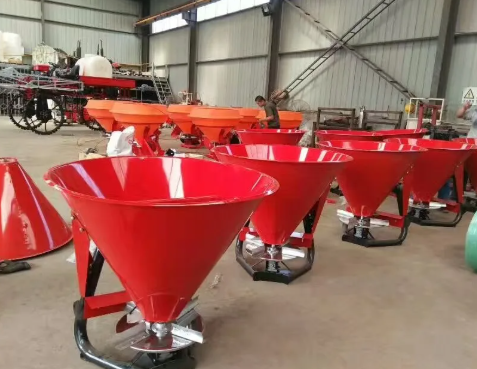
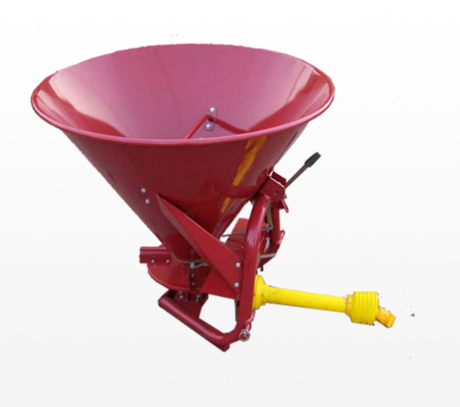
3-point broadcast seeder
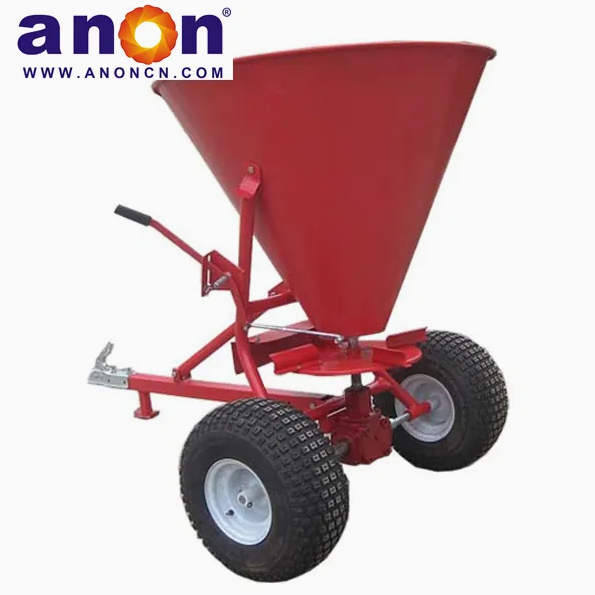
This cost-effective model is designed for small-scale spreading operations. It offers an efficient solution for farmers who need reduced workload in smaller working areas. It is ideal for narrow farms, orchards, and small lawns where flexibility and ease of operation are essential.
PTO Driven: The spreader is powered by small tractors or hand tractors with 25–60 HP. When powered with higher horsepower tractors, it can handle larger material loads, improving overall working efficiency.
Versatile Application: This model is suitable for spreading fertilizer, seeds, lime, and other granular materials, making it a practical choice for a wide range of agricultural tasks.
Flexible Hopper Options: The hopper material can be customized based on your needs. We offer stainless steel, engineering plastic, and carbon steel. Stainless steel offers premium corrosion resistance for long-term usage, engineering plastic provides a lightweight and cost-effective solution, and carbon steel ensures high strength for heavy-duty use.
Efficient Spreading: The machine is equipped with a single spinner disc with a 540 rotation speed. It delivers a spreading width of 4–8 meters, helping reduce working time and labor costs while maintaining consistent distribution.
Easy Operation & Low Maintenance: The speed controller, spreading amount knob, and width baffle are very easy to use. Even people with little equipment knowledge are able to operate it easily.
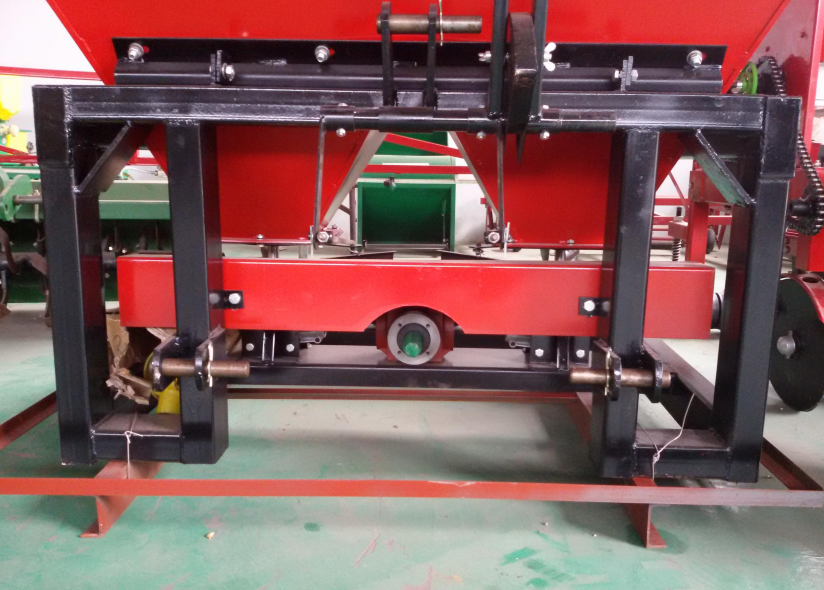
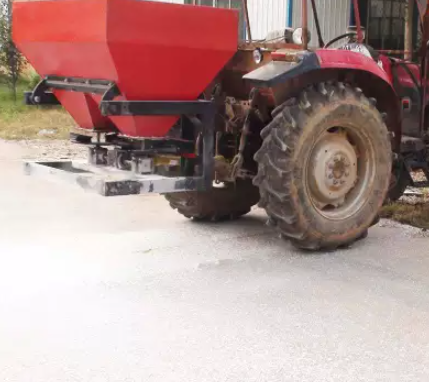
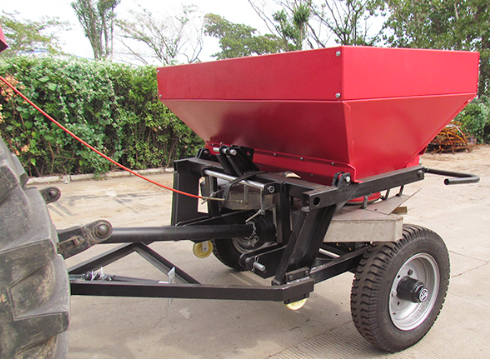
Twin spinner broadcast seeder
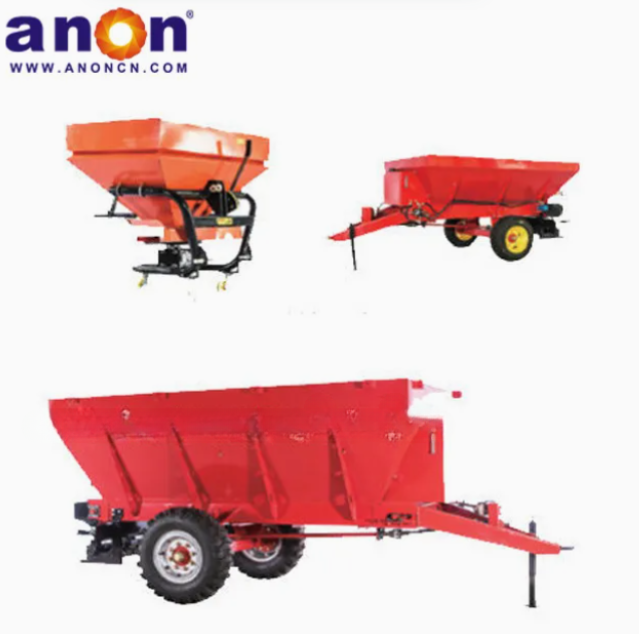
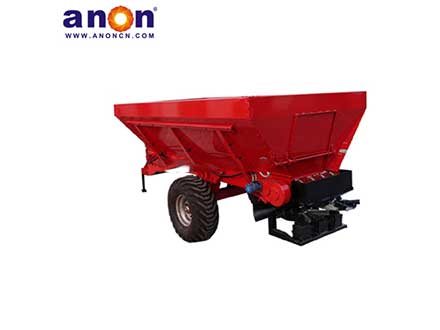
ANON twin spinner model is a time-saving model for medium-scale and large-scale operations. It is ideal for operations that require higher efficiency and better uniformity. It is an ideal model for farmer that already own a utility tractor, as it can deliver greater results with lower equipment cost.
PTO Driven: This model has to be powered by a tractor with at least 50 horsepower, as the overall weight is higher and the double spinner requires more power to drive. When powered by a 120 HP tractor, it can hold 8 m^3 of materials for the maximum capacity.
Less passes: this model has a larger spreading width, up to 16 meters, covering more area in a single pass. It ensures fewer passes and operation time, saving the overall labor costs.
Improved Distribution Consistency: The double spinner design can reduce the problem of uneven distribution that occurs in a single spinner version – more materials clustered in the center and less in the outer cycle. This improvement can increase the fertilizer utilization rate and reduce the waste.
Terrain Adaptability: The center of gravity of this spreader is closer to the ground for better stability. This ensures a better spreading performance on a slope and an uneven field. We also feature an extendable draw bar to adapt to turning in different places.
Stable operation: The conveying system is enhanced in the hopper. It helps to move heavier materials to the disc and increase the working stability.
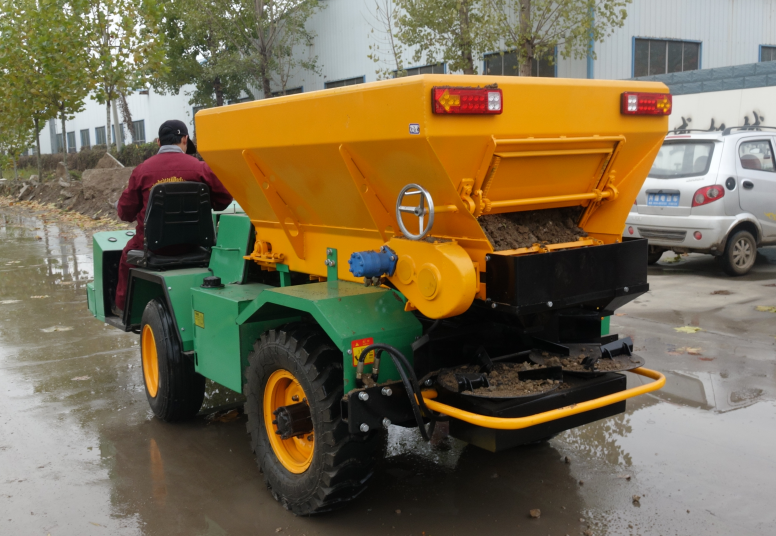
Self-propelled broadcast seeder
ANON self-propelled spreader is an ideal solution for customers who require high-capacity performance, large-area coverage, and commercial-level efficiency. It provides maximum efficiency and operational independence as it is powered by its own engine. The engine-driven model makes it more flexible to operate in various field conditions.
High Working Efficiency: This model offers the best efficiency; it enables it to cover up to 18 meters in one pass, significantly reducing the number of passes required. That enable to complete spreading in a significantly shorter time. This not only saves time but also lowers labor costs and increases overall farm productivity.
Continuous long operation: the spreader is equipped with an ANON high-end water-cooling radiator. This allows for continuous operation even under heavy-duty conditions, improving reliability in large-scale operation.
User-Friendly Design: We specifically adopt an ergonomic seat and an easy-to-operate control panel, providing a comfortable working experience. This helps reduce operator fatigue and ensures smooth and efficient operation throughout the day.
Related Products
FAQ
The core components of a broadcast spreader include a seed hopper, a centrifugal spreader, and a drive mechanism. During operation, the materials in the seed hopper are agitated—either by vibration or a built-in stirrer—and fall by gravity through an outlet at the bottom of the hopper. The materials then land on a high-speed rotating spreader disk, where they are flung outward by centrifugal force, ensuring even coverage across the ground.
First, process the seed material by sieving out lumps and impurities to ensure it is dry and loose. Next, clean any remaining debris from the feed hopper, check the discharge port and guide baffles for blockages, and tighten the bolts on the swivel disc. Then, remove large stones, straw piles, and other obstacles from the field to prevent obstruction of seeding or damage to the machine. Finally, conduct a small-scale trial seeding to confirm that the seeding rate and uniformity meet standards before proceeding with large-scale operations.
After sowing the seeds on a firm seedbed, you can compact it again to mix the seeds with the top layer of soil to a depth of 0.6-1.5 inches (about 1.2-1.5 cm). If you don’t have a compactor, gently dragging after sowing can achieve the same effect.
Stunted growth: Correct seeding location helps minimize uneven grass growth while ensuring even distribution of soil nutrients. Therefore, if fertilizer is broadcast or sprayed at the same time as seeding, it may disturb the soil and displace the new seed.
If the broadcast seeder becomes clogged, please stop the machine immediately for safety. First, thoroughly clean the machine, opening and removing all debris and clumps from the seed outlet or discharge port. Next, check the transmission system, ensuring that transmission components such as chains and gears are properly engaged and that the seed outlet shaft can rotate. Finally, address the root cause. If the blockage is due to excessive material moisture, allow the material to dry before use. If the discharge port opening is too small, increase it appropriately. After completing these three steps, test the machine by running it idle to ensure smooth material flow before resuming operation. Maintaining dry material and regular cleaning are key to preventing blockages during daily use.
When the broadcasting seeder produces uneven seeding, resulting in “dense in the middle and sparse at the edges” or “strip-like accumulation,” the following measures can be taken: If it’s dense in the middle and sparse at the edges, it’s mostly due to an improper angle of the guide baffle. Adjusting the baffle to guide the material towards the edge of the spreader disc and reducing the travel speed will improve the situation. If strip-like accumulation occurs, it’s most likely due to loose bolts on the spreader disc causing eccentric rotation. Stop the machine and tighten the bolts. If the spreader disc is deformed, it needs to be replaced. If there are still localized missed seeding areas, check if there is any debris blocking the discharge port. Cleaning it will restore the evenness of the seeding.
The ANON broadcast seeder machine has a wide range of applications and can be used for pre sowing of crops such as lawns, wheat, rapeseed, and green manure, helping to improve coverage and seedling uniformity; It can apply granular fertilizer or compound fertilizer during the middle stage of crop growth to improve nutrient utilization efficiency and promote stable and increased yield; The machine can evenly scattered grass seeds on natural or artificial pastures to increase germination rates and promote grassland regeneration and recovery; It also apply in spread organic fertilizers, lime, bacterial fertilizers, etc. in the root zone of the orchard to improve soil structure and enhance water and fertilizer retention capacity.
Before sowing, you need to check whether the sowing box, mixing device, sowing plate, power connection, and sowing amount adjustment device are normal; Then, according to the crop type, field area, and other factors, the sowing rate should be reasonably set, and the size and speed of the discharge outlet should be adjusted; Keep the tractor running at a constant speed in a straight line during sowing, and turn off the sowing device when turning, starting or braking to prevent unevenness; Try to avoid working on windy days as much as possible. If necessary, lower the sowing height and adjust the angle; After completing the homework, you need to clean up the residue in a timely manner, do regular maintenance work, and pay attention to rain and moisture prevention when storing for a long time.