



Vegetable Seeder
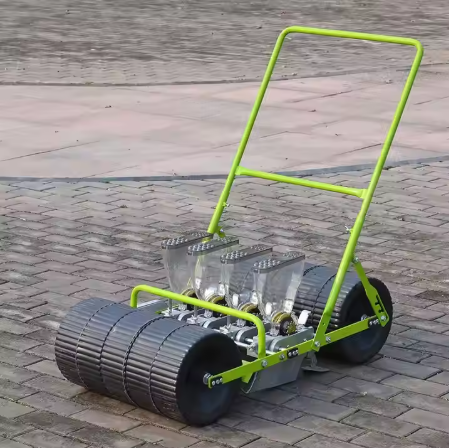
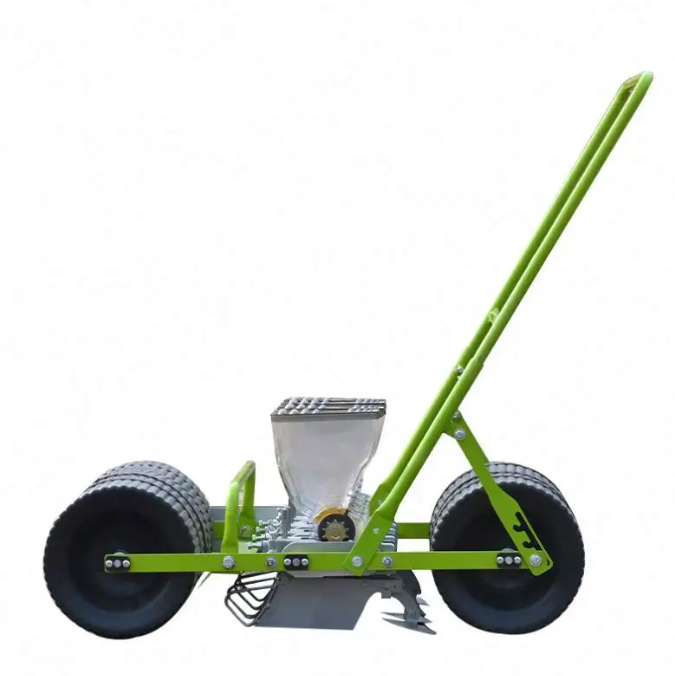
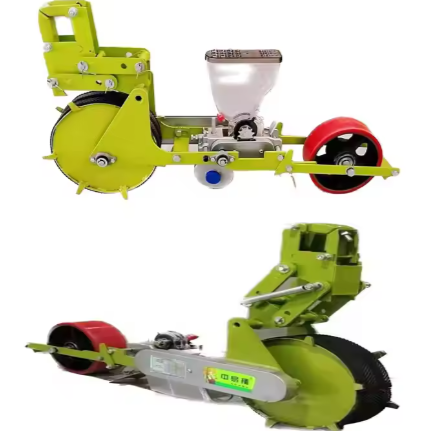
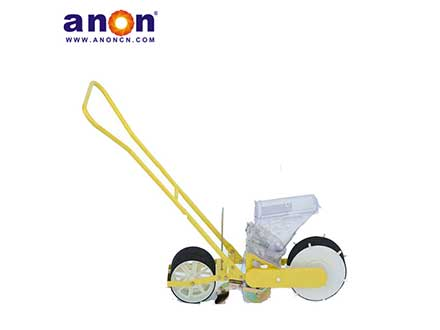
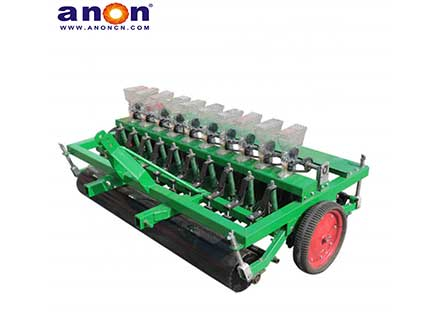
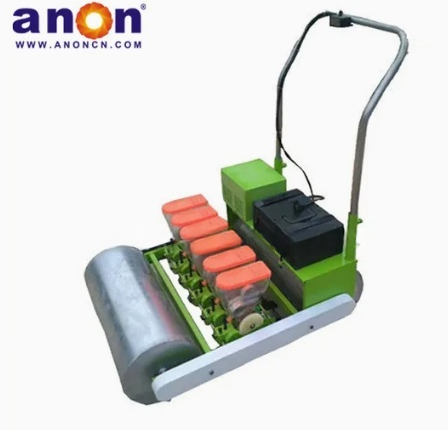
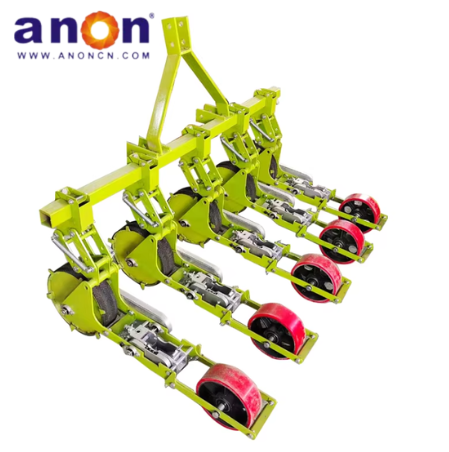
Using a vegetable seeder can automatically sow vegetable seeds into the soil according to a certain row spacing, plant spacing, and sowing depth, greatly improving your sowing efficiency. It’s faster than manual sowing and can save you seeds. The ANON vegetable planter can complete the steps of digging furrows, sowing seeds, covering soil, and compacting in one go.
1. Support multi-row sowing, hole sowing/row sowing mode optional;
2. Adapt to tractor traction or hand-push power structure;
3. High sowing accuracy, save seeds, save labor, and improve germination rate;
4. Suitable for a variety of seed specifications and sowing density requirements;
5. The ANON vegetable seeder can sow small seeds of vegetables such as carrots, spinach, cabbage, celery, lettuce, onions, shepherd’s purse, and coriander.






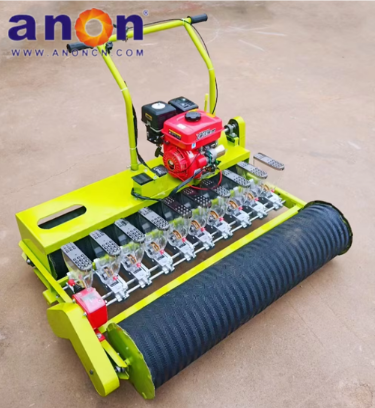
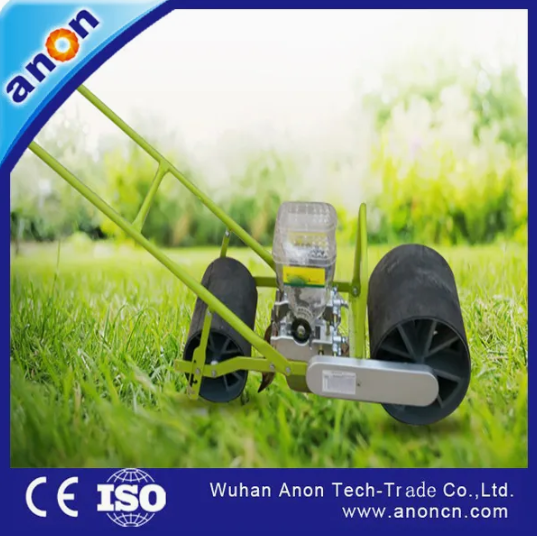
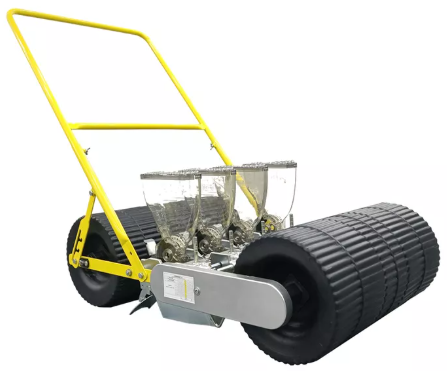
Precision Sowing
ANON vegetable seeders are designed with the characteristics of various vegetable seeds in mind. Employing a precision seed metering system, they accurately control the sowing rate, whether it’s small seeds like coriander and spinach, or medium-sized seeds like radishes and tomatoes. They can achieve precise sowing of one or more seeds per hole, ensuring even seed distribution and avoiding empty holes or seed clumps. This completely solves the problems of seed waste and thinning difficulties associated with manual sowing, guaranteeing uniform emergence and maturity. This saves on seed costs and lays a solid foundation for subsequent mechanized harvesting.
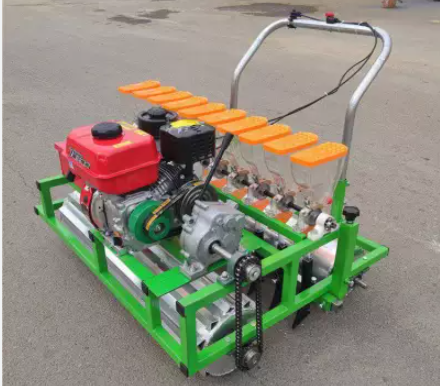
Shallow Sowing Design
ANON has designed its seed planting system to allow for precise adjustment of the sowing depth, considering that vegetable seeds require shallow sowing for optimal germination. The addition of a light-pressing soil covering device ensures even soil coverage, allowing the seeds and soil to fully absorb moisture without compressing the soil and affecting aeration. This allows even delicate seeds like lettuce and celery to germinate quickly, increasing the emergence rate from around 70% with manual sowing to over 95%. A single sowing ensures full seedling emergence, eliminating the need for replanting and reducing seed and labor waste.
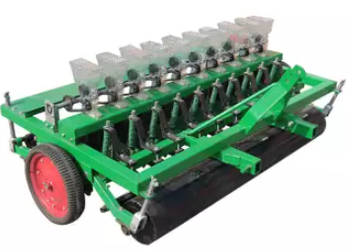
Multi-functional Machine
The ANON vegetable planter is a multi-functional machine. By changing the seed tray and adjusting the components, row spacing and plant spacing can be flexibly adjusted. A single machine can adapt to the sowing needs of more than ten kinds of crops, easily handling the sowing of leafy vegetables, root vegetables, and solanaceous seeds. When changing crops for the season or planting multiple crops simultaneously, there is no need to purchase additional equipment; one machine can cover multiple planting tasks throughout the year.
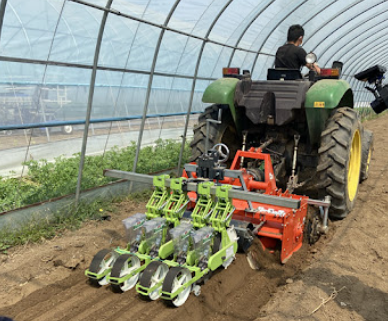
Multi-Scenario Coverage
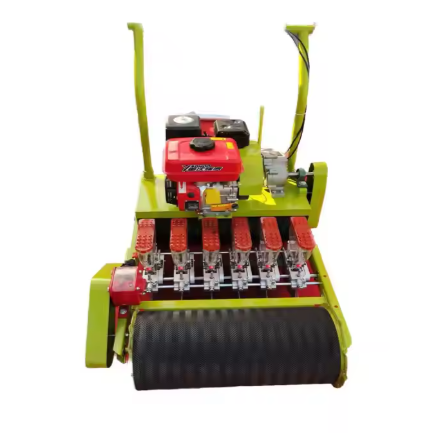
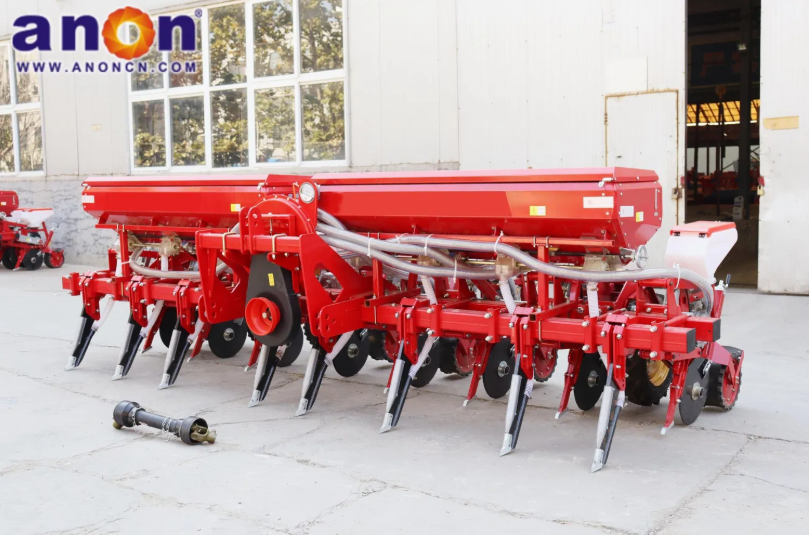
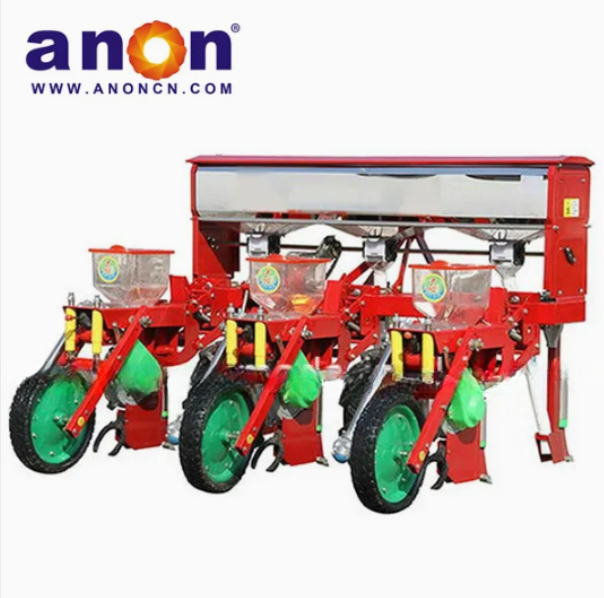
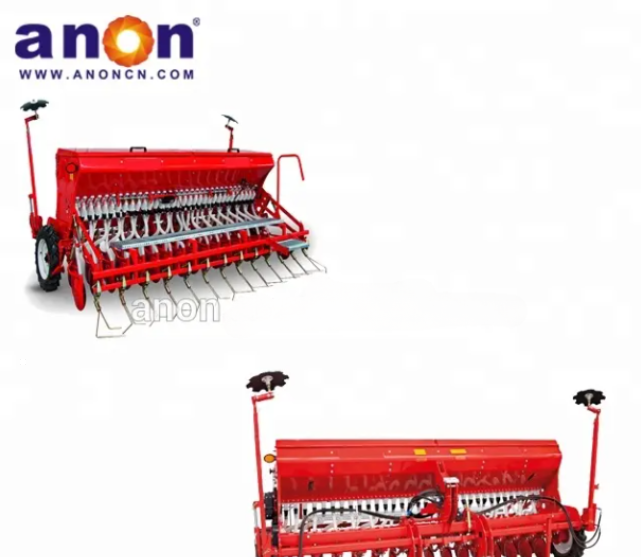
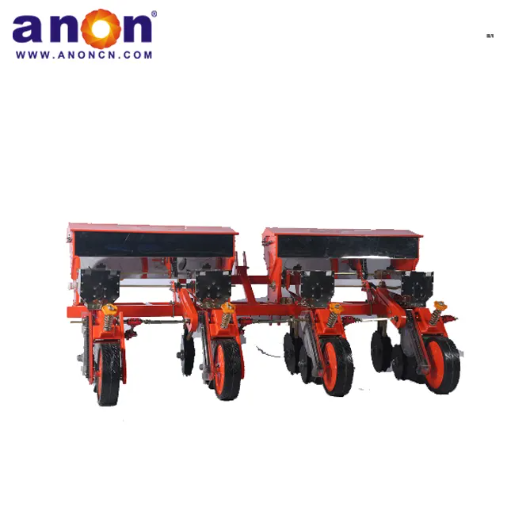
ANON’s vegetable seeders are adaptable to a variety of applications. We offer three types: push-type, self-propelled, and tractor-trailer-driven, meeting the operational needs of both family farms and large-scale planting. The push-type vegetable planter features a lightweight design, requires no power drive, can be operated by a single person, and has a small turning radius. The self-propelled walk-behind planter is equipped with a high-performance engine, offering high efficiency and labor-saving operation. The tractor-trailer-driven vegetable planter is equipped with tractor suspension and is suitable for large-area operations.
Applications
The vegetable seeder is widely used in large-scale operations of vegetable planting bases, precision sowing in greenhouses, and planting scenarios with high density and uniformity requirements in organic farms. At the same time, it is also suitable for the mechanized operation needs of agricultural machinery cooperatives and agricultural service organizations, especially for small vegetable growers in hilly and mountainous areas and scattered plots, effectively improving sowing efficiency and seedling consistency.
Using Tips
In order to improve the operating effect of the vegetable seeder, it is recommended to screen the seeds and pre-treat them appropriately before sowing to ensure that the land is fine and flat and the soil moisture is suitable; adjust the row spacing, plant spacing and sowing depth reasonably according to the type, and conduct trial sowing to confirm uniformity; after the operation, clean the seed meter and residual impurities in time, and lubricate the transmission parts regularly to ensure sowing accuracy and equipment life.
Related Products
FAQ
Radishes. Radishes are probably the fastest-growing vegetable in your garden, ready to be picked in as little as 30 days from sowing. Their spicy flavor is perfect on a vegetable platter or added to a fresh salad.
Choosing the right seeder depends on the area you need to harvest and the amount of work required. In addition to the area you want to plant, you also need to consider the type of seed you want to plant, the soil you want to plant it in, and how you want to plant it.
If you plan to plant new plants, be sure to water the soil in the garden first. Of course, if it rains, your soil may already be moist enough. Alternatively, if you have an irrigation system, you may not need to water the garden soil again before planting.
The sowing depth can be adjusted in the following ways: Adjust the depth of the furrow opener – changing the position of the furrow opener’s depth-limiting wheel or plate controls the furrow depth; adjust the height of the press wheel – the height of the press wheel directly affects the thickness of the soil covering; for towed models, the tractor’s attachment height and the furrow opener’s spring pressure can be adjusted for further fine-tuning. The adjustment principle is: 1-2 cm for small seeds, 3-5 cm for large seeds. The specific depth needs to be adjusted flexibly according to the crop variety and soil moisture.