



Summary
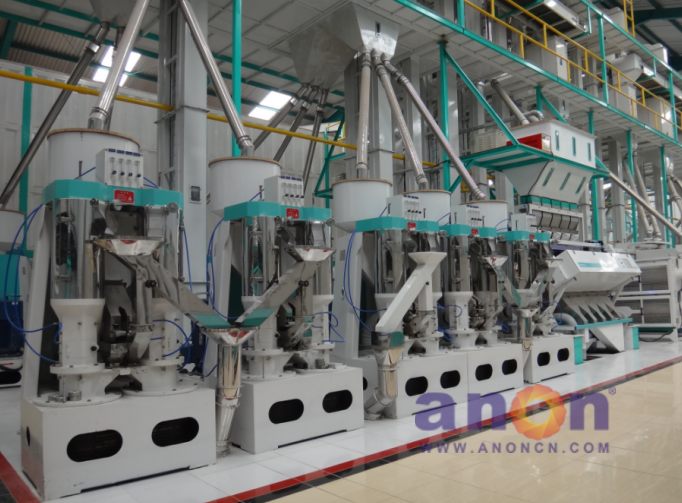
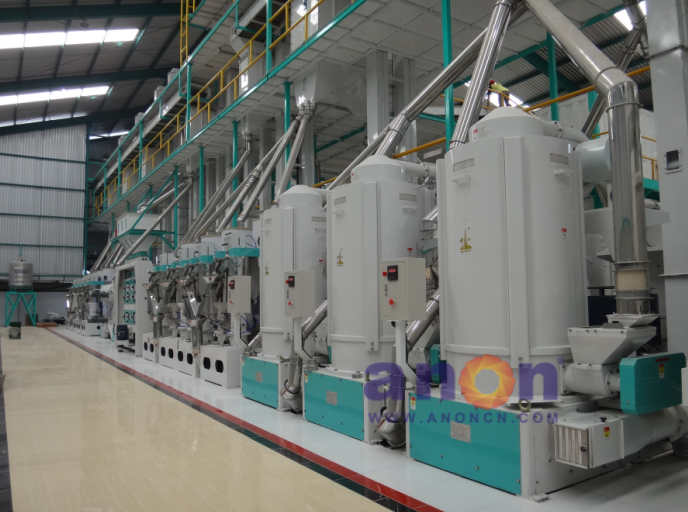
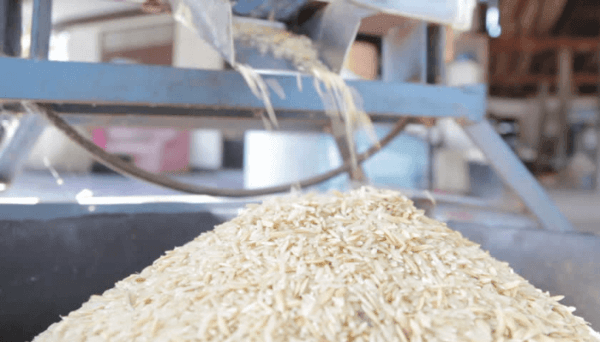
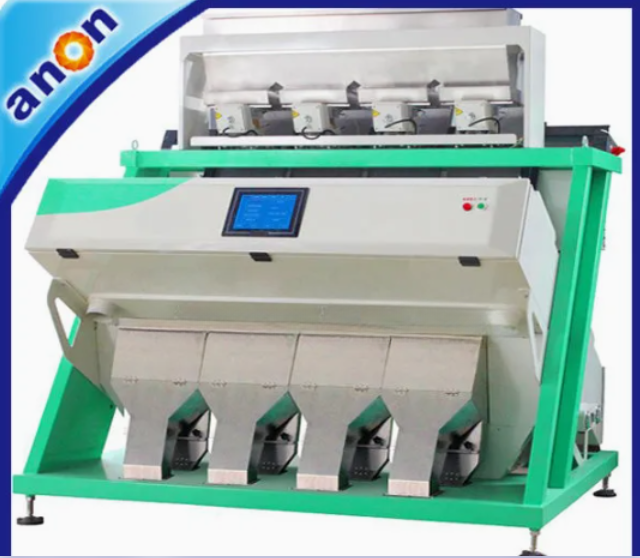
ANON manufactures the 240–500 TPD rice mill plant as a customizable, industrial-scale processing line for large commercial and government rice production. This plant sits within ANON’s full rice mill range, spanning 15 TPD facilities up to ANON’s 500 TPD industrial configuration, so you can scale up without changing suppliers. Raw paddy moves through cleaner machine, huller, paddy separator, whitener machine, grader, color sorter, polisher, and packing machine in one connected line; no manual transfer between stages.
Our Product
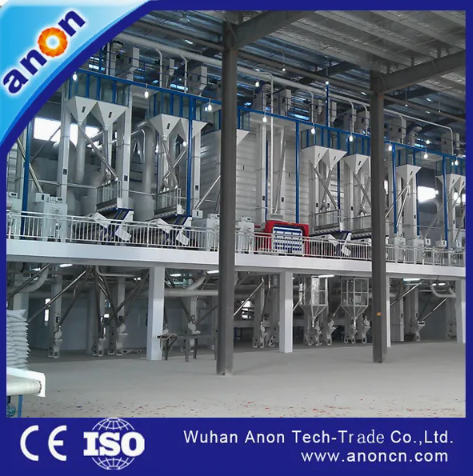
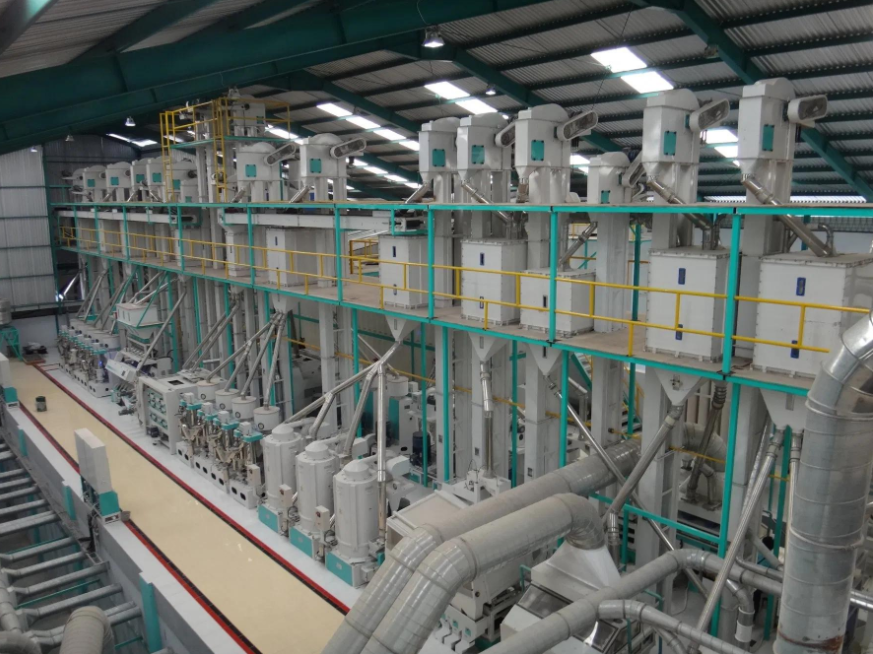
Precision Flow, Higher Value
Speed alone doesn’t protect your rice mill plants revenue; how gently and precisely paddy moves between stages does. ANON’s sequential control system matches each stage’s output speed to the capacity of the next machine downstream, so paddy never backs up, over-processes, or gets rushed through whitening and polishing out of sequence.
That precision is what keeps your rice intact instead of cracked or over-milled. When whitening doesn’t outpace grading, and grading doesn’t outpace color sorting, each grain gets the full, correctly timed pass through every stage, protecting the head-rice yield you actually sell at a premium, not just the total tonnage that leaves the plant.
For large commercial and government-scale rice processing production, this is often the real difference between a plant that hits its daily tonnage and one that hits its daily tonnage at the grade and value your buyers pay for. ANON’s synchronized flow control is built to protect both, so your output supports your revenue, not just your throughput number.
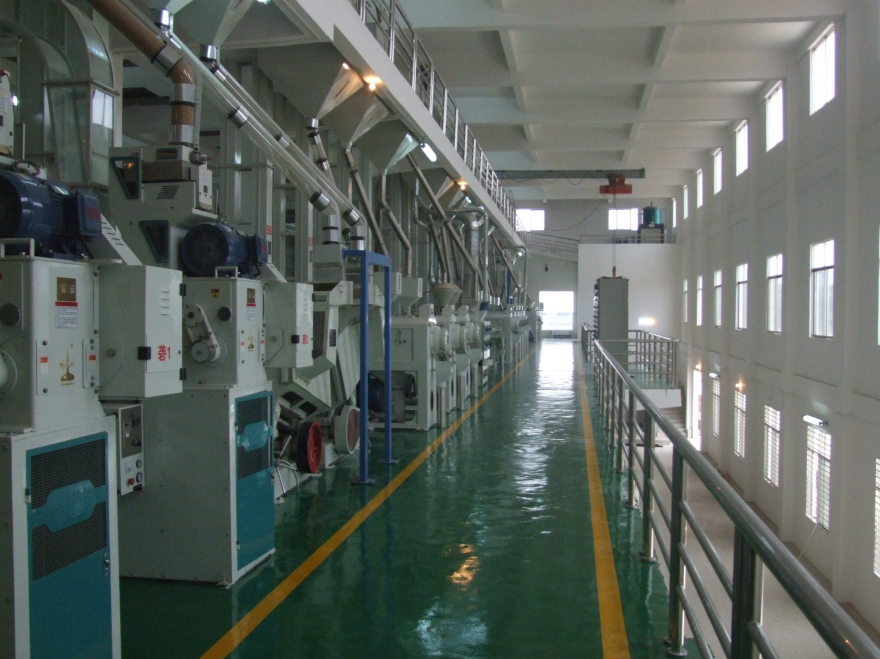
Built for Continuous Industrial Runs
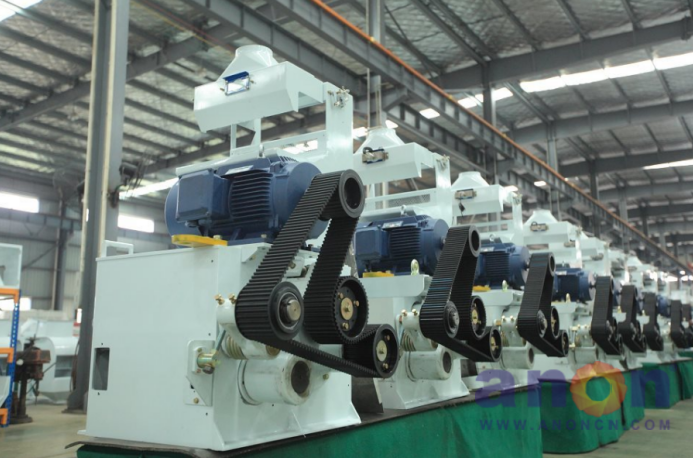
Your daily tonnage stays predictable whether you’re three hours into a shift or ten, because ANON’s 240–500 TPD rice mill plant is engineered to run continuously through full industrial shifts rather than in short intermittent batches. That consistency comes from a reinforced frame that protects your drivetrains and bearings from the mechanical stress extended operation puts on them.
A frame that flexes under vibration loosens fittings and shortens component life over time. As a result, your whitening and polishing stages maintain consistent output quality from the first hour of the shift to the last. This keeps output quality consistent across a full day of production, not just in short test conditions.
ANON’s 240–500 TPD rice mill plant is built around that requirement, so your daily output plan isn’t disrupted by unscheduled downtime.
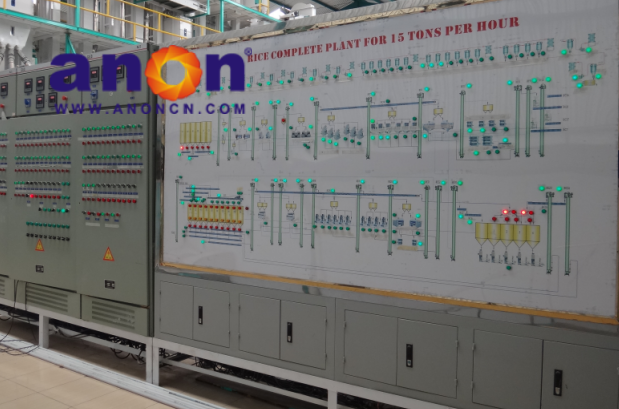
Configured to Your Factory Layout
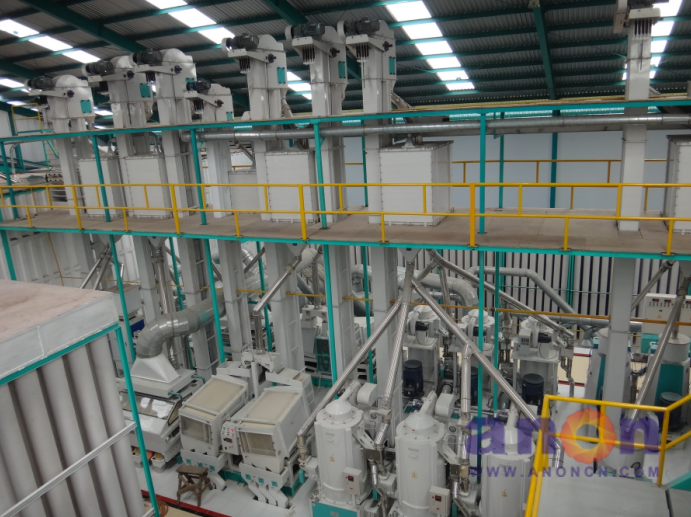
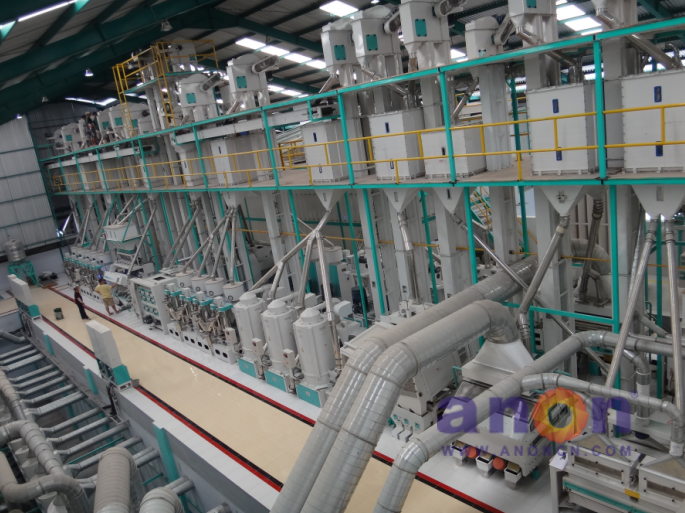
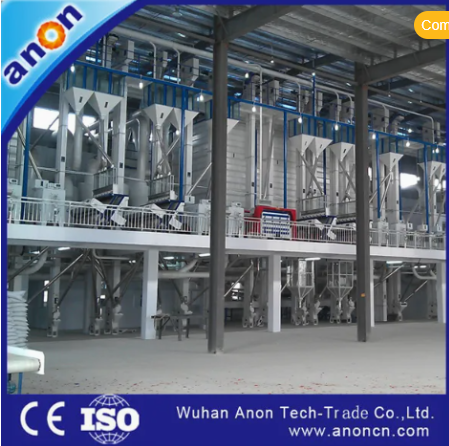
ANON configures the 240–500 TPD rice mill plant around your factory layout instead of forcing a fixed equipment arrangement. You get equipment positioning, conveyor routing, and capacity allocation matched to your available floor space and building structure. This layout-based approach applies whether you’re retrofitting an existing facility or building a new industrial site.
ANON’s engineering team maps your target capacity within the 240–500 TPD range against your site dimensions, then arranges bucket elevators, conveyors, and processing units to fit that footprint. This avoids the common problem of buying fixed-layout equipment that doesn’t match your building, forcing costly structural changes after installation.
This same layout flexibility lets ANON’s rice mill plant be specified once and adapted per site rather than re-engineered from scratch, useful for managing multi-site rollouts. That keeps your equipment specification and project timeline consistent across locations, even when your building dimensions differ site to site.
Built to Run Efficiently
Industrial-scale processing runs your motors, blowers, and elevators for full shifts, so power draw adds up fast across a 240–500 TPD rice mill plant processing line. ANON sizes drive components to each stage’s actual load rather than over-specifying motors across the board, and applies variable-frequency drives where process control justifies them, so equipment isn’t drawing full power during lighter processing loads.
That matters directly to your operating cost on high-volume runs, where even a small efficiency gap compounds across a full production year. Confirm the exact connected load and expected energy draw for your configuration with ANON’s engineering team as part of your quotation, since power requirements shift with automation level, drying or parboiling additions, and packing-line scope.
Clean Air, Contained By-Products
You’re not managing loose debris across your factory floor, because dust, husk, and bran by-products are contained at the source. Dust aspiration draws fine particulate away from rice processing points as it’s generated. Husk suction removes husk material directly from the husking stage before it spreads to adjacent equipment.
Bran collection channels bran away from the whitening and polishing stages into a dedicated collection point, keeping it separate from your finished rice output. You keep your finished rice free of metal contamination and protect internal components from damage because a magnetic separation stage removes metal fragments before they reach polishing equipment.
Uncontained dust and husk buildup isn’t just a cleanliness issue; it raises fire risk and increases rice mill equipment wear from abrasive particulate settling into moving parts. ANON’s integrated system addresses both by removing by-products at each stage rather than leaving cleanup to a separate post-processing step, keeping your rice mill plant air cleaner and your equipment running longer.
Related Products
1. How is capacity measured for the ANON 240–500 TPD Rice Mill Plant?
TPD refers to Finished Rice Output once husk, bran, and processing loss are removed. The raw paddy your ANON 240–500 TPD Rice Mill Plant processes per day is more than the finished rice output. Confirm your exact input-to-output ratio with ANON based on your paddy variety and moisture content.
2. Can the ANON 240–500 TPD Rice Mill Plant process both long-grain and short-grain rice?
Yes. ANON calibrates the husking, whitening, and grading stages of your 240–500 TPD Rice Mill Plant to the grain length and variety you run. Confirm your specific paddy types with ANON so the plant is set up correctly before installation.
3. Does the ANON 240–500 TPD Rice Mill Plant require a dedicated foundation or civil works?
Site requirements depend on your factory layout and building structure. ANON’s engineering team reviews your site during quotation for the 240–500 TPD Rice Mill Plant and confirms any foundation or civil work needed before installation begins.
4. How long does commissioning take once the ANON 240–500 TPD Rice Mill Plant arrives on site?
Commissioning time depends on your site readiness and configuration complexity. ANON’s installation team supports on-site setup and operator training for your 240–500 TPD Rice Mill Plant to bring it to full daily output as quickly as your site allows.
5. Can the ANON 240–500 TPD Rice Mill Plant be upgraded or expanded after installation?
Yes. Because the 240–500 TPD Rice Mill Plant is built on a modular, layout-based configuration, additional capacity or processing stages can be planned into your original layout. Discuss expansion plans with ANON’s engineering team before finalizing your initial configuration.