



Rice Mill
Polishing Machine Series
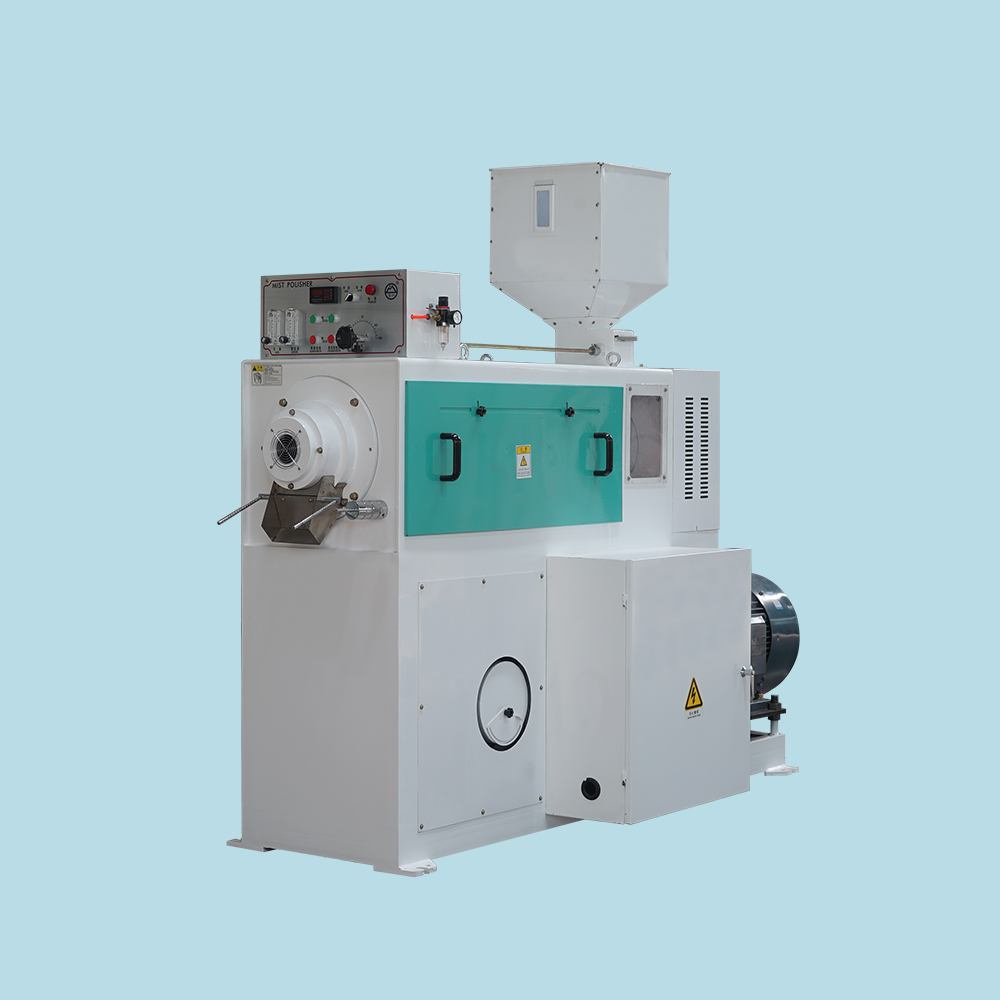
The ANON rice polisher is an essential machine for advanced rice processing, designed to provide the industry with an efficient and reliable polishing solution. Its primary function is to remove the outer skin and fine impurities from rice grains, giving them a smoother, brighter, and cleaner appearance while preserving their natural nutritional value. Our rice polishing equipment is engineered with advanced technology and precision design, enabling fully automated operation with minimal manual intervention. This ensures higher productivity while reducing labor intensity.
Choose the right product for you
Providing quality products and services.
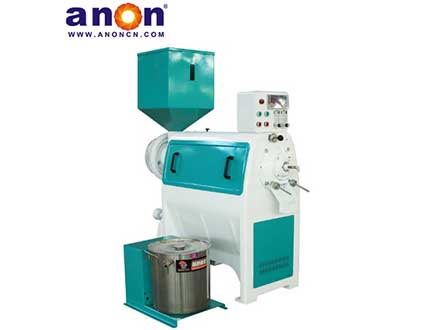
ANON Home Rice Polisher,Rice Polisher Machine
The ANON home polisher effectively improves the taste, quality, and appearance of rice by polishing it. During operation, simply feed the rice into the inlet. As the rice falls into…
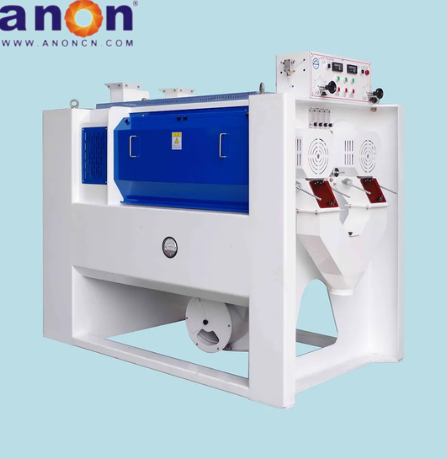
Double Roller Water Silky Rice Polisher Rice Milling and Polishing Machine
The ANON MPGW double-roller rice polisher features a horizontal structure and consists of a drive system, feeding device, polishing chamber, discharge port, spraying device, rice bran collection hopper, base, and…
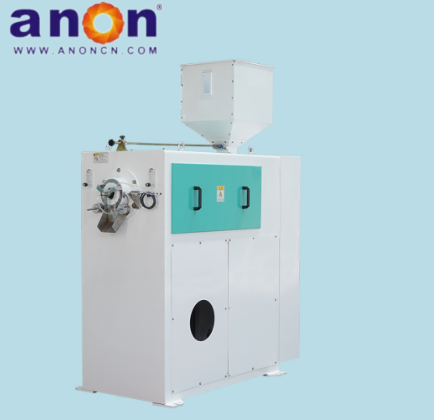
ANON MPGW17 rice polishing machine for rice processing
The ANON MPGW series rice polishing machine is a new generation product developed based on the actual situation in China and the introduction of international advanced technology. Its structure and…
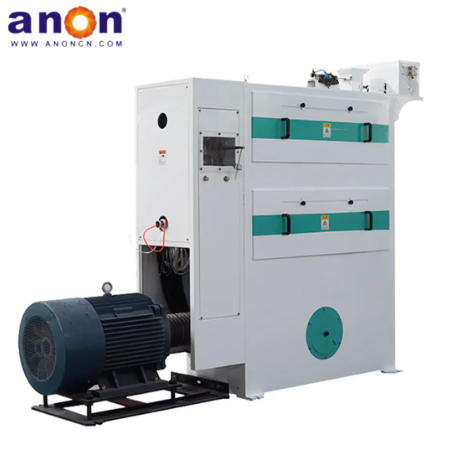
ANON Rice Polisher Double Blower Powder Automatic Rice Polishing Machine
Product descriptions T8 double roller polisher is a new type of double roller rice polisher developed by optimizing the latest technology at home and abroad. This series of polishers has…
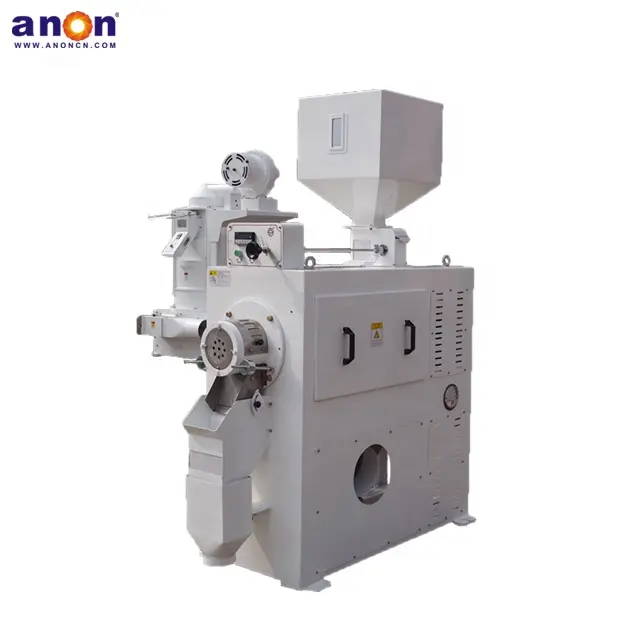
ANON Togo high quality mist water rice polisher rice polisher machine
Product Details MPGW series rice polishing machine is a new generation of product that is developed with introduced international advanced technology in combination with the real conditions of China, structure…
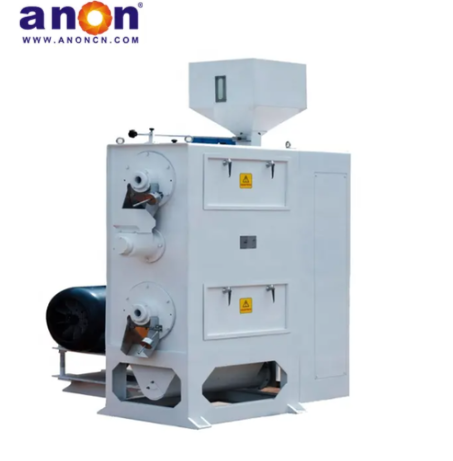
ANON Double Roller Rice Polishing Machine
MPG series rice polishing machine is the introduction of international advanced technology, combined with the actual situation of our country, after several optimizations, it is in the leading position in…
Introduction
A rice polisher is used in the fine processing stage of rice milling, mainly for treating the surface of milled rice. Through a combination of mist spraying and polishing, the machine enhances the luster of rice grains. Polishing not only removes bran powder from the surface but also pre-gelatinizes and glutinizes the starch on the grain surface. This process fills in cracks, leaving the rice smooth, white, and glossy — improving its commercial value, taste, and extending its shelf life.
ANON offers various types of polishing machines, such as single-roller polishing machines, double-roller polishing machines, vertical polishing machines, and horizontal polishing machines, with capacities ranging from 0.8T/H to 8.5T/H and more. In addition to rice polishers, ANON provides a complete range of rice milling solutions — from standalone machines to full production lines. We also offer comprehensive after-sales service, including technical support and maintenance guidance.
Working Principle
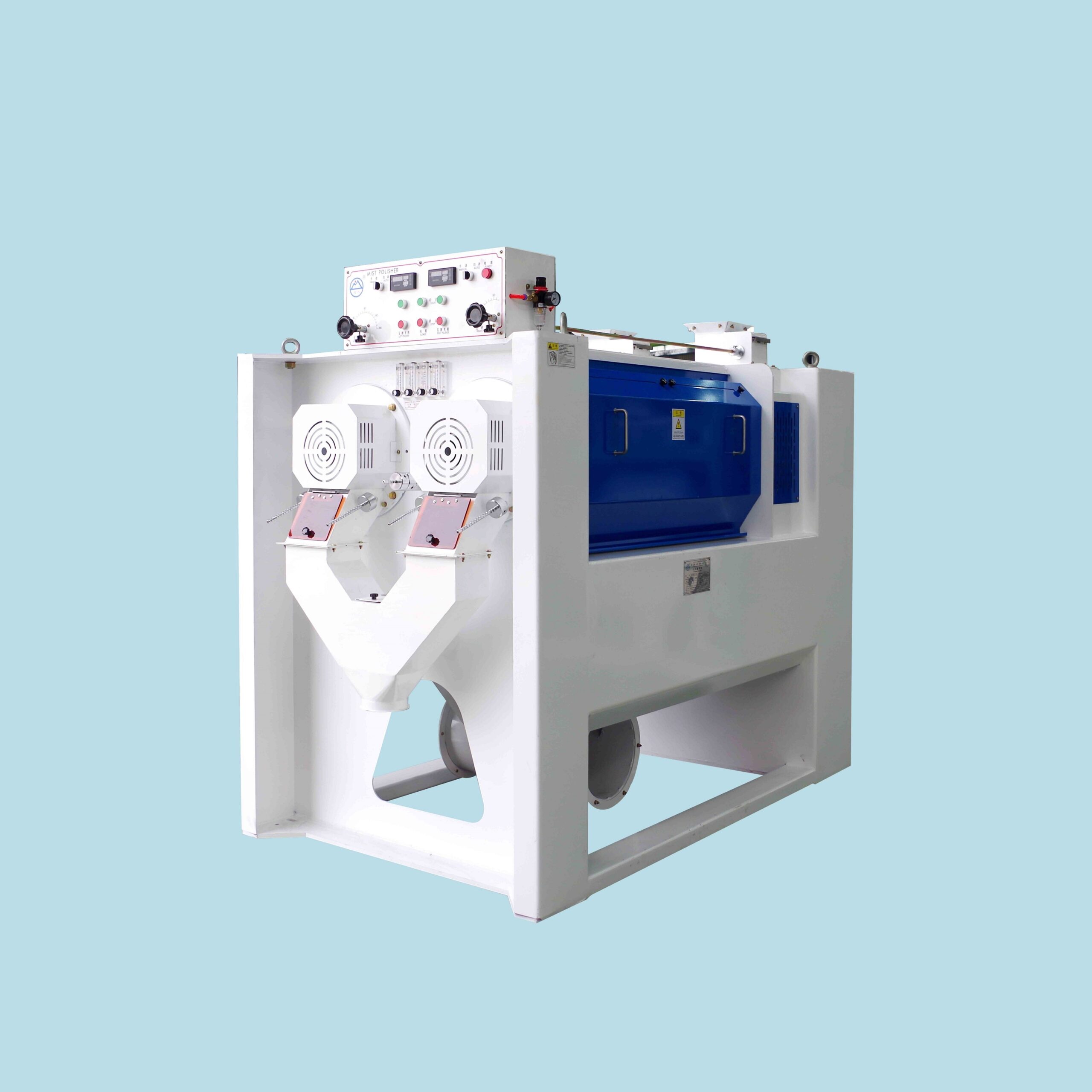
Rice enters the machine through the feed inlet, where a fine mist of water is sprayed onto the grains before polishing, forming a thin film that softens the rice surface. The rice then enters the polishing chamber, where, under controlled pressure and temperature, high-speed rotating polishing rollers and abrasive friction smooth and polish the grains. A built-in powerful fan simultaneously removes the bran dust and debris generated during polishing, preventing reattachment. After polishing, the rice grains have a bright, white, and glossy appearance, with a reduced broken rice rate and improved overall quality.
Features
1. Superior Rice Quality
The ANON rice polisher uses long-roller polishing technology to produce rice with high precision, a bright white finish, and a smooth, crystal-clear surface. After polishing, grains have minimal grooves or cracks, making it difficult for bran, dust, or fungi to accumulate. This significantly extends storage life and ensures food safety. With the combined action of polishing rollers, rice screens, and a precise water-spray atomization system, bran and surface cracks are effectively removed. The result is premium-quality rice with high luster and strong market appeal — easily graded as top-tier rice that commands higher prices.
2. Improved Taste and Texture
Polished rice is free from residual bran and impurities, reducing cloudiness in the cooking water. During cooking, starch gelatinization becomes more uniform, producing rice that is fragrant, light, and non-sticky. The result is a noticeably better flavor and eating experience.
3. High Adaptability
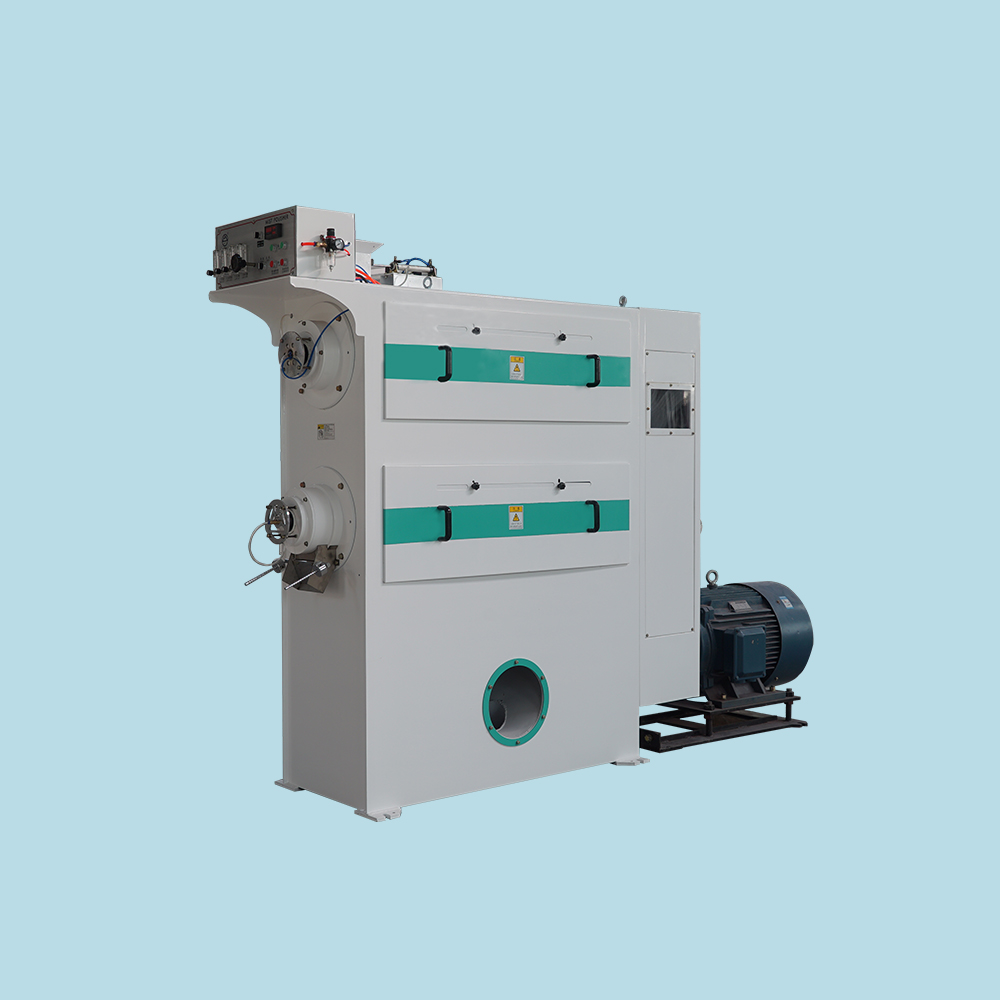
ANON rice polishers are available in different output capacities, with adjustable water-spray levels, polishing intensity, and rice flow rate to meet the needs of mills of various scales. They are compatible with different rice varieties, including Japonica and Indica, and are especially effective for small or fragile grains. Under the same raw material conditions, they can increase the whole polished rice yield by 5–8%, reducing raw material loss.
The ANON rice polisher offers flexible polishing methods, accommodating both single-roller and double-roller polishing processes to meet different production requirements. Its adaptable design allows for large feed capacity and high output, ensuring efficient processing.
4. Easy Operation
ANON rice polishing machines mostly use digital display ammeters, imported material level sensors, solenoid valves, and other key components to ensure that the control operation of the polishing process is simple, reliable, fast, and clear, with a high degree of automation, reducing the difficulty and labor intensity of manual operation and reducing dependence on operator experience. Precision parameter control helps avoid human error and ensures consistent quality. The automatic water-supply system simplifies operation, while the self-cleaning feature clears the polishing chamber after production, reducing manual intervention. Designed with advanced technology, multiple safeguards, and precision control, ANON polishers deliver efficiency and reliability tailored to the rice milling industry.
5. Environmentally Friendly
The ANON rice polisher features an efficient dust and bran removal design, ensuring that the dust concentration in the workshop is far below national safety standards. This protects the health of operators and avoids fines for exceeding dust emission limits. The sealed polishing chamber, combined with the dust collection system, effectively reduces dust and noise. This low-noise design further improves the working environment, and the compact body reduces the footprint, saving valuable space and making installation simple and convenient.
6. Enhances Brand Value
Polished rice not only looks and tastes better but can also be marketed as premium or high-grade rice. This helps processors strengthen their brand image, achieve product differentiation, and capture higher market value through premium pricing.
7. Automation and Durability
ANON polishing machines offer automation, allowing you to set parameters with a single click and automatically adjust feeding, water supply, and discharge, reducing human error. Our core components, such as polishing rollers and screens, are made of highly wear-resistant materials, extending their service life by 20% compared to the industry average. Routine maintenance only requires cleaning debris and periodically replacing brushes, without requiring professional technical skills.
8. Low Broken Rice Rate
ANON rice water mist polishing machines utilize an innovative water mist humidification and flexible polishing technology to effectively buffer mechanical force during the polishing process, significantly reducing the broken rice rate from a physical principle perspective. Rice grains are evenly polished in the polishing chamber, removing residual bran, grooves, and fine powder layers, while avoiding excessive grinding that leads to an increased broken rice rate. High-quality models can achieve a stable broken rice rate of less than 3%. You can precisely adjust the drum speed, water volume, and polishing time to suit different varieties such as indica rice, japonica rice, and germinated rice, creating a uniform and bright starch protective film on the rice surface. This directly translates to a higher yield, converting more losses into profitable, intact rice; at the same time, the more complete and uniform appearance of the rice grains enhances the product’s visual appeal and consumer experience, achieving a dual value increase in both production efficiency and end-product quality.
Conclusion
At ANON, we are committed to delivering high-quality products and exceptional service, creating greater value for our customers. Choosing our rice polishers will help you increase production efficiency, enhance product quality, and achieve greater commercial success.
If you have any questions about our agricultural machinery, feel free to leave us a message online or give us a call to learn more about our products. Here, you’ll find the right equipment to meet your needs.
FAQ
1. Are rice bran and polished rice the same thing?
Polished rice is a byproduct of the rice milling process, where the rice is brushed to polish the grains. The oil content of polished rice ranges from 13% to 19%. The crude protein content ranges from 13% to 16%, and the total nutritional value (TDN) ranges from 70% to 90%, depending on the oil content.
2. Does milling rice reduce its nutritional value?
Milling primarily removes the bran layer from the surface of the rice grain. This layer contains some vitamins, dietary fiber, and fats, so milling does lead to the loss of these surface nutrients. However, the core nutritional components of rice (such as starch and protein) are mainly found in the endosperm, which is largely unaffected by milling. Water-mist polishing is a gentler process that causes less damage to the rice grain structure and helps retain more nutrients.
3. How to choose a polishing machine with the appropriate capacity and model?
First, you need to determine the hourly processing capacity (T/H) of the polishing machine based on the daily rice processing capacity or finished rice output of the processing plant. Typically, a 10%-20% margin should be added to the actual requirement. For example, if the daily output of white rice is 50 tons (based on 20 hours of operation per day), you should choose a model with an hourly processing capacity slightly greater than 2.5 tons. Common models such as 1 T/H, 2 T/H, 3 T/H, and 5 T/H can be selected as needed.
Next, clarify the desired rice quality. If you are pursuing a high whole grain rate, high quality, and low broken rice rate, and want the rice to have high gloss and a long shelf life, you should prioritize a wet (water mist) polishing machine with an atomizing water system, which is especially suitable for high-end rice and refurbishing aged rice. If you have a limited budget, do not have high requirements for the broken rice rate, or mainly produce products that require retaining more nutrients, such as germinated rice, you can choose a traditional dry polishing machine.
Finally, pay attention to the brand and after-sales service to ensure the normal operation of the machine and address any potential problems in the future.
4. What is the difference between a rice whitener and a rice polishing machine?
A roller-type rice whitener processes brown rice into white rice. A spray-type polishing machine removes the bran from the surface of the rice grains and also performs pre-gelatinization and gelatinization of the rice grain surface.
Contact for detailed service
Anon cooperates with a number of factories to improve efficiency and service quality, and provide technical support and services to customers.
Get Support