



Description
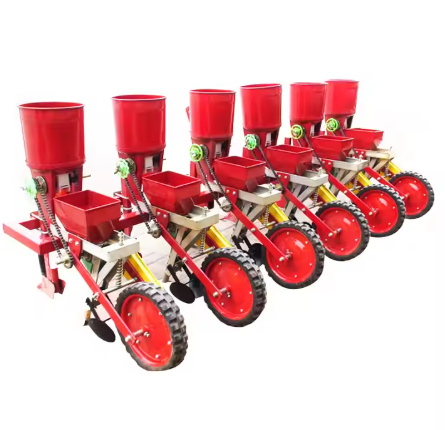
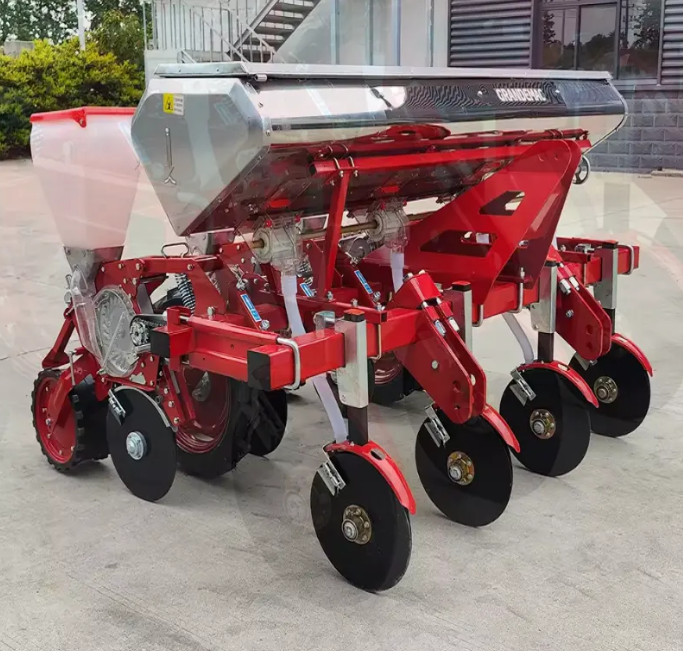
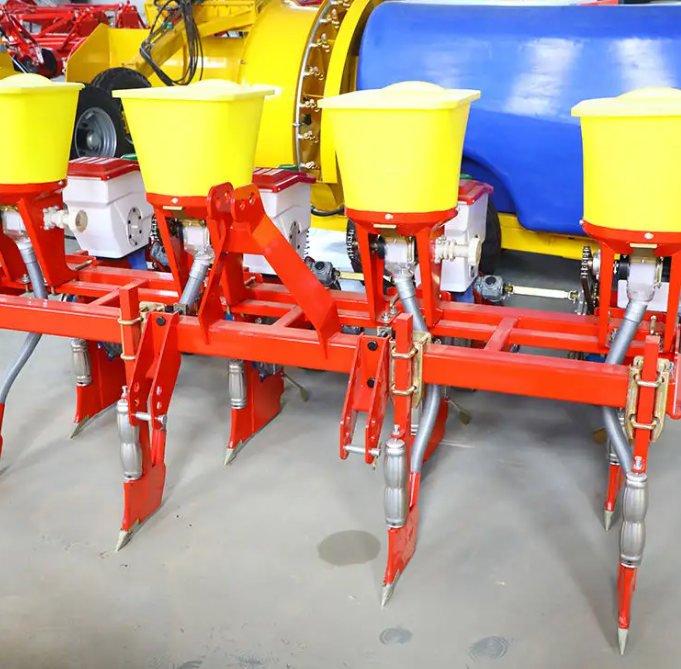
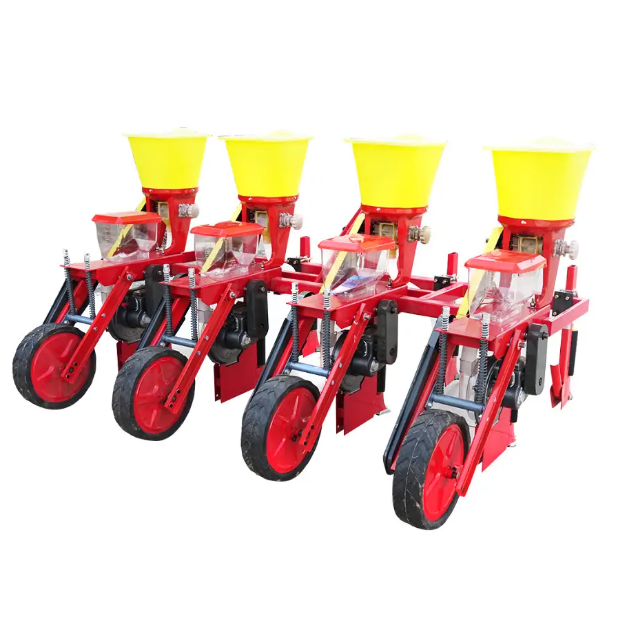
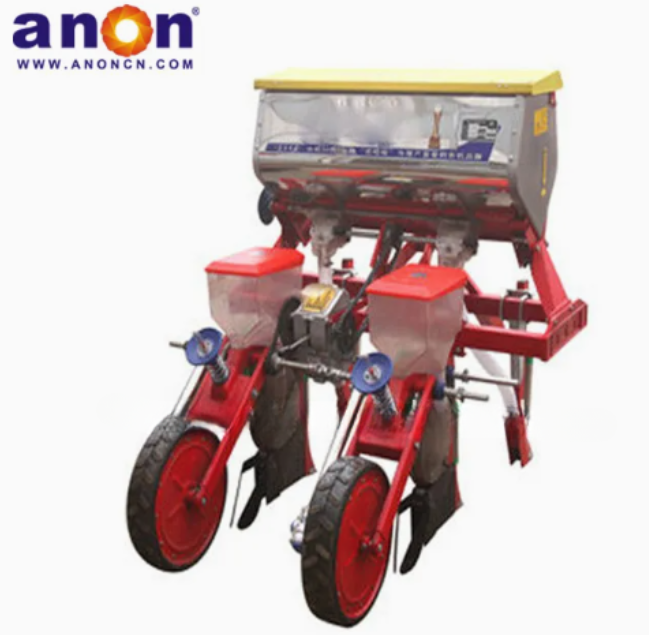
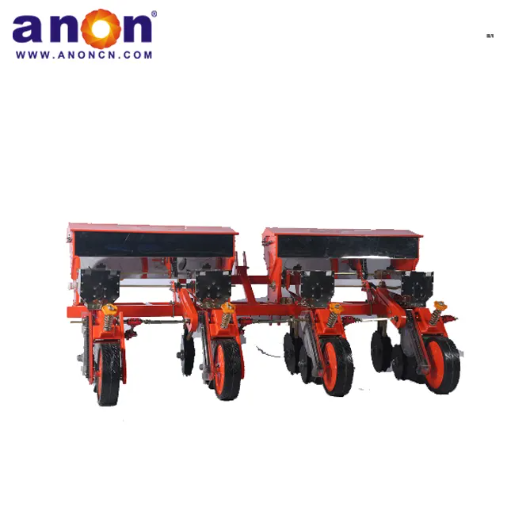
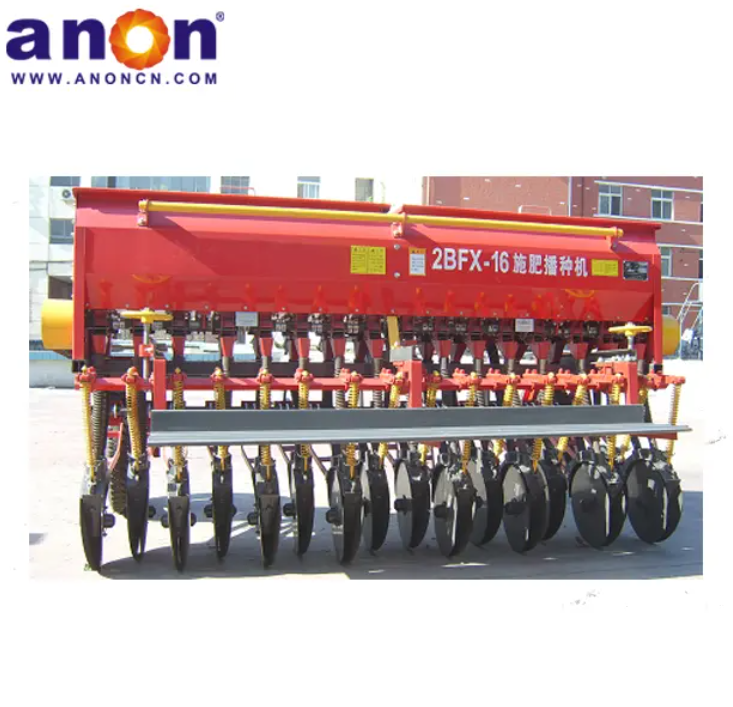
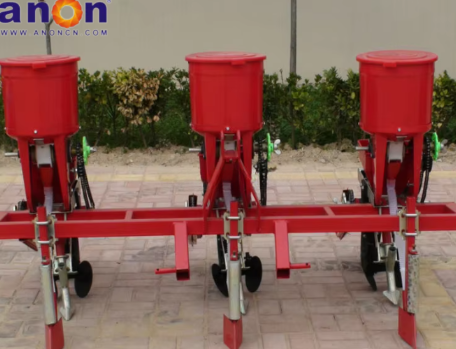
ANON’s no-till seeder completes 6 jobs in one tractor pass: stubble breaking, soil opening with deep loosening, synchronous fertilization into a separate furrow, precision seeding at controlled depth, soil covering, and press-wheel compaction that seals in moisture. You choose heavy double-disc ploughs, arrow-shovel openers, or sliding knife trenchers, plus mechanical or pneumatic metering by air seeder, with floating contour-following row units for uniform depth on uneven ground. ANON configures units for row crops like corn and soybeans and small grains like wheat, barley, and sorghum, across 1-, 2-, 4-, 6-, 8-, 16-, 20-, and 24-row drills for 20 HP to 120+ HP tractors.






Our Products
Tillage's Hidden Cost
Conventional tillage prepares a clean seedbed, but each additional pass exposes soil to wind, sun, and moisture loss. ANON’s no-till seeder skips that trade-off entirely.
ANON’s seeder plants directly into undisturbed ground, so the soil structure and existing moisture stay locked in place instead of evaporating across multiple tillage passes. This is the same anti-tangling cutter system noted above, which means you do not need a separate tillage or residue-clearing pass before seeding begins. This keeps organic matter and topsoil in place, reducing the erosion risk that repeated plowing creates on exposed ground season after season.
Because this all happens in the same pass, your field spends less total time disturbed and exposed. On drought-prone or wind-erosion-exposed land, this matters directly, since additional tillage passes increase the moisture lost before the crop germinates. With ANON’s single-pass system, you get the seedbed preparation and planting result you need without the soil health cost of repeated conventional tillage.
Cuts Through Stubble
Heavy stubble and straw mulch jam many lighter-duty seeders before they finish a row, wrapping residue around discs and forcing you to stop and clear the machine. ANON’s no-till seeder is built to cut through it instead.
This slicing action, rather than pushing residue aside, is what causes wrapping and jamming in lighter-duty cutters, and what ANON’s design avoids.
This keeps you seeding continuously through heavy stubble and dense straw mulch without stopping to clear jams mid-field. For farms in residue-heavy grain belts, this anti-tangling design helps you finish a field in one continuous pass instead of stopping every few rows to clean the machine by hand.
Six Jobs, One Pass
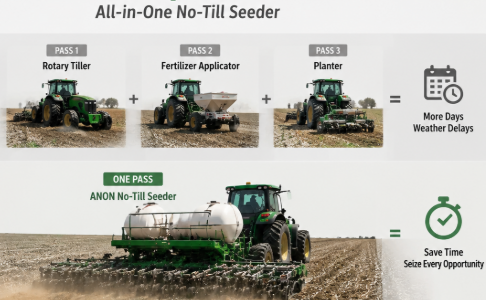
Running a rotary tiller, a separate fertilizer applicator, and a planter across the same field means three sets of equipment, three passes, and three chances for weather delays. ANON’s no-till seeder condenses all of it into one.
As covered above, all six of these steps happen in a single forward pass with ANON’s seeder.
Because all 6 operations happen in the same pass, you are not waiting on separate equipment availability or scheduling three field windows around weather. This finishes with the press-wheel compaction noted above, sealing in the moisture the earlier steps preserved. What used to take multiple machines and multiple days now happens in one pass with ANON’s seeder; contact ANON for acres-per-hour figures for your row configuration.
Follows Any Contour
A seeder that holds a fixed depth on flat ground often plants too shallow on rises and too deep in dips, giving you uneven emergence across the same field. ANON’s no-till seeder adjusts to the ground instead of ignoring it.
This is the floating row-unit system noted above, so each row follows the contour beneath it rather than staying locked to a fixed frame height. This means a row crossing a low spot and a row crossing a ridge in the same pass both hold the same seeding depth, instead of one going too deep and the other too shallow.
This matters on hard, rocky, or uneven ground, where a rigid seeder frame struggles to compensate for terrain changes row by row. Paired with your choice of opener, ANON’s contour-following system keeps seed placement consistent regardless of which type suits your soil. For farms working uneven or rocky fields, this depth consistency supports more even germination across the whole field.
Fewer Passes, Lower Costs
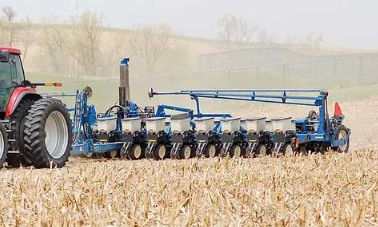
Every extra pass across a field burns fuel, adds tractor hours, and stretches your planting window, sometimes beyond what the weather allows. ANON’s no-till seeder cuts that cost by removing the passes entirely.
ANON’s single-pass design, described above, eliminates rotary tiller, plow, and separate seedbed preparation entirely. Fewer passes means fewer hours on your tractor’s engine and drivetrain, which extends the service life of equipment you would otherwise run through multiple tillage operations every season. Your fuel cost per acre drops as you remove passes from the schedule; contact ANON for fuel-use comparisons for your setup.
This also shortens your total planting window, since you are not waiting for a tillage pass to finish before a separate planter can follow behind it. For cooperatives and contractors billing by the acre, fewer passes can lower your labor cost per acre compared to conventional multi-pass systems.

Built for Your Field
ANON matches cutter type, metering system, and row count to your specific soil and crop combination, so the machine you receive is built for the ground you are actually planting into.
ANON’s no-till seeder fits farms in residue-heavy grain belts and regions under erosion or moisture-conservation pressure, including drought-prone and wind-erosion-exposed land, where the anti-tangling cutters and moisture-sealing press wheel matter directly. It also fits mixed row-crop and small-grain operations growing corn, soybeans, wheat, barley, sorghum, rape, or grass seeds, since ANON configures opener type and row spacing to the crop you are planting.
It also fits farms working stubble-covered, straw-mulched, uneven, or hard and rocky ground, where ANON’s contour-following depth control and choice of opener, double-disc, arrow-shovel, or sliding knife, support a more consistent stand across your whole field. Whatever your soil and crop combination, ANON has a configuration built to match it.
Company Advantage
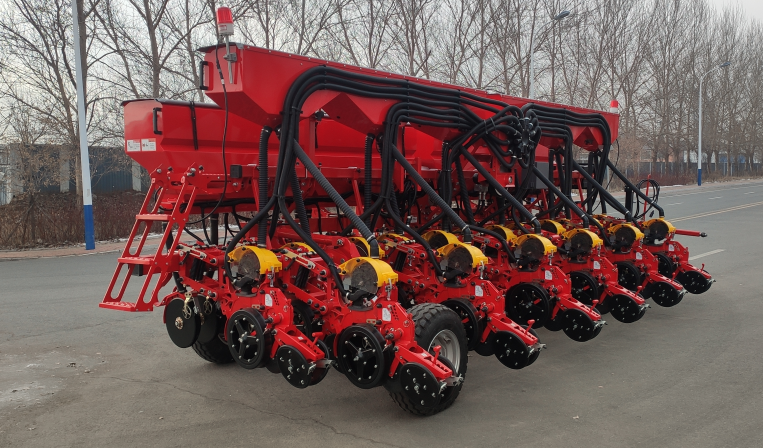
ANON designs its no-till machinery with reinforced, simple mechanical structures rather than complex, fragile electronics, keeping purchase cost low and field breakdowns to a minimum. ANON offers customized seed discs and trencher types for its no-till seeder; double-disc versus shovel; matched to regional conditions, from hard dry clay to rocky hillsides and dense straw-mulched fields, with reinforced steel frames, sealed transmission components, and anti-clogging polymer fertilizer boxes built for high-intensity seasonal workloads.
As part of a one-stop conservation farming supply line, ANON also supplies heavy disc harrows, straw choppers/returning machines, and matching 4WD tractors, ensuring seamless hydraulic and mechanical integration across the full no-till system. Backed by ANON’s presence in 140+ countries, customers get reliable spare parts delivery; blades, bearings, seed cups; and 24/7 remote technical assistance.
Related Products
FAQ
The Great Plains 10-foot no-till planter requires at least a 50HP tractor and at least one hydraulic system. It comes with a warm-season grass box, a legume box, and a regular grain box. It can plant warm-season grasses, soybeans, wheat, oats, fescue, and more.
A five-year-old no-till planter costs $12.56 per acre if you plant 200 acres per year, and $7.27 per acre if you plant 400 acres per year. After 800 acres, maintenance work begins to increase, and the cost of owning the planter increases.
No-till farming is far more profitable than conventional farming because it requires less fuel, equipment, and labor. It also provides additional environmental benefits by increasing soil organic matter and keeping the soil stable.
Long-term no-till farming not only does not cause soil compaction, but it can actually improve soil compaction and enhance soil fertility. Traditional tillage damages soil aggregate structure, leading to the loss of soil organic matter and, over time, compaction. No-till planting combined with straw return to the field allows the straw to decompose and transform into soil organic matter, increasing soil humus content, improving soil aggregate structure, and gradually making compacted soil loose and aerated. At the same time, no-till farming reduces the compaction of the soil by agricultural machinery, avoiding damage to soil structure, reducing soil erosion, and improving soil water and fertilizer retention capacity. Long-term practice shows that after more than 3 consecutive years of no-till farming, soil organic matter content can increase by 0.1-0.3 percentage points, soil bulk density can decrease by 10%-15%, and the land becomes more fertile with each planting, achieving sustainable farming.
No, it won’t burn seedlings. The depth and amount of fertilizer can be precisely controlled. The seed and fertilizer are scientifically positioned with a vertical separation of 5-8cm. The fertilizer is applied directly below or to the side of the seeds, avoiding direct contact that could burn the seeds and seedlings, while ensuring the fertilizer reaches the root system for absorption. Fertilizer utilization is more than 30% higher than traditional surface fertilization. The fertilization depth can be adjusted from 8-15cm according to the crop’s growth needs, meeting the fertilizer efficiency requirements of different crop root development. The fertilizer amount is controlled by an adjustable fertilizer applicator, ranging from 10-50kg per acre, with an error of no more than 5%. You can flexibly set the amount based on crop variety, soil fertility, and target yield, ensuring sufficient fertilizer effectiveness without waste, and achieving precise fertilization.