



Introduction
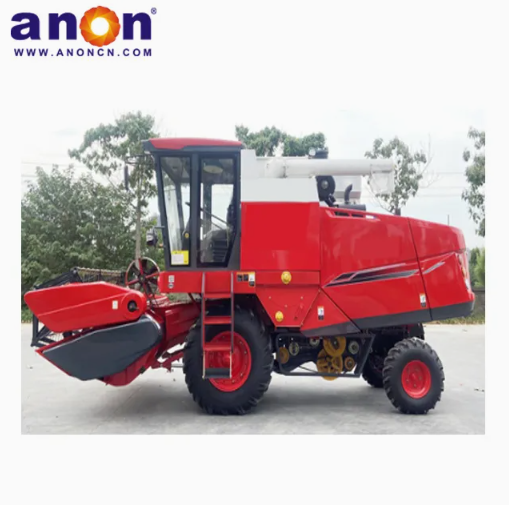
The wheat combine harvester is undoubtedly one of the greatest inventions in agriculture! When the wheat combine harvester enters a field of ripe wheat, it produces clean grain with ease, even when harvesting hundreds of acres a day. Do you know how a wheat combine harvester works? In this article, I will explain what a combine harvester is, how it works, and the things to watch out for before operating it. If you’re interested, keep reading!
Main Components of a Wheat Combine Harvester
Header
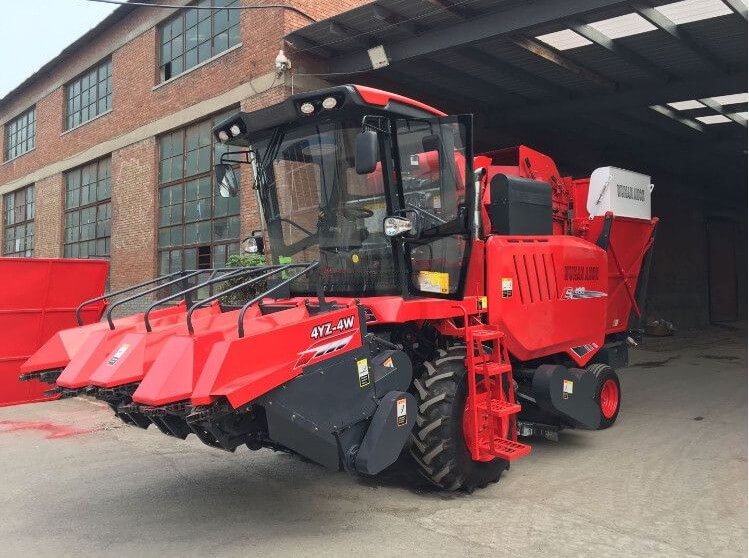
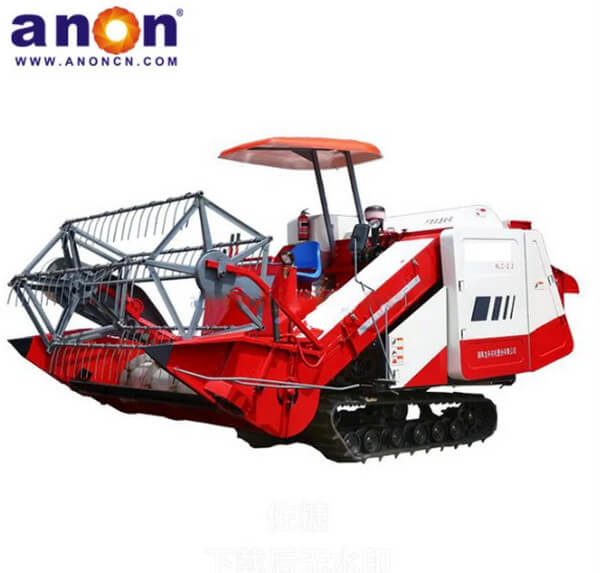
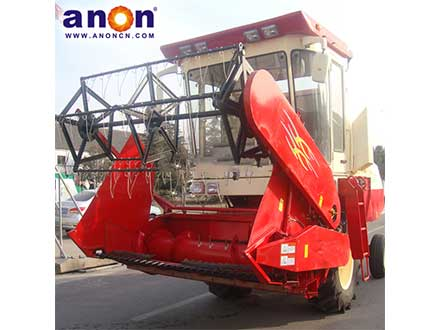
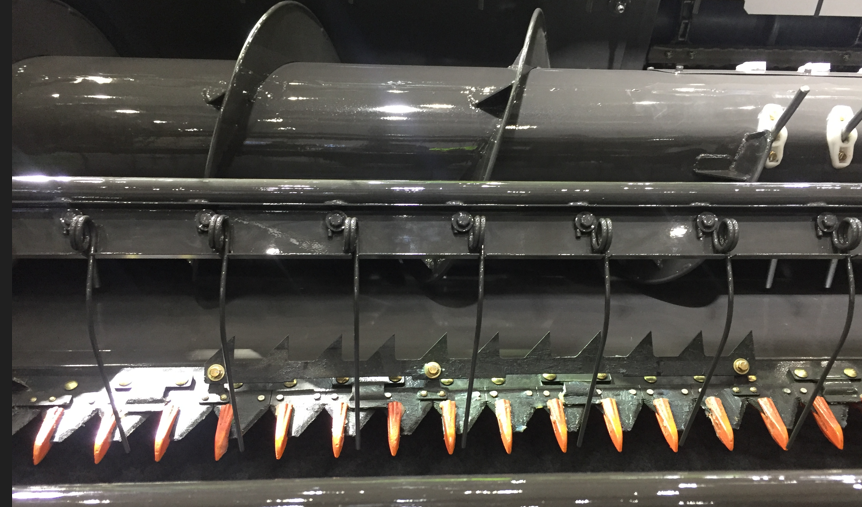
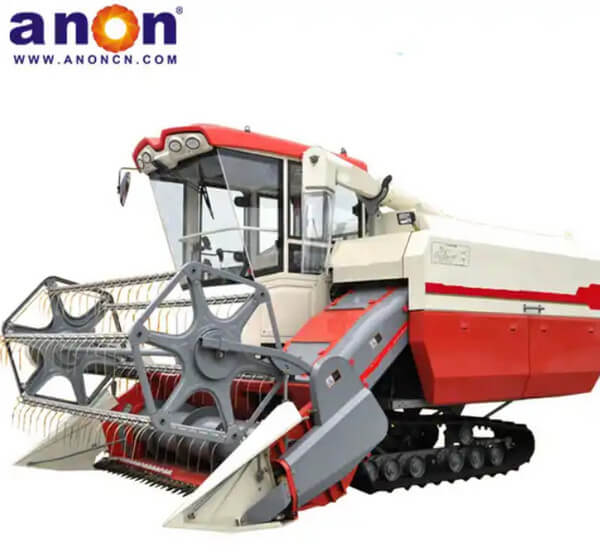
The header consists of a reel, a cutter, and a header auger. The reel, located at the front of the header, is responsible for guiding the wheat stalks toward the cutter and also helps to straighten lodged wheat.
The cutter consists of moving and stationary blades that reciprocate, cutting the wheat stalks like a pair of scissors.
The header auger, located behind the cutter, is a transverse rotating shaft with spiral blades and telescopic teeth, responsible for concentrating the cut wheat stalks towards the center of the header.
Conveyor
The conveyor connects the header and the threshing device, and is responsible for conveying the wheat plants evenly and continuously upwards to the inlet of the threshing drum.
Threshing System
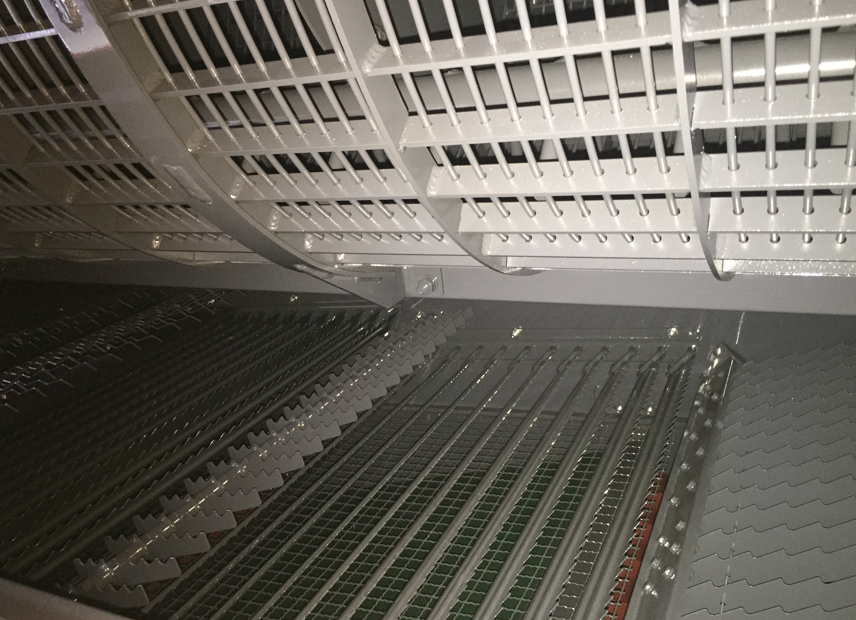
The threshing system consists of a threshing drum and a concave screen. The threshing drum is a high-speed rotating cylinder with grooved bars or spikes on its surface, while the concave screen is an arc-shaped mesh wrapped around the bottom of the drum. Wheat plants enter the gap between the threshing drum and the concave screen for threshing.
Separation System
The separation system is responsible for recovering the wheat grains that remain embedded in the straw after threshing. Traditional combine harvesters use a straw separator, a set of stepped vibrating keys that separate the wheat grains from the straw through vibration. Modern large combine harvesters use axial flow drum separation technology, which allows threshing and separation to be completed within the same drum, resulting in higher efficiency.
Cleaning System
The cleaning system consists of a vibrating screen and a blower, responsible for separating wheat grains from other impurities such as chaff, straw, and dust, resulting in pure impurities.
Grain Processing System
Cleaned wheat grains, after being sorted, need to be stored in the grain silo via a conveying device, typically a bucket elevator or screw conveyor.
Straw Processing Device
There are two main methods for straw processing in wheat combine harvesters: the most common method is chopping and returning the straw to the field, and the other is collecting and baling.
The Working Principle of a Combine Harvester for Wheat
Cutting
When a combine harvester enters a wheat field, the height of the header needs to be adjusted according to the crop height to avoid missing any harvest. The rotating reel above the header pushes the wheat onto the header. As the wheat stalks approach the header, two high-speed reciprocating blades cut them. The header auger gathers the cut wheat towards the center of the header and then conveys it to the threshing unit via a conveyor.
Threshing
The wheat ears fed into the threshing unit are impacted by threshing drums with a toothed structure. Based on their axial arrangement, threshing drums can be classified into three types: horizontal shaft, vertical shaft, and a combination of horizontal and vertical shafts.
Horizontal shaft threshing drums are perpendicular to the combine harvester’s direction of travel, enabling fast and uniform threshing. Vertical shaft threshing drums are parallel to the combine harvester’s direction of travel, resulting in a longer path for the wheat grains within the drum and more impacts. This allows vertical shaft threshing drums to operate efficiently even under high moisture and high-yield conditions. Dual-shaft threshing drums combine the advantages of both horizontal and vertical shaft threshing drums, offering even higher efficiency and suitability for various harvesting conditions.
Separating
The long straw after threshing is thrown towards the separation section of the straw separator or axial flow drum, and the wheat grains carried in during the shaking process fall into the cleaning screen below.
Cleaning
The grains mixed with broken straw and other impurities fall onto the grain pan and enter the cleaning system. Its main function is to clean, separate, and screen the harvested grain, removing impurities and non-target materials to ensure the final grain quality is good.
Collecting
After multiple cycles of threshing and separation, the grain enters the collection area. An elevator lifts the grain from the bottom of the combine harvester to the grain tank. When the tank is full, the wheat combine harvester stops, and the unloading auger discharges the grain into bags or onto transport vehicles.
If the workload is too heavy, a grain cart will be needed. The grain cart will move alongside the combine harvester, and they will use signals to transfer the grain smoothly through the unloading auger into the cart. Be sure not to use your hands, feet, or tools to push or clean the grain in the tank during unloading.
Handling of Stalks
If the wheat combine harvester has a chopping and spreading device, it can chop the straw and spread it on the field, which helps with returning straw to the soil as fertilizer. If the wheat combine harvester doesn’t have this device, or if you need the straw for fuel or feed, you can use a holding drum to transport it. An upper outlet will discharge the straw, and it will fall in one area of the field, making it easier for you to collect, whether you use it for fuel or feed.
Key Points to Consider Before Operating a Combine Harvester
Before operating a combine harvester, you must complete the necessary training and obtain the appropriate license.
Before you start using the combine harvester, you should also pay attention to the following points:
1. Check your clothing; don’t wear anything too loose, and tie up your long hair.
2. Check the condition of the machine.
3. Inspect the field conditions, such as terrain, size, and shape.
4. Check the moisture level and height of the crops.
Connect With ANON
I hope my detailed explanation has given you a good understanding of how a wheat combine harvester works. If you have any questions or need information regarding harvesters, don’t hesitate to contact us at ANON. We are the largest supplier of agricultural machinery in China, and we have extensive expertise. We offer a wide range of options and professional support.
FAQ
What is the typical price range for combine harvesters?
The price of combine harvesters varies greatly. Smaller or older models may cost less than $50,000, while new, high-tech combine harvesters can cost over $1 million. Most new medium-to-large combine harvesters range from $100,000 to over $500,000, while used combine harvesters typically cost between $100,000 and $250,000, depending on the brand (John Deere, Case, New Holland), size, features (GPS, automation), and condition.