



ANON Hand Push Seeder
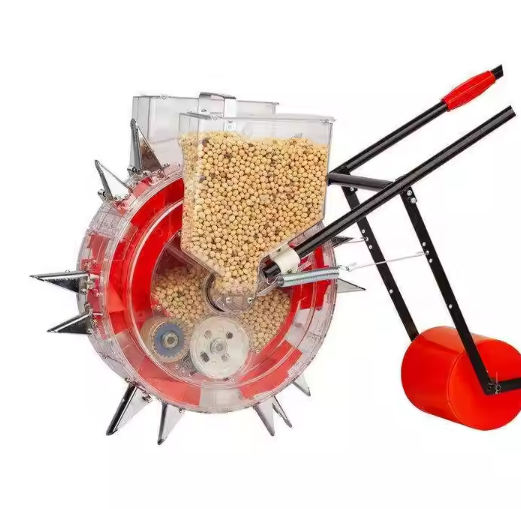
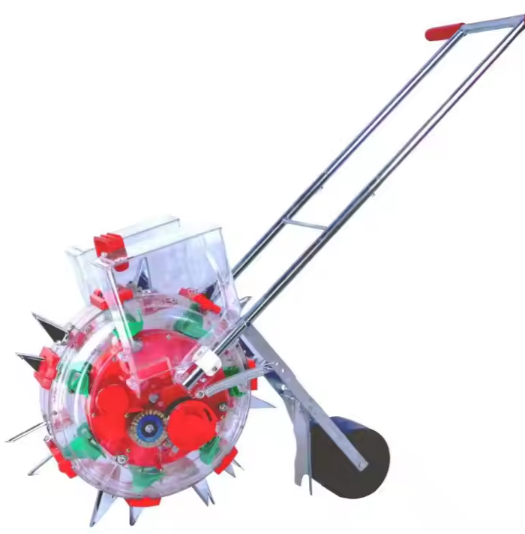
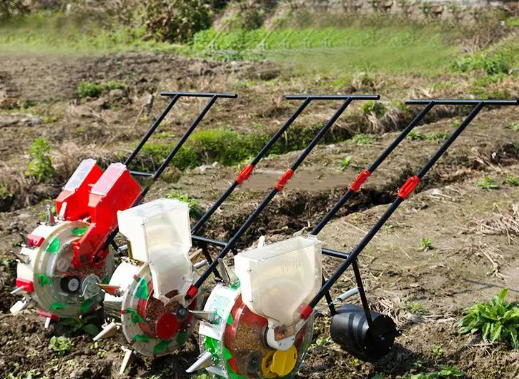
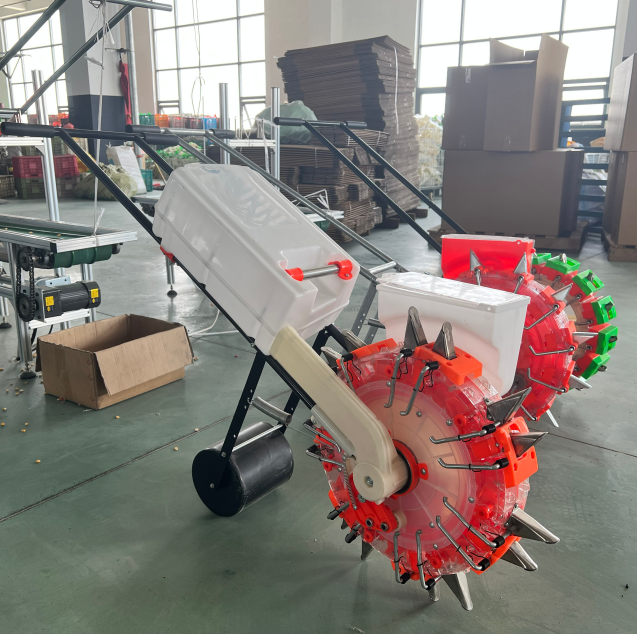
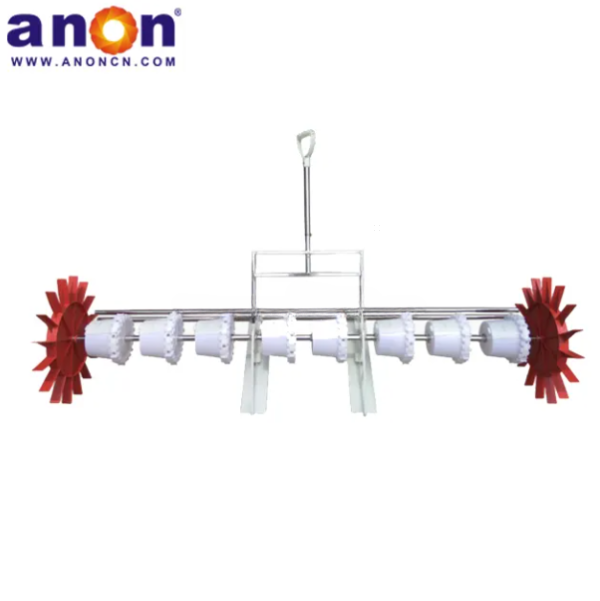
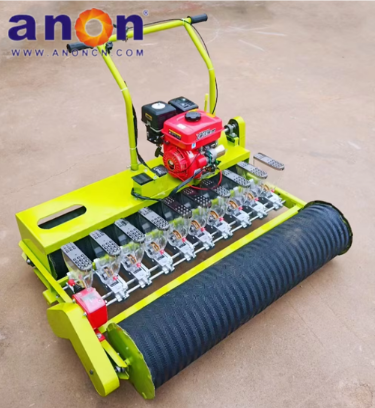
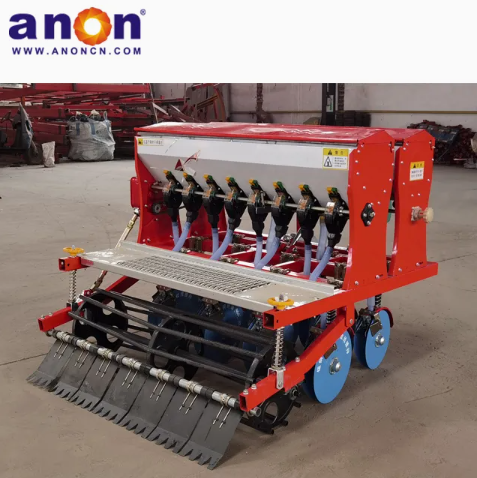
A hand-push seeder is a lightweight agricultural tool designed for small-scale fields, home gardens, or hilly terrain. It allows integrated operations such as furrowing, seeding, and covering soil, all powered by manual pushing.
Application:
Land Type:
Suitable for small farms, backyard gardens, or uneven hilly areas.
Crop Types:
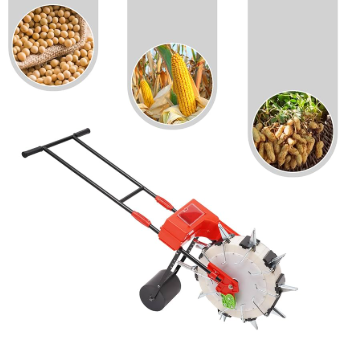
Works well with medium to small seeds such as corn, soybeans, peanuts, wheat, and vegetables.
Soil Conditions:
Best used on dry or light soil. For heavy clay soil, pre-tilling is recommended.
Working Principle
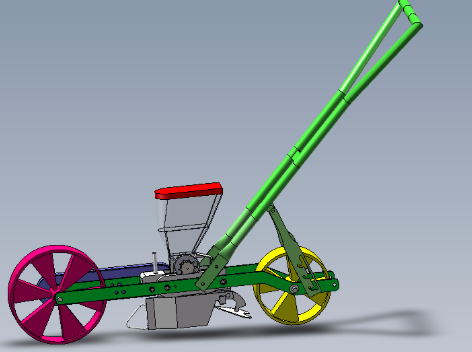
When the seeder is pushed, the rollers rotate, driving the seed metering device. Seeds fall from the seed box into the furrows created by the furrow opener, and then the covering device completes the covering.
Core Components
Seed Box: Stores seeds and is equipped with an adjustment device to control the sowing rate and number of seeds.
Furrow Opener: Creates sowing furrows in the soil using rollers or a duckbill-type structure; the depth is adjustable.
Soil Covering Device: Automatically or manually covers the seeds with soil after sowing, ensuring contact between the seeds and the soil.
Transmission System: Relies on manual power to rotate the rollers, driving the seed metering device to achieve intermittent sowing.







Our Products
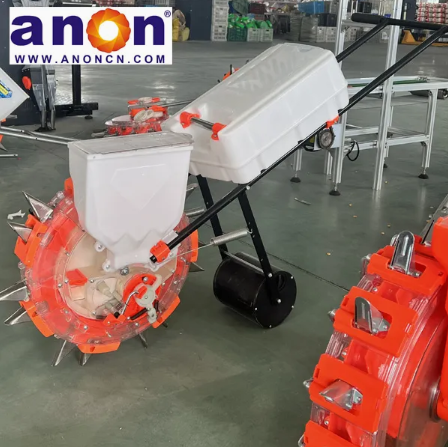
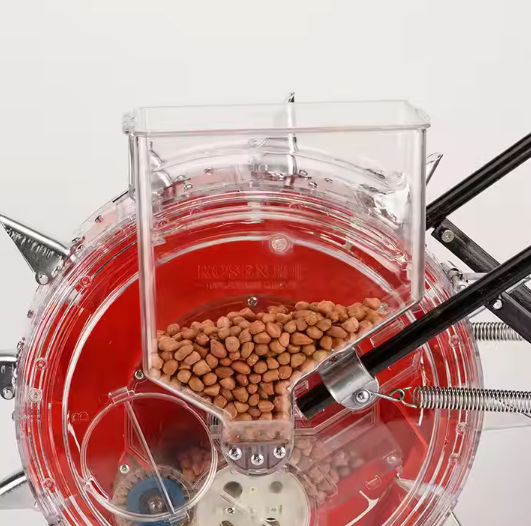
Multi purpose adaptation
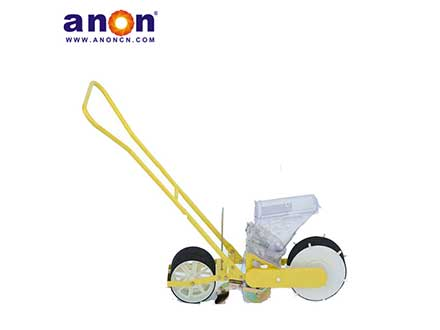
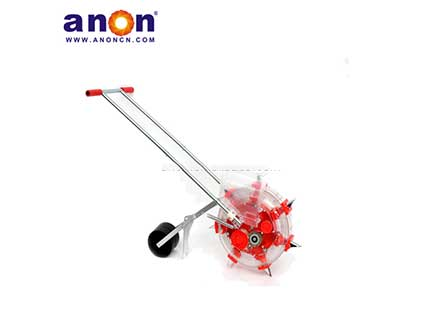
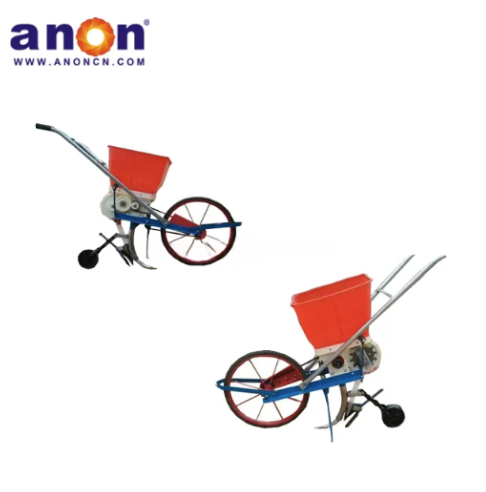
Most ANON push-type seeders integrate sowing, covering, and compaction functions, with some also featuring a furrowing function. After being pushed, they automatically complete furrowing, sowing, covering, and compaction, eliminating the need for manual secondary covering. ANON hand-cranked seeders can easily meet the sowing needs of various crops by changing the seed trays of different sizes. Changing the seed metering wheel and seed box allows compatibility with small vegetable seeds, medium-sized grain seeds, garlic cloves, and other materials. For small seeds such as carrots and radishes, fine-mesh seed trays can be used; for leafy vegetables like spinach, shallow-groove seed trays ensure even sowing; for larger seeds such as corn and beans, simply replacing the seed tray with a larger diameter one allows for stable single or double seed sowing, ensuring proper seed spacing and reducing the hassle of later transplanting. Some models can also be divided into seed and fertilizer boxes, allowing for simultaneous fertilization during sowing, covering sowing needs throughout the year.
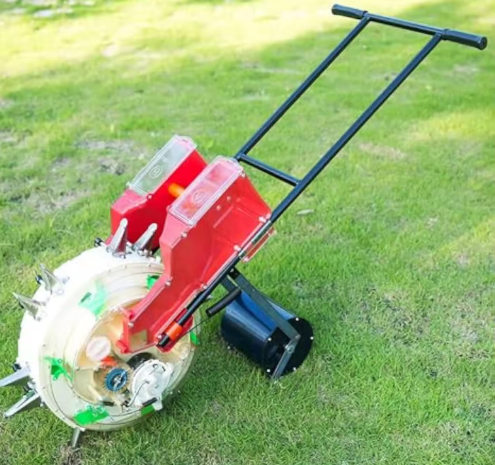
Lightweight and Portable
Our push-type seeders are lightweight, ranging from a few kilograms to tens of kilograms. For example, the AN1 push-type seeder weighs only 9 kilograms. Its compact size and small turning radius allow it to easily navigate in confined spaces where large seeders and tractors cannot operate, such as greenhouses, orchards, gardens, and terraced fields. It can also navigate irregularly shaped plots without damaging seedlings, scraping crops, or causing heavy soil compaction, making it suitable for conservation tillage. Its compact design and small size require minimal storage space, and it can be moved without a trailer or transport vehicle, easily carried by a single person by hand or on their shoulder, making it suitable for scattered plots and multi-location operations.
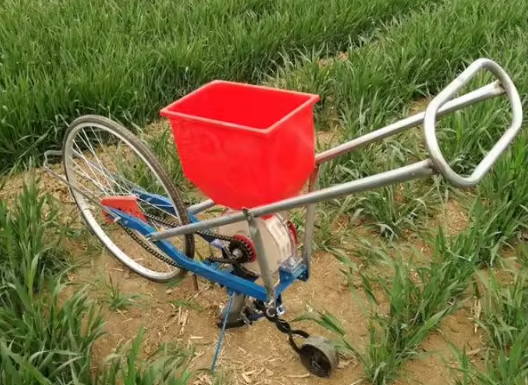
No Fuel Consumption
The ANON push-type seeder operates entirely by human power, requiring no tractor, consuming no fuel or electricity, and operating with zero fuel consumption and no noise. Sowing is completed simply by pushing, with low pushing resistance and easy operation. It is entirely manual, allowing a single person to complete the sowing process. The machine features a simple transmission and hydraulic structure; the handle and gear positions are intuitively designed, requiring no professional training—just read the instruction manual. The pushing speed can be independently controlled to suit users of varying strengths. It is suitable for various terrains, including greenhouses, small plots of land, and hillsides. Its small turning radius easily handles narrow or irregular fields. Wherever you need to sow, it can handle it.
Durable and Easy to Maintain
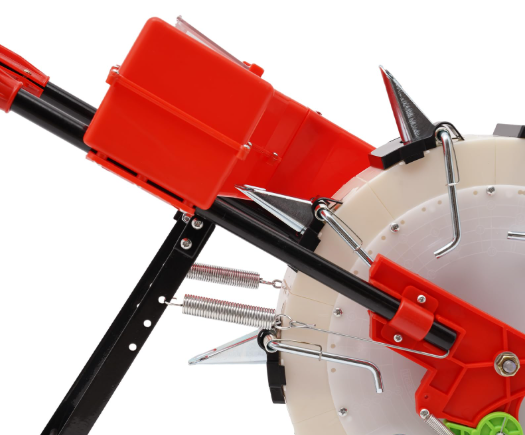
The frame is made of thickened steel, and the seeding components are made of engineering plastics. The machine is sturdy and durable, resistant to drops and impacts, and adaptable to complex field environments, extending its service life. The only core wear parts are the seed metering wheel and seed guide tube, which are highly versatile and inexpensive. Routine maintenance only requires cleaning residue from the seed box and adding lubricant to the transfer shaft. There are no complicated inspection procedures or professional requirements; you can check the machine yourself at home.
Related products
FAQ
Wet soil easily clogs the furrow opener and covering wheel, while compacted soil significantly increases pushing resistance. To ensure normal sowing, you can: reduce the pushing speed, use a small, frequent operation method to avoid mud clumping on the furrow opener, use pointed furrow openers to reduce the area covered by soil, and clean the soil adhering to the furrow opener regularly. For compacted soil, you can first perform shallow rotary loosening before using the seeder. Adding a handrail can further reduce the difficulty of pushing.
A seed drill can precisely position the seeds, reducing gaps in the field and making it harder for weeds to grow. This helps reduce the need for herbicides and reduces competition with unwanted plants, resulting in healthier crops.
Seeders and planters are agricultural machines used for sowing seeds, but they differ in their function, seed types, and precision. Seeders, also known as seed drills, sow seeds at a specific depth and spacing in rows, typically for small grains and cereals. Planters, on the other hand, deposit seeds at specified rates in hills and rows, often used for larger row crops like corn and vegetables. Planters offer more precise seed placement than seeders, ensuring optimal spacing and depth for better germination.
If there is insufficient soil cover or exposed seeds after sowing, targeted measures can be taken: first check the angle of the soil cover plate, and adjust it downwards to increase the amount of soil cover; Confirm the pressure and position of the compaction wheel again, and press the compaction wheel appropriately to ensure close contact between the soil and seeds, thereby improving soil moisture retention and seedling emergence rate; At the same time, adjust the compaction pressure according to the soil type. For sandy soil plots, add compaction wheels appropriately, and for sticky and heavy soil, apply light compaction to avoid soil compaction and waterlogging.
Plant spacing can be adjusted by changing the gear of the seed metering wheel or different tooth counts on the seed metering disc. Multiple settings are available from 10-30cm. For leafy vegetables, choose the 10-15cm dense setting; for root vegetables, choose the 15-25cm sparse setting. Sowing depth is set by adjusting the lifting screw of the furrow opener. For conventional crops, the depth is 2-5cm. Sow shallower when soil moisture is good and deeper when soil moisture is poor. After adjustment, lock the screw to prevent movement during operation.